This article was co-authored by Jarod Carter, DPT, CMT and by wikiHow staff writer, Jessica Gibson. Jarod Carter is a Physical Therapist, Consultant, and the Owner of Carter Physiotherapy, a manual physical therapy clinic in Austin, Texas focused on manual therapy as well as telehealth services to resolve pain and injuries. Dr. Carter has over 15 years of professional physical therapy experience. He received a DPT (Doctor of Physical Therapy) and an MTC (Manual Therapy Certification) from the University of St. Augustine for Health Sciences. Dr. Carter also holds a BS in Kinesiology from the University of Texas at Austin.
There are 12 references cited in this article, which can be found at the bottom of the page.
wikiHow marks an article as reader-approved once it receives enough positive feedback. In this case, 100% of readers who voted found the article helpful, earning it our reader-approved status.
This article has been viewed 417,951 times.
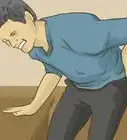
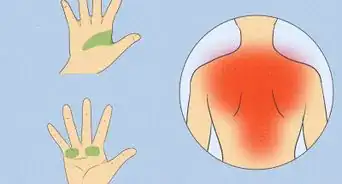
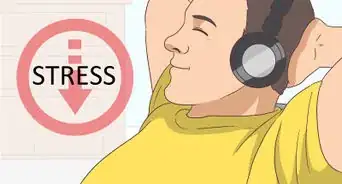
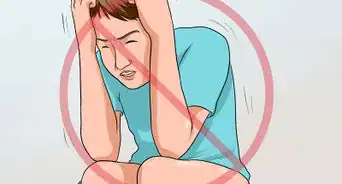
Upper back pain (in the thoracic region of the spine, below the neck, and along the length of the ribs) is often the result of poor sitting or standing posture or is due to minor trauma from playing sports or exercising. The pain is often characterized as achy and sore to the touch, which typically indicates a muscle strain. Muscle strains often respond well to rest or other home treatments and resolve within a few days.
Here are 14 effective ways to treat upper back pain.
Steps
Method 1
Method 1 of 14:Take OTC Pain Relievers to Deal with Short-Term Pain
-
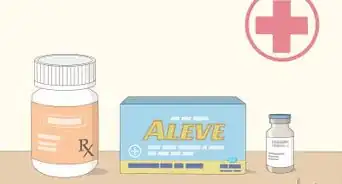
1Use ibuprofen, naproxen, or aspirin to help you manage the pain. Although these medications won't heal your back, they can make you more comfortable. Follow the manufacturer's dosing recommendations and don't take more than the recommended amount within a 24-hour period.[1]
- If the medication doesn't seem to work and you're still in a lot of pain, don't hesitate to call your doctor. They may be able to prescribe stronger non-steroidal anti-inflammatories (NSAIDs).
Advertisement

Method 2
Method 2 of 14:Apply a Topical Pain Reliever for Temporary Relief
-
1Spread a thin layer of pain reliever cream, salve, or ointment onto your skin. Rub it directly onto the area of your back that hurts. Most topical pain relievers have methyl salicylate, which is sometimes called oil of wintergreen, menthol, capsaicin, or NSAIDs. These can desensitize the area so you don't feel the pain for a while.[2]
- Always follow the manufacturer's dosing instructions for how often to reapply the cream.

Method 3
Method 3 of 14:Soak in a Hot Bath
-
1Run a hot bath and add 1 1/2 cups (300 g) of Epsom salt if you like. You've probably heard that Epsom salt can relieve muscle ache and there's certainly no harm in trying it. However, there's very little research that Epsom salt decreases pain. Instead, soaking in a hot bath for at least 15 minutes is what probably makes your muscles feel relaxed.[3]
- If you have a problem with swelling in your upper back, then pop a cold pack on the area after you get out of the bath. Keep it in place for 15 minutes so it numbs the area and reduces swelling.
Advertisement

Method 4
Method 4 of 14:Try Cold and Heat Therapies to Deal with Swelling and Pain
-
1Use ice right after an injury and use heat for lingering pain. Press an ice pack against your back as soon as you feel pain. Ice is effective at preventing swelling so use the pack right when you injure your back and hold it in place for about 20 minutes. Once the swelling goes down, you can switch to a heating pad. Hold the heating pad on your upper back for 20 minutes to reduce muscle stiffness.[4]
- Always wrap an ice pack in a cloth so you're not putting ice directly against your skin.
- Use the ice pack just after the injury—it's not helpful in treating lingering back pain. Instead, reach for the heating pad.

Method 5
Method 5 of 14:Stretch your Upper Back to Relax your Muscles
-
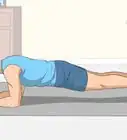
1Try slow, gentle stretches to prevent your muscles from feeling tight. Light exercises can also help your upper back if it feels tender. Take deep, full breaths while you stretch and hold each stretch for 30 seconds. You can do any of these stretches 3 to 5 times a day:[5]
- Sit up straight and roll your shoulders forward in a circular motion. Start with big circles before making them smaller. Then, reverse the direction and repeat the exercise.
- Sit in a chair and hold one side of it. Bend your neck to the opposite side, but keep your torso straight. Keep bending until you feel a stretch in your upper back and neck.
- Put your hands on your shoulders and tuck your elbows to the front of your chest. Bring them as close as you can so you feel a gentle stretch in your upper back. Then, release the stretch.
Advertisement

Method 6
Method 6 of 14:Press Against a Foam Roller to Get Deep-Tissue Relief
-
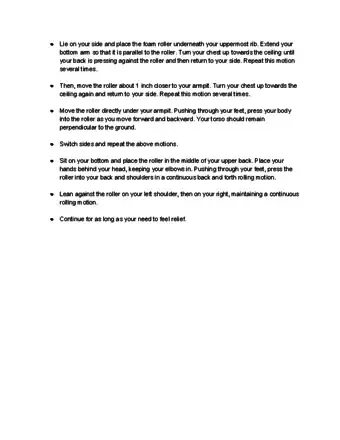
1Place a foam roller on the ground and lie down so it's under your upper back. Put your feet flat, bend your knees, and rest your upper back on the roller so it's perpendicular to the length of your body. Keep using the roller for about 10 minutes so you work the deep muscles in your upper back.[6]
- You can buy inexpensive foam rollers at big-box stores or sporting goods stores.

Method 7
Method 7 of 14:Improve your posture to eliminate muscle strain.
-
1Keep your spine straight and don't hunch your shoulders forward. You might not realize it, but back pain is often caused by poor posture throughout the day. When you sit, keep the base of your spine at the back of your chair and sit up straight with your feet flat on the floor in front of you. Whether you're sitting or standing, draw your shoulders back so they don't slump forward.[7]
- It might be helpful to set an alarm on your phone or use an app to remind you throughout the day to correct your posture.
Advertisement

Method 8
Method 8 of 14:Take a break from your normal physical routine.
-
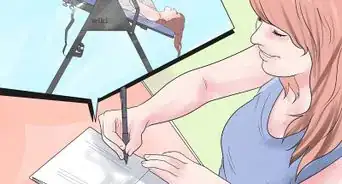
1Stop doing repetitive movements that might cause your back pain. A lot of upper back pain is caused by doing the same simple movements again and again. This can cause muscle strain or a pinched nerve—either way, rest is the best treatment. In some cases, you might know exactly when you injured your back. You might have been playing tennis or got into a car accident and have whiplash. If you can't identify the cause, take a rest from any strenuous activity and improve your posture.[8]
- Poor posture or even carrying a heavy backpack can strain your muscles which causes general upper back pain.
- While it's important to rest your back so you don't damage it further, don't go for total bed rest. A little gentle movement, like from a walk, can get blood flowing so your back heals.

Method 9
Method 9 of 14:Get a deep-tissue massage.
-
1Tell the massage therapist where you're feeling back pain. They'll give you a deep-tissue massage that can help you feel relaxed. Although more research is needed to determine if massage is an effective way to manage upper back pain, it can temporarily make you feel calm, which might distract you from the pain.[9]Advertisement

Method 10
Method 10 of 14:Try physiotherapy for chronic back pain.
-
1Work with a physical therapist if you frequently have upper back pain. Weak spinal muscles, poor posture, or degenerative conditions like osteoarthritis can cause chronic pain. Fortunately, a physical therapist can show you specifically tailored stretches and strengthening exercises for your upper back. You'll probably need to do 2 or 3 physiotherapy sessions for 4 to 8 weeks before you see improvements.[10]
- Check with your insurance company to see if they cover physiotherapy sessions. In some cases, you might need a doctor's referral to get coverage.
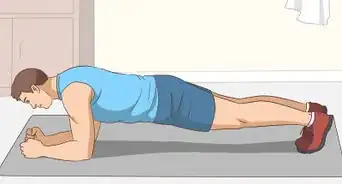
- If your back is healed, you may come up with an exercise schedule that includes rowing, swimming, and back extensions.

Method 11
Method 11 of 14:Try acupuncture.
-
1Schedule an appointment with a licensed acupuncturist. They'll stick very thin needles into perceived energy points below your skin in an effort to reduce pain and inflammation. Acupuncture is based on the principles of traditional Chinese medicine and some people believe it releases endorphins and serotonin. However, pain relief from acupuncture is most likely a placebo effect.[11]
- Some health professionals like physicians, chiropractors, naturopaths, physical therapists, and massage therapists are trained in acupuncture.
- You'll probably need repeated sessions before you feel an improvement.
Advertisement

Method 12
Method 12 of 14:Talk with your doctor if you're still in pain.
-
1Get a medical exam with your doctor if the pain doesn't go away or gets worse. You may have an underlying condition that's causing back pain and needs treatment. Schedule an appointment if your back pain has lasted more than 1 one month, your upper back constantly feels numb, or the pain was caused by direct trauma like being hit or in a car accident. Your doctor will do a full exam and take your medical history to make a diagnosis.[12]
- Your doctor might refer you to a medical specialist such as an orthopedist, neurologist, or rheumatologist.
- You may need X-rays, bone scans, MRIs, CT scans, or ultrasounds before the doctor makes a diagnosis.

Method 13
Method 13 of 14:Ask your doctor about an anesthetic injection.
-
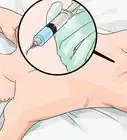
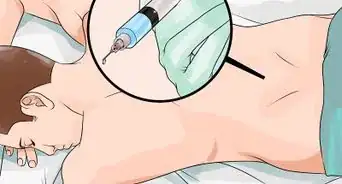
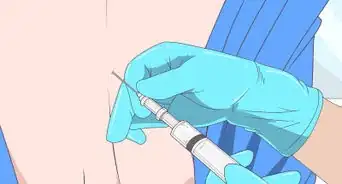
1Your doctor may be able to inject pain medication into a joint or muscle. They'll identify the source of your back pain to decide if an injection would help. For instance, if you have chronic joint inflammation, they'll inject an anesthetic mixture into the joint itself. For unidentified upper back pain, they'll inject the mixture into the trigger point which is a knot of muscle that doesn't relax.[13]
- Injections usually take around 30 minutes to do, but they can relieve pain for up to a few weeks or months. You can only get 3 facet joint injections within a 6-month period of time.
Advertisement

Method 14
Method 14 of 14:Discuss surgery as a last resort.
-
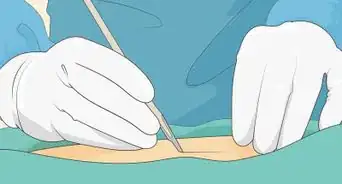
1Back surgery isn't common unless there are issues with your spine. Your doctor might talk to you about surgery for removing excess bone growth from osteoarthritis or to remove a herniated disc. You'll need to work closely with a surgical team to decide if surgery is right for you since there can be complications like nerve damage or paralysis.[14]
- If your doctor is the one to suggest surgery, it's a good idea to get a second opinion from a qualified spine specialist.

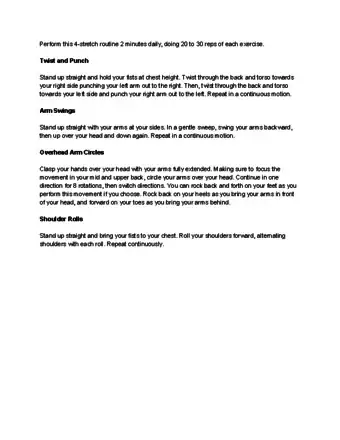
Stretching and Foam Rolling Routines for Upper Back Pain
Expert Q&A
-
QuestionHow can I prevent upper back pain when I'm training?
 Scott Anderson, MA, ATC, SFMA, DNSPScott Anderson is the Chief Clinical Officer at SyncThink, an award winning startup founded out of Stanford University. Scott previously served as the Director of Sports Medicine/Athletic Training for Stanford University for over ten years from 2007 to 2017. Scott has over 18 years of clinical and management experience, and is a recognized international speaker on topics of clinical specialization, which include developmental kinesiology, neuroscience/concussion, and movement dysfunction. He is a certified Dynamic Neuromuscular Stabilization Practitioner (DNSP), Sports Safety Specialist and is certified to conduct Selective Functional Movement Assessments (SFMA), and Functional Movement Screenings (FMS). He earned a BS in Athletic Training from Washington State University in 2000 and an MA in Athletic Administration from Saint Mary's College in 2002.
Sports Medicine & Injury Prevention SpecialistWhen people have pain in that area, it's because they haven't developed the proper postural control to support their upright posture during the day. That typically is because we have a head full position or because our cervical spine is too far in front of our torso. So in many cases, this causes increased stress and muscle tension on the tissue in the upper thoracic spine, the upper mid-back, and can create chronic tension in those tissues, which are liable to be injured if you're exercising them or adding additional stress to them. I always tell people, you have to look at the cervical spine and work your way down and adjust the postural components so that the musculature at the mid-back level is not doing extra work during the day just to support your upright posture. -
QuestionWhat causes pain in the upper back?
 Jarod Carter, DPT, CMTJarod Carter is a Physical Therapist, Consultant, and the Owner of Carter Physiotherapy, a manual physical therapy clinic in Austin, Texas focused on manual therapy as well as telehealth services to resolve pain and injuries. Dr. Carter has over 15 years of professional physical therapy experience. He received a DPT (Doctor of Physical Therapy) and an MTC (Manual Therapy Certification) from the University of St. Augustine for Health Sciences. Dr. Carter also holds a BS in Kinesiology from the University of Texas at Austin.
Physical TherapistUpper back pain can have multiple causes. It could be from a traumatic incident, such as a car wreck or a fall. Upper back pain could also come from bad posture and repetitive motions throughout the day.
Warnings
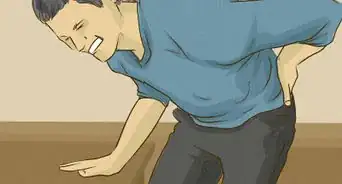
- Get emergency medical care if you have back pain after a major injury like a car crash, bad fall, or sports injury. You should also get emergency care if you have back pain along with fever or bowel and bladder control problems.[15]Thanks!

References
- ↑ https://www.mayoclinic.org/diseases-conditions/back-pain/diagnosis-treatment/drc-20369911
- ↑ https://health.clevelandclinic.org/topical-pain-relief-what-is-it-and-how-does-it-work/
- ↑ https://www.painscience.com/articles/epsom-salts.php
- ↑ https://health.clevelandclinic.org/should-you-use-ice-or-heat-for-pain-infographic/
- ↑ https://healthcenter.vt.edu/content/dam/healthcenter_vt_edu/assets/docs/MCOrthoRehab-UpperBack.pdf
- ↑ https://health.clevelandclinic.org/massage-rollers-and-more-how-to-ease-neck-and-back-pain-with-simple-tools/
- ↑ Jarod Carter, DPT, CMT. Physical Therapist. Expert Interview. 11 June 2020.
- ↑ Jarod Carter, DPT, CMT. Physical Therapist. Expert Interview. 11 June 2020.
- ↑ https://health.clevelandclinic.org/5-myths-about-massage-therapy/
- ↑ Jarod Carter, DPT, CMT. Physical Therapist. Expert Interview. 11 June 2020.
- ↑ http://www.mayoclinic.org/tests-procedures/acupuncture/basics/definition/prc-20020778
- ↑ https://healthcenter.vt.edu/content/dam/healthcenter_vt_edu/assets/docs/MCOrthoRehab-UpperBack.pdf
- ↑ https://journals.lww.com/ajpmr/Fulltext/2019/06000/Ultrasound_Guided_5_in_1_Injection__Trigger_Point.15.aspx
- ↑ https://www.mayoclinic.org/diseases-conditions/back-pain/in-depth/back-surgery/art-20048274
- ↑ https://www.mayoclinic.org/symptoms/back-pain/basics/when-to-see-doctor/sym-20050878
About This Article

Medical Disclaimer
The content of this article is not intended to be a substitute for professional medical advice, examination, diagnosis, or treatment. You should always contact your doctor or other qualified healthcare professional before starting, changing, or stopping any kind of health treatment.
To treat upper back pain, you can take over-the-counter anti-inflammatory medications like ibuprofen, naproxen, or aspirin for short-term pain relief. If your pain is from an injury that occurred in the last 48 hours, icing your upper back can help reduce swelling and combat pain. Light stretching and massage therapy are good options if you're dealing with a strained upper back muscle. If you want to try alternative therapies, consider seeing an acupuncturist or chiropractor. For tips on using a foam roller for pain relief, read on!