This article was co-authored by Jarod Carter, DPT, CMT and by wikiHow staff writer, Hannah Madden. Jarod Carter is a Physical Therapist, Consultant, and the Owner of Carter Physiotherapy, a manual physical therapy clinic in Austin, Texas focused on manual therapy as well as telehealth services to resolve pain and injuries. Dr. Carter has over 15 years of professional physical therapy experience. He received a DPT (Doctor of Physical Therapy) and an MTC (Manual Therapy Certification) from the University of St. Augustine for Health Sciences. Dr. Carter also holds a BS in Kinesiology from the University of Texas at Austin.
There are 9 references cited in this article, which can be found at the bottom of the page.
This article has been viewed 10,576 times.
If you often have a crick in your neck or shoulder pain at the end of the day, you might be experiencing tech neck. The hunched position that so many of us adopt when looking at our phones or computers can lead to pain, stiffness, and soreness over time.[1] Thankfully, tech neck isn’t permanent, and there are a few different ways you can treat and prevent tech neck to get some relief.

Steps
Question 1
Question 1 of 9:What causes tech neck?
-
1Leaning forward and hunching while on your computer or phone. Poor posture when sitting down can lead to a crick in your neck. Often, people sit with their backs hunched forward and their heads looking down, which can cause pain and discomfort.[2] [3]
- This is especially true when you’re on your phone a lot. Since it’s more difficult to hold your device at eye level, many of us hold it too low and force ourselves into bad posture.
Advertisement

Question 2
Question 2 of 9:What are the symptoms of tech neck?
-
1Neck and shoulder pain are the most common. The hunched-over posture puts a strain on your neck and shoulder area. You might feel stiff, store, or even get a pinch of pain between your shoulder blades.[4]
- This is especially true at the end of the day after you’ve been sitting with poor posture for a few hours.
-
2Headaches are another common symptom. Neck strain can cause tension headaches, so they’re a common side effect of tech neck. You might notice that your pain gets worse throughout the day.[5]
-
3Neck stiffness is a little less common. Some people report they have a hard time looking up after being in a hunched position for a long time. You might not be able to extend your neck fully or rotate your head all the way.[6]
- If you experience tingling or numbness in your neck, shoulders, or arms, you may have pinched a nerve in your neck.
Advertisement


Question 3
Question 3 of 9:What does tech neck look like?
-
1Over time, tech neck can lead to a rounded back. This is because your muscles will form to the shape of your poor posture, leading to a more rounded appearance. You might notice that you can’t stand up straight all the way or you have trouble sitting with good posture.[7]
- Tech neck is different from kyphosis, a curvature of the spine that can cause a rounded back. With tech neck, it’s the muscles that are rounded, not the spine itself.

Question 4
Question 4 of 9:Can tech neck be reversed?
-
1Yes, in most cases. Sitting with good posture and making sure you hold the posture all day can help relieve tension in your neck and shoulders.[8] You can also do exercises like rows, pullups, and neck stretches to strengthen and stretch your muscles.[9]
- If you struggle with keeping good posture, consider buying a posture corrector. These harnesses force your shoulders back and align your spine to hold your posture upright while you’re sitting down.
-
2You can change your tech habits to correct your posture. Use a tablet holder or stand to prop up your phone or tablet, make phone calls instead of texting, and take breaks from using technology every day.[10]
- When you’re using the computer, make sure your shoulders are relaxed and keep your elbows near your body to hold good posture.
Advertisement


Question 5
Question 5 of 9:What are some tech neck treatment exercises?
-
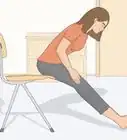
1Do neck twists and neck tilts to stretch your neck muscles. To do a neck twist, sit or stand upright and slowly twist your head to look over your left shoulder. Hold the twist for 10 seconds, then twist over to the right. To do a neck tilt, sit up straight and slowly drop your ear down to your left shoulder. Hold the stretch for 10 seconds, then switch to the other side.[11]
- You can do these stretches 3 to 5 times each on both sides.
-
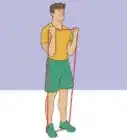
2Try rows to strengthen your back muscles. To do an upright row, stand with your feet shoulder-width apart and grab 2 dumbbells with your palms facing your thighs. Slowly bring the weights up your body, sticking your elbows out to the side (kind of like you’re zipping up a jacket). Lower the weights down to the original position, then repeat that 12 times.[12]
- Start with a weight that’s 4 to 11 pounds (1.8 to 5.0 kg). As you get stronger, you can add more weight.
-
3Do shoulder stretches and shoulder rolls to stretch your shoulders. To do a shoulder stretch, lift your shoulders up toward your ears as high as they can go, then hold the position for 10 seconds. For a shoulder roll, sit up straight and slowly roll your shoulders up and backwards 10 times.[13]
- You can repeat each of these stretches 3 to 5 times.
Advertisement


Question 6
Question 6 of 9:What helps with tech neck pain?
-
1Take breaks from using technology. Try to take a break every 15 minutes to stand up, stretch, or walk around. This will not only be good for your tech neck, but it can boost your productivity levels and improve your overall health.[14]
- Your breaks don’t have to be long at all. Just spend 1 to 2 minutes away from your desk or your phone.
-
2Shift your weight and adjust your posture. When you notice your neck or back starting to get sore, shift your weight, adjust your posture, or stand up. Moving your body to a more comfortable position can help alleviate some of the pain and soreness.[15]
-
3Lean back when you sit down. If you often sit down throughout the day, get a chair with good lumbar support. Lean back and use the chair to support your body so you can sit up straight without fatiguing your muscles.[16]
- Sitting up perfectly straight for long periods of time will actually tire you out more. Try to lean back as you work to use your chair to keep your back upright.
Advertisement


Question 7
Question 7 of 9:Can a chiropractor fix tech neck?
-
1They can help temporarily, but not permanently. Studies have shown that chiropractors are generally unhelpful with neck pain, and they can’t “fix” pain, soreness, or stiffness in the neck. They might offer relief for a few minutes or a few hours, but neck pain always comes back in the end.[17]
- It’s better to work on strength-training exercises as a long-term solution.

Question 8
Question 8 of 9:Can a massage therapist fix tech neck?
-
1Massages can help relieve the symptoms of tech neck. However, they won’t be able to fix your tech neck for you. If you’re experiencing a lot of pain, stiffness, and soreness, a massage therapist can help with that.[18]
- Massages work well for some people and not as well for others. It’s worth a try if your neck and shoulder pain is getting unbearable or you feel stiff and sore on a daily basis.
Advertisement

Question 9
Question 9 of 9:What’s the best way to sleep with tech neck?
-
1Sleep on your side or your back. Sleeping on your stomach can force your neck into an unnatural position as you sleep. Try to stretch and elongate your neck by sleeping on your side or on your back.[19]
-
2Use a feather or memory foam pillow. Pillows like these will conform to the shape of your head, and they won’t force your neck upwards. If you’re sleeping on your side, try to adjust your pillow so your neck is level with your head.[20]
- If you use a feather pillow, you’ll have to replace it every year as the feathers tend to lose their fluff over time.
-
3Support your neck during travel with a horseshoe pillow. Travel pillows, or horseshoe pillows, can save you from an uncomfortable sleep when you’re on a train, plane, or bus. They’re especially important for people with neck issues, since they can help avoid strain and pain.[21]
- If you often fall asleep watching TV, you could even use a travel pillow at home to support your neck as you doze.
Advertisement


Expert Q&A
Did you know you can get expert answers for this article?
Unlock expert answers by supporting wikiHow
-
QuestionI always forget to sit with good posture at work. What can I do?
 Jarod Carter, DPT, CMTJarod Carter is a Physical Therapist, Consultant, and the Owner of Carter Physiotherapy, a manual physical therapy clinic in Austin, Texas focused on manual therapy as well as telehealth services to resolve pain and injuries. Dr. Carter has over 15 years of professional physical therapy experience. He received a DPT (Doctor of Physical Therapy) and an MTC (Manual Therapy Certification) from the University of St. Augustine for Health Sciences. Dr. Carter also holds a BS in Kinesiology from the University of Texas at Austin.
Physical TherapistGet a reminder, like an app on your phone or an extension on your computer. There are a lot of different ones that you can get depending on your system. You just need something to pop up regularly and remind you to sit with good posture.
Support wikiHow by unlocking this expert answer.








References
- ↑ Jarod Carter, DPT, CMT. Physical Therapist. Expert Interview. 11 June 2020.
- ↑ https://www.health.harvard.edu/pain/prevent-pain-from-computer-use
- ↑ Jarod Carter, DPT, CMT. Physical Therapist. Expert Interview. 11 June 2020.
- ↑ https://www.health.harvard.edu/staying-healthy/the-surprising-side-effects-from-using-technology
- ↑ https://www.painscience.com/tutorials/neck-pain.php
- ↑ https://healthmatters.nyp.org/how-to-prevent-tech-neck/
- ↑ https://www.nhs.uk/live-well/exercise/common-posture-mistakes-and-fixes/
- ↑ Jarod Carter, DPT, CMT. Physical Therapist. Expert Interview. 11 June 2020.
- ↑ https://www.gla.ac.uk/media/Media_730161_smxx.pdf
- ↑ https://www.health.harvard.edu/pain/prevent-pain-from-computer-use
- ↑ https://www.gla.ac.uk/media/Media_730161_smxx.pdf
- ↑ https://www.health.harvard.edu/pain/strength-training-relieves-chronic-neck-pain
- ↑ https://www.health.harvard.edu/pain/strength-training-relieves-chronic-neck-pain
- ↑ https://www.health.harvard.edu/pain/prevent-pain-from-computer-use
- ↑ https://www.health.harvard.edu/pain/prevent-pain-from-computer-use
- ↑ https://healthmatters.nyp.org/how-to-prevent-tech-neck/
- ↑ https://www.painscience.com/tutorials/neck-pain.php
- ↑ https://www.painscience.com/tutorials/neck-pain.php
- ↑ https://www.painscience.com/tutorials/neck-pain.php
- ↑ https://www.health.harvard.edu/pain/say-good-night-to-neck-pain
- ↑ https://www.health.harvard.edu/pain/say-good-night-to-neck-pain
- ↑ https://healthmatters.nyp.org/how-to-prevent-tech-neck/











































Medical Disclaimer
The content of this article is not intended to be a substitute for professional medical advice, examination, diagnosis, or treatment. You should always contact your doctor or other qualified healthcare professional before starting, changing, or stopping any kind of health treatment.
Read More...