X
This article was co-authored by wikiHow Staff. Our trained team of editors and researchers validate articles for accuracy and comprehensiveness. wikiHow's Content Management Team carefully monitors the work from our editorial staff to ensure that each article is backed by trusted research and meets our high quality standards.
There are 8 references cited in this article, which can be found at the bottom of the page.
Learn more...
If you’ve ever had strep throat, you know it’s no fun at all. Sometimes, the bacteria that causes strep throat can also cause an inflammatory response known as poststreptococcal syndrome. Luckily, you can treat and manage your symptoms while your body heals and recovers.
Steps
Question 1
Question 1 of 8:Background
Question 1
-
1Inflammatory syndromes happen after a streptococcus infection. An infection caused by a group-A streptococcus bacteria (such as strep throat) can cause different inflammatory syndromes in your body after it clears up. These syndromes usually occur a week or so after the strep infection.[1]
- Common inflammatory syndromes include rheumatic fever, scarlet fever, poststreptococcal reactive arthritis, and poststreptococcal glomerulonephritis (kidney inflammation).
- Group-A streptococcus bacteria can also cause other infections such as cellulitis, impetigo, necrotizing fasciitis, and streptococcal toxic shock, but these are different than syndromes that are triggered by an infection.[2]
-
2Children are the most susceptible to poststreptococcal syndromes. While anybody can be affected, post-strep diseases commonly affect younger people. Children and teenagers are much more likely to develop a poststreptococcal syndrome than adults.[3]
- Children younger than 3 usually aren’t affected by group-A streptococcus bacteria.

Question 2
Question 2 of 8:Causes
Question 2
-
1Strep bacteria triggers an inflammatory response. Poststreptococcal syndromes aren’t really caused by the strep bacteria itself. It’s actually your immune system’s response to the infection. The strep bacteria triggers an inflammatory response that leads to a syndrome.[4]

Question 3
Question 3 of 8:Symptoms
Question 3
-
1Rheumatic fever can cause fever, joint pain, and heart problems. Rheumatic fever is a generalized inflammatory response that develops after a strep throat infection. Its symptoms include fever, tender joints, chest pain, shortness of breath, and a rapid heartbeat. You can also have fatigue, uncontrollable body movements (known as “chorea”), rash, and lumps beneath your skin near your joints.[5]
-
2Scarlet fever is characterized by a prominent rash. Scarlet fever, also known as scarlatina, develops in some people who have strep throat. Along with a sore throat and high fever, it also causes a bright red rash that covers most of your body.[6]
- Scarlet fever is most common in children aged 5-15 years old.
-
3Reactive arthritis can cause joint pain, swelling, and fever. Symptoms of post-strep reactive arthritis are similar to rheumatic fever and can include joint pain and swelling. But it doesn’t cause any heart-related symptoms.[7]
-
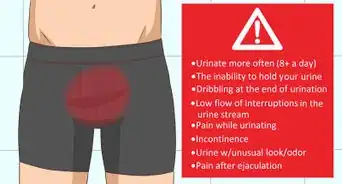
4Glomerulonephritis can cause dark urine and swelling in your feet or face. Post-strep glomerulonephritis causes your kidneys to become inflamed. It can cause changes in the color of your urine and swelling in your feet and face, known as edema.[8]

Question 4
Question 4 of 8:Diagnosis
Question 4
-
1See your doctor for a throat swab to look for strep bacteria. If you have throat pain, painful swallowing, red and swollen tonsils, fever, headache, and body aches, you could have strep throat.[9] See a doctor as soon as you can so they can swab your throat to check for group-A streptococcus bacteria and prescribe medication and antibiotics that can help you fight off the infection and prevent poststreptococcal syndromes.[10]
- A throat swab can also confirm a diagnosis of rheumatic fever, scarlet fever, and poststreptococcal reactive arthritis. If you have the symptoms of these syndromes, a swab will identify whether or not strep bacteria is the cause.
-
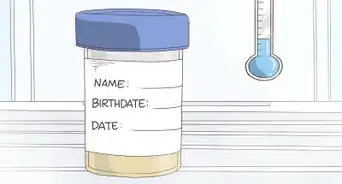
2Get a urine test to check for poststreptococcal glomerulonephritis (PSGN). PSGN is a kidney disease caused by a strep infection. Provide a urine sample to your doctor so they can test and analyze it to look for protein and blood that will help them confirm a diagnosis. Your doctor may also test your blood to see how well your kidneys are functioning and swab your throat to check for strep bacteria.[11]

Question 5
Question 5 of 8:Treatment
Question 5
-
1Take antibiotics as prescribed to knock out a strep infection. If you do have strep bacteria, your doctor will prescribe antibiotics. It’s important that you take them as prescribed until they’re finished. Don’t miss any doses and don’t stop taking them if you start feeling better.[12]
- Antibiotics are also used to treat scarlet fever.[13]
-
2Use NSAIDs or aspirin to reduce pain, fever, and inflammation. Nonsteroidal anti-inflammatory drugs (NSAIDs) like ibuprofen (Advil), naproxen (Aleve), and aspirin can help reduce pain and inflammation caused by poststreptococcal syndromes such as scarlet fever, rheumatic fever, and poststreptococcal reactive arthritis. They can also help reduce your fever while your body fights off the inflammation.[14]
- You can buy NSAIDs over-the-counter at your local pharmacy.
- Your doctor may prescribe stronger NSAIDs if you need them.
-
3Take diuretics and blood pressure medication to treat PSGN. Limit your salt and water intake to help decrease swelling by taking diuretics, which will increase the flow of your urine. Additionally, because high blood pressure is a symptom of PSGN, taking blood pressure medication can also help treat the syndrome.[15]

Question 6
Question 6 of 8:Prognosis
Question 6
-
1Most people recover, but it needs to be treated. The good news is that you will eventually recover from your post-strep syndrome, and most treatments are aimed at making you feel better while your body deals with the inflammation. However, if you don’t treat the original infection, or you don’t take care of your symptoms, it could lead to complications such as heart problems and high blood pressure.[16]

Question 7
Question 7 of 8:Prevention
Question 7
-
1Wash your hands and practice good hygiene to avoid getting strep. Group-A streptococcus bacteria is super contagious and easy to spread. Practicing basic hygiene and washing your hands often, especially if you’re in contact with someone who has strep-throat, can help reduce your chances of getting an infection that could lead to poststreptococcal syndrome.[19]
-
2Treat your strep throat immediately to prevent poststreptococcal syndromes. If you have strep throat, your doctor will prescribe an antibiotic such as penicillin or amoxicillin, which will usually knock out the infection. Take the antibiotics as prescribed to take care of the infection and reduce your chances of developing an inflammatory syndrome.[20]

Question 8
Question 8 of 8:Additional Info
Question 8
-
1Poststreptococcal syndrome is not contagious. While strep throat is a highly contagious bacterial infection, poststreptococcal syndrome is an inflammatory response caused by your own body’s immune system. That means it can’t be transmitted from one person to another.[21]

Warnings
- Strep throat can lead to serious medical issues if it isn’t properly treated. See your doctor if you show any signs of strep throat.Thanks!








References
- ↑ https://www.aafp.org/afp/2018/0415/p517.html
- ↑ https://www.cdc.gov/groupastrep/diseases-public/index.html
- ↑ https://www.hss.edu/condition-list_poststreptococcal-inflammatory-syndromes.asp
- ↑ https://www.cdc.gov/groupastrep/diseases-public/rheumatic-fever.html
- ↑ https://www.cdc.gov/groupastrep/diseases-public/rheumatic-fever.html
- ↑ https://www.mayoclinic.org/diseases-conditions/scarlet-fever/symptoms-causes/syc-20377406
- ↑ https://www.hss.edu/condition-list_poststreptococcal-inflammatory-syndromes.asp
- ↑ https://www.hss.edu/condition-list_poststreptococcal-inflammatory-syndromes.asp
- ↑ https://www.mayoclinic.org/diseases-conditions/strep-throat/symptoms-causes/syc-20350338
- ↑ https://www.cdc.gov/groupastrep/diseases-public/rheumatic-fever.html
- ↑ https://www.cdc.gov/groupastrep/diseases-public/post-streptococcal.html
- ↑ https://www.cdc.gov/groupastrep/diseases-public/rheumatic-fever.html
- ↑ https://www.mayoclinic.org/diseases-conditions/scarlet-fever/symptoms-causes/syc-20377406
- ↑ https://www.hss.edu/condition-list_poststreptococcal-inflammatory-syndromes.asp
- ↑ https://www.cdc.gov/groupastrep/diseases-public/post-streptococcal.html
- ↑ https://www.kidshealth.org.nz/poststreptococcal-glomerulonephritis-psgn
- ↑ https://www.hss.edu/condition-list_poststreptococcal-inflammatory-syndromes.asp
- ↑ https://www.aafp.org/afp/2018/0415/p517.html
- ↑ https://www.cdc.gov/groupastrep/diseases-public/rheumatic-fever.html
- ↑ https://www.hss.edu/condition-list_poststreptococcal-inflammatory-syndromes.asp
- ↑ https://www.cdc.gov/groupastrep/diseases-public/rheumatic-fever.html
- ↑ https://www.cdc.gov/groupastrep/diseases-public/rheumatic-fever.html














































Medical Disclaimer
The content of this article is not intended to be a substitute for professional medical advice, examination, diagnosis, or treatment. You should always contact your doctor or other qualified healthcare professional before starting, changing, or stopping any kind of health treatment.
Read More...