This article was co-authored by Pippa Elliott, MRCVS. Dr. Elliott, BVMS, MRCVS is a veterinarian with over 30 years of experience in veterinary surgery and companion animal practice. She graduated from the University of Glasgow in 1987 with a degree in veterinary medicine and surgery. She has worked at the same animal clinic in her hometown for over 20 years.
This article has been viewed 3,707 times.
Older dogs can develop heart problems. There are many forms of heart disease, but problems with the heart valves is most common. The heart valves, which keep blood flowing through the heart properly, can weaken and wear out in older dogs. This causes some blood to flow in the wrong direction, leading to a type of cardiac disease called valvular disease.[1] Although cardiac disease in older dogs has no cure, it can be managed with medication and lifestyle changes.[2]
Steps
Method 1
Method 1 of 2:Treating with Medication
-
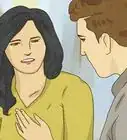
1Talk with your vet. If your vet has diagnosed your dog with cardiac disease, you will need to decide how you want to treat it. Medications are effective at treating cardiac disease in older dogs. As you discuss the treatment options with your vet, ask some questions:
- How long will my dog need to take medication?
- Will the medications have bad side effects?
- How much will the medications cost?
- Will my dog’s heart get better?
- How often will my dog need to come back to the vet’s office?
-
2Allow your dog’s veterinarian to perform imaging tests. A cardiac heart scan may give your veterinarian valuable information about the size of the heart and how diseased it is. X-rays can also provide your vet with useful information about heart size and lung congestion. Having this information will allow your vet to choose the best medication to treat your dog’s condition.Advertisement
-
3Follow prescription instructions. Your vet will likely prescribe several medications for you to give your dog. Each medication will have its own set of instructions. Follow these instructions carefully. If you have any questions about how to give each medication, ask your vet.
- You will likely give the medications by mouth.
-
4Prevent fluid buildup in your dog’s lungs. In older dogs with cardiac disease, a valve on the left side of the heart (mitral valve) is most commonly affected. When the mitral valve stops working well, fluid can buildup in a dog’s lungs. To get rid of this excess fluid, your vet will prescribe a medication called a diuretic.[3]
- Diuretics cause a dog to urinate more frequently. Increased urination will remove the excess fluid.[4]
-
5Lower your dog’s blood pressure. Cardiac disease often leads to high blood pressure in older dogs. Several types of medication, including beta blockers and ACE inhibitors, slow the heart rate and lower blood pressure.[5] By lowering the blood pressure, blood is able to move through the heart more easily.
-
6
-
7
-
8Watch for improvement in clinical signs. Along with coughing, breathing problems are a common sign of cardiac disease in older dogs. With medication, you should notice your older dog breathing more easily and slowly.[10] With less fluid buildup in the lungs, your dog will also start coughing less.
-
9Adjust your dog’s medication over time. Cardiac disease gradually gets worse. As your dog’s mitral valve function worsens, your vet will need to make changes to your dog’s medications.[11] For example, your vet may need to increase the dose of certain medications.Advertisement


Method 2
Method 2 of 2:Making Lifestyle Changes
-
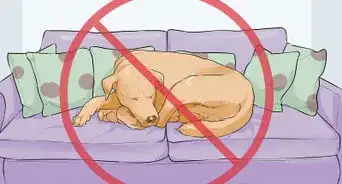
1Feed your dog a low-salt diet. In addition to treating cardiac disease with medication, you will need to make changes to your older dog’s lifestyle. For example, your vet will recommend switching your dog to a low-salt diet, which will help prevent fluid buildup in your dog’s body.[12]
- Low-salt prescription diets are available through your vet.[13]
- Switch your dog to the new diet gradually. Over one to two weeks, mix more of the new diet in with the old diet until your dog is eating only the new diet.
- Let your vet know if your dog does not like the new diet. Your vet may recommend another diet for your dog.
-
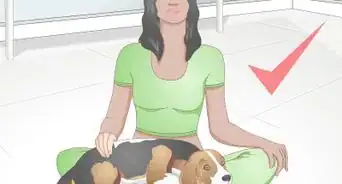
2Limit your dog’s exercise. Dogs with cardiac disease can’t tolerate much exercise because their hearts don’t work very well. To manage your older dog’s cardiac disease, limit your dog’s exercise. Rather than taking your dog for a run or playing fetch, take your dog for easy, leisurely walks.
- Your older dog’s heart shouldn’t have to work any harder than it has to.
- Ask your veterinarian about an appropriate exercise schedule for your dog. If your dog has early stage heart disease, then he may benefit from regular walks. However, a dog with late stage heart failure will need to rest as much as possible.
-
3Decrease your dog’s stress. Like exercise, stress can make a dog’s heart beat faster and work harder. Without a well-functioning heart, your dog won’t be able to handle stress very well. Keep your dog’s life as stress free as possible:
- Keep your dog’s daily routine the same.
- If you have young children, do not let them play roughly with your dog.
- Limit your dog’s interactions with unfamiliar pets or people.
-
4Get your dog to an ideal weight. Excess weight can put stress on a dog’s body and make the heart work harder. If your dog is overweight, help it lose weight.[14] Because you won’t be able to increase your dog’s physical activity by very much, you may need to make adjustments to your dog’s diet.
- Talk with your vet about ways to get your dog to its ideal weight.
- If your dog is already at an ideal weight, try to maintain this ideal weight by not overfeeding your dog or giving it table foods.
Advertisement


Expert Q&A
-
QuestionCan a dog's heart murmur be treated?
 Pippa Elliott, MRCVSDr. Elliott, BVMS, MRCVS is a veterinarian with over 30 years of experience in veterinary surgery and companion animal practice. She graduated from the University of Glasgow in 1987 with a degree in veterinary medicine and surgery. She has worked at the same animal clinic in her hometown for over 20 years.
VeterinarianThe murmur cannot be reversed but the effects can be minimized in order to protect heart health. The key to this is an ultrasound scan to measure the size of the heart and work out if it is appropriate to start medication. Caught early, before marked heart enlargement, drugs such as pimobendan can extend life expectancy by months to years. -
QuestionIs heart failure in dogs treatable?Pippa Elliott, MRCVSDr. Elliott, BVMS, MRCVS is a veterinarian with over 30 years of experience in veterinary surgery and companion animal practice. She graduated from the University of Glasgow in 1987 with a degree in veterinary medicine and surgery. She has worked at the same animal clinic in her hometown for over 20 years.
VeterinarianYes, heart failure is treatable as there are many highly sophisticated and effective drugs available. Options include drugs such as pimobendan which helps the heart to pump and diuretics such as frusemide or spironolactone which reduce fluid retention and make the dog more comfortable. -
QuestionWhat are the signs of a heart condition in a dog?Pippa Elliott, MRCVSDr. Elliott, BVMS, MRCVS is a veterinarian with over 30 years of experience in veterinary surgery and companion animal practice. She graduated from the University of Glasgow in 1987 with a degree in veterinary medicine and surgery. She has worked at the same animal clinic in her hometown for over 20 years.
VeterinarianThere is a difference between a heart condition and heart failure. Many heart conditions are 'silent' and only show symptoms once they develop into disease. Signs of heart failure include a night-time cough, lack of energy, rapid breathing, and a racing heart. -
QuestionCan heart disease be reversed in dogs?Pippa Elliott, MRCVSDr. Elliott, BVMS, MRCVS is a veterinarian with over 30 years of experience in veterinary surgery and companion animal practice. She graduated from the University of Glasgow in 1987 with a degree in veterinary medicine and surgery. She has worked at the same animal clinic in her hometown for over 20 years.
VeterinarianThe symptoms of heart disease can be reversed, but the physical damage to the heart itself cannot be. Modern medications are extremely effective at alleviating fluid buildup in the lungs, reducing the resistance to blood flow, and helping the heart to pump more easily.
Warnings
- Eventually, cardiac disease in older dogs will lead to heart failure.Thanks!
References
- ↑ http://www.vcahospitals.com/main/pet-health-information/article/animal-health/mitral-valve-disease-in-dogs/842
- ↑ https://www.vet.cornell.edu/hospitals/companion-animal-hospital/cardiology/leaky-valve-disease-older-dogs
- ↑ https://www.vet.cornell.edu/hospitals/companion-animal-hospital/cardiology/leaky-valve-disease-older-dogs
- ↑ http://www.peteducation.com/article.cfm?c=2+2096&aid=462
- ↑ http://www.vcahospitals.com/main/pet-health-information/article/animal-health/mitral-valve-disease-in-dogs/842
- ↑ http://vet.tufts.edu/heartsmart/treatments/congestive-heart-failure/
- ↑ http://www.vcahospitals.com/main/pet-health-information/article/animal-health/mitral-valve-disease-in-dogs/842
- ↑ http://www.vcahospitals.com/main/pet-health-information/article/animal-health/mitral-valve-disease-in-dogs/842
- ↑ http://vet.tufts.edu/heartsmart/treatments/congestive-heart-failure/
- ↑ http://www.2ndchance.info/heart.htm
- ↑ https://www.vet.cornell.edu/hospitals/companion-animal-hospital/cardiology/leaky-valve-disease-older-dogs
- ↑ http://olddoghaven.org/heart-disease-in-geriatric-dogs/
- ↑ http://www.vcahospitals.com/main/pet-health-information/article/animal-health/mitral-valve-disease-in-dogs/842
- ↑ http://www.peteducation.com/article.cfm?c=2+2096&aid=462
- ↑ https://www.vet.cornell.edu/hospitals/companion-animal-hospital/cardiology/leaky-valve-disease-older-dogs
- ↑ http://olddoghaven.org/heart-disease-in-geriatric-dogs/
About This Article

You can treat cardiac disease in an older dog by gradually starting it on a low-salt diet, which can help prevent fluid buildup in its body. Additionally, to reduce strain on its heart, you should opt for leisurely walks rather than running or playing fetch. In addition to lifestyle changes, talk with your vet about what medication is best for your dog. Once your dog has been prescribed a medication, make sure to follow the prescription instructions carefully. To learn how to adjust your dog’s medication over time, read more from our Veterinarian co-author.