This article was medically reviewed by Roy Nattiv, MD and by wikiHow staff writer, Eric McClure. Dr. Roy Nattiv is a board-certified Pediatric Gastroenterologist in Los Angeles, California. who specializes in a broad range of pediatric gastrointestinal and nutritional illnesses such as constipation, diarrhea, reflux, food allergies, poor weight gain, SIBO, IBD, and IBS. Dr. Nattiv received his undergrad degree from the University of California, Berkeley, and his medical degree (MD) from the Sackler School of Medicine in Tel Aviv, Israel. He completed his pediatric residency at the Children’s Hospital at Montefiore, Albert Einstein College of Medicine in New York, and his fellowship at the University of California, San Francisco (UCSF). While at UCSF, he was a California Institute of Regenerative Medicine (CIRM) fellowship trainee and was awarded the North American Society for Pediatric Gastroenterology, Hepatology, and Nutrition (NASPGHAN) Fellow to Faculty Award in Pediatric IBD Research. In addition to his clinical work, Dr. Nattiv is active in the research community and has been published in several high-impact medical journals.
There are 27 references cited in this article, which can be found at the bottom of the page.
wikiHow marks an article as reader-approved once it receives enough positive feedback. This article has 12 testimonials from our readers, earning it our reader-approved status.
This article has been viewed 642,983 times.
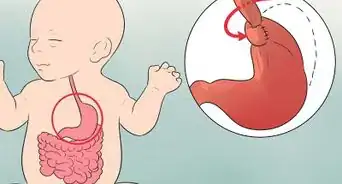
Acid reflux is the backflow of stomach acid into the esophagus, throat, or mouth. It can be unpleasant, but it helps to know that this is a fairly normal occurrence for most folks. It usually isn’t a big deal, but if you experience this regularly, you may have chronic acid reflux as a result of gastroesophageal reflux disease (GERD). If you suspect you have GERD, check in with a doctor to discuss potential solutions. GERD requires treatment, but it’s often extremely manageable with a few lifestyle changes and the occasional antacid![1]
Here are 12 effective ways to treat acid reflux.
Steps
Method 1
Method 1 of 12:Cut back on spicy, fatty, and salty foods.
-
1Foods high in salt, fat, or spice tend to promote acid production. Cutting back on these ingredients and dishes may help the acids in your stomach stay stable. See if reducing how much fat and salt you incorporate in your diet helps curb your acid reflux, and avoid overdoing it with the spicy ingredients to keep your stomach calm. Specific foods that may make acid reflux worse include:[2]Advertisement


Method 2
Method 2 of 12:Eat more fiber, alkaline foods, and water-based foods.
-
1These foods will help settle the acids in your stomach to prevent acid reflux. Fiber helps by keeping you from overeating, which is a big part of avoiding acid reflux. Alkaline foods balance out acids in your stomach, a food with a high-water content can help dilute any acids you consume.[8]

Method 3
Method 3 of 12:Have smaller meals more frequently.
-
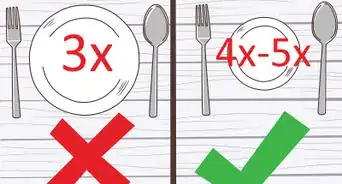
1Eating larger meals makes it easier for acids to come back up. When you eat a big meal, it causes your stomach to stretch. This puts excessive pressure on lower esophageal sphincter (the ring of muscle that controls the opening between your stomach and your esophagus). This allows acid and other stomach contents to enter your esophagus. Aim to eat smaller portions, and give yourself 10-15 minutes after finishing a dish to see if you really need a second serving.[12] Wait until you no longer feel full before eating more food.[13] [14]
- Eating 4-6 small meals every day is not only going to help treat your acid reflux, it’s also a great way to help you lose weight, maintain a healthy metabolism, and stay energetic throughout the day![15]
Advertisement

Method 4
Method 4 of 12:Sit or stand instead of lying down after eating.
-
1Remaining upright utilizes gravity to keep acids down. If you can’t stand, at least sit up. Any acids in your gut will be less likely to come back up if your digestive system remains upright. After eating, don’t lie down or lean back in your chair for at least 3 hours, if possible. Avoiding post-lunch naps and midnight snacks will help here as well.[16]
- You don’t want to do any heavy exercise after eating, either. Just take it easy and try to stay upright!
- Elevating your head while you sleep is a great way to avoid acid reflux in the middle of the night or early in the morning. This is especially helpful if you happen to eat before bedtime.[17]

Method 5
Method 5 of 12:Wear loose-fitting clothing to give your stomach space.
-
1Giving your gut room to breathe may help reduce the odds you get acid reflux. On its own, wearing loose clothing is unlikely to make a huge impact, but it’s definitely going to help if you’re taking other steps to prevent acid reflux.[18] Tight waistbands compress the internal organs and may block digestion.[19] Wear pants and skirts with elastic waistbands. If you wear form-fitting clothes and heavy fabrics at the office, change into sweats or other comfortable clothing as soon as you get home.
- Loose-fitting clothing can also be a lot more comfortable for most folks!
Advertisement

Method 6
Method 6 of 12:Maintain a healthy weight to take pressure off your stomach.
-
1If you’re overweight, shedding a few pounds will have a huge impact. Losing weight will help a ton, since obesity is a major risk factor for chronic acid reflux.[20] It’s not entirely known why obesity causes acid reflux, but it appears that extra weight puts pressure on the sphincter between your stomach and your esophagus, which causes acid to rise back up. Diet and exercise may eliminate symptoms without requiring further treatment.[21]
- Talk to your doctor or a registered dietitian to get advice on how to lose weight safely and effectively.

Method 7
Method 7 of 12:Stop smoking to keep your esophagus healthy.
-
1If you’re a tobacco user, smoking will likely make your acid reflux worse. When you smoke, the smoke travels through your throat and grazes against the muscle that protects your esophagus.[22] Over time, this can wear down that muscle and make it easier for acids to come back up.[23] Talk to your doctor about quitting smoking if you’re an active tobacco user.
- Nictoine-replacement therapy, like nicotine gum or patches, can be highly effective when it comes to quitting permanently.[24]
Advertisement

Method 8
Method 8 of 12:Take an antacid to soothe your symptoms.
-
1A simple antacid will quickly curb any irritation you experience. It’s not a cure to your problem, but antacids like Mylanta, Rolaids, and Tums will definitely help you find relief in the moment. Antacids act quickly to neutralize stomach acids, so don’t take them multiple times a day as overusing antacids may cause diarrhea.[25]
- If you take multiple antacids every day, it may eventually lead to kidney problems. They’re perfectly safe every now and then, but don’t take them daily.[26]
- Antacids can affect the way your body absorbs other medications. Take any other medicine at least 1 hour before or 4 hours after taking antacids. Check with your doctor to find out how antacids might interact with your other medications.[27]

Method 9
Method 9 of 12:Talk to a doctor about probiotics.
-
1Probiotics may help balance out stomach acids, but they aren’t for everyone. Some people experience acid reflux because their stomach acid levels are naturally a little off, which can contribute to poor digestion and lead to acid reflux. Talk to your doctor about whether your acid reflux might be related to stomach acid issues, and ask them if digestive enzymes and probiotic supplements might help.[28]
- For some people, probiotics may actually make the problem worse, so definitely discuss this with a doctor. Even if eating something like probiotic yogurt won’t really do any harm to your health, it may exacerbate your acid reflux depending on your other conditions and overall health.[29]
Advertisement

Method 10
Method 10 of 12:Take H2 blockers if you expect to get acid reflux.
-
1If you suspect you’ll get acid reflux soon, take an H2 blocker. Medications such as ranitidine (Zantac), cimetidine (Tagamet) and famotidine (Pepcid) act to block the histamine receptors that signal your stomach to produce acid.[30] This makes them a great choice if you’re trying to prevent acid reflux if you expect you’re going to have it in the next couple of hours.[31]
- H2 blockers are generally safe, and you can buy them over-the-counter. Talk to your doctor if you have any side effects or have questions about these medications.[32]
- You can also take an H2 blocker to treat acid reflux after it has occurred, but they take roughly an hour to kick in,[33] and acid reflux often goes away on its own before the H2 blocker starts working.

Method 11
Method 11 of 12:Ask a doctor about omeprazole for chronic acid reflux.
-
1If you have regular acid reflux, taking omeprazole daily will help. Omeprazole (Prilosec) is mainly thought of as a medication for heartburn, but it’s a good option for long-term acid reflux issues. Studies show that taking 20 mg of omeprazole once a day will dramatically help with chronic acid reflux.[34] However, omeprazole can interact with a lot of other medications, so talk to your doctor about this before you pick some Prilosec up at the store and start taking it.[35]
- Other medications in this class that may help include Prevacid and Nexium.[36] However, most of the research on this class of medication have been on omeprazole, so that’s likely going to be your best bet.
Advertisement

Method 12
Method 12 of 12:See a doctor if you have chronic acid reflux.
-
1If you’ve been trying to treat chronic acid reflux on your own, see a doctor. Chronic acid reflux, also known as gastroesophageal reflux disease (GERD) is a diagnosis on its own. However, there are a lot of underlying conditions that could be making the problem worse, and there are long-term complications you need to keep an eye on. If it’s especially bad, they’ll be able to walk you through potential surgical solutions as well.[37]
- If GERD goes untreated, it could lead to permanent damage to your esophagus or increase your risk for cancer.[38]
- Laparoscopic antireflux surgery is typically necessary if lifestyle changes and medications are unable to treat acid reflux and it’s a regular problem interfering in your life. It’s a minimally-invasive procedure that involves putting a valve on the esophagus to keep acids from coming up.[39]

Expert Q&A
Did you know you can get expert answers for this article?
Unlock expert answers by supporting wikiHow
-
QuestionWould almond milk be good because it doesn't have lactic acid?
 Sarah Gehrke, RN, MSSarah Gehrke is a Registered Nurse and Licensed Massage Therapist in Texas. Sarah has over 10 years of experience teaching and practicing phlebotomy and intravenous (IV) therapy using physical, psychological, and emotional support. She received her Massage Therapist License from the Amarillo Massage Therapy Institute in 2008 and a M.S. in Nursing from the University of Phoenix in 2013.
Registered NurseAlmond milk is a low-acidic food with calcium, which is a good option for someone with frequent heartburn. It is not because it doesn't have lactic acid.
Support wikiHow by unlocking this expert answer.
-
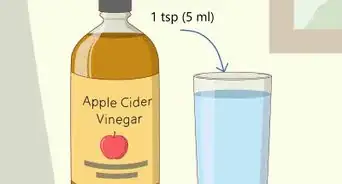
QuestionWill drinking apple cider help acid reflux?Sarah Gehrke, RN, MSSarah Gehrke is a Registered Nurse and Licensed Massage Therapist in Texas. Sarah has over 10 years of experience teaching and practicing phlebotomy and intravenous (IV) therapy using physical, psychological, and emotional support. She received her Massage Therapist License from the Amarillo Massage Therapy Institute in 2008 and a M.S. in Nursing from the University of Phoenix in 2013.
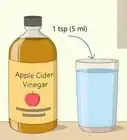
Registered NurseApple cider vinegar, not apple cider, may help with acid reflux because it is full of enzymes and may help you break down food.Support wikiHow by unlocking this expert answer.
-
QuestionWhat foods should I avoid with acid reflux?
 Roy Nattiv, MDDr. Roy Nattiv is a board-certified Pediatric Gastroenterologist in Los Angeles, California. who specializes in a broad range of pediatric gastrointestinal and nutritional illnesses such as constipation, diarrhea, reflux, food allergies, poor weight gain, SIBO, IBD, and IBS. Dr. Nattiv received his undergrad degree from the University of California, Berkeley, and his medical degree (MD) from the Sackler School of Medicine in Tel Aviv, Israel. He completed his pediatric residency at the Children’s Hospital at Montefiore, Albert Einstein College of Medicine in New York, and his fellowship at the University of California, San Francisco (UCSF). While at UCSF, he was a California Institute of Regenerative Medicine (CIRM) fellowship trainee and was awarded the North American Society for Pediatric Gastroenterology, Hepatology, and Nutrition (NASPGHAN) Fellow to Faculty Award in Pediatric IBD Research. In addition to his clinical work, Dr. Nattiv is active in the research community and has been published in several high-impact medical journals.
Board Certified GastroenterologistAvoid foods that are acidic, like oranges, lemons, orange juice, lemonade, and grapefuit; spicy foods like Fiery Hot Cheetos, Takis, salsa, Sriracha, Tapatio, and wasabi; and tomato-based foods like pizza, pizza sauce, spaghetti sauce, and marinara sauce. Also, stay away from greasy or fried foods, carbonated beverages, caffeine, and alcohol.Support wikiHow by unlocking this expert answer.
Warnings
- Untreated acid reflux aggravates high blood pressure.[41] It may also contribute to asthma attacks.[42]Thanks!
- The regurgitation of stomach acid and undigested food during sleep may cause aspiration pneumonia and interfere with breathing.[43]Thanks!
- Untreated acid reflux can lead to tissue damage that may result, in some cases, in bleeding ulcers or esophageal cancer.[44]Thanks!







References
- ↑ https://www.mayoclinic.org/diseases-conditions/heartburn/expert-answers/heartburn-gerd/faq-20057894
- ↑ https://www.hopkinsmedicine.org/health/wellness-and-prevention/gerd-diet-foods-that-help-with-acid-reflux-heartburn
- ↑ Roy Nattiv, MD. Board Certified Gastroenterologist. Expert Interview. 13 January 2021.
- ↑ https://my.clevelandclinic.org/health/diseases/17019-gerd-or-acid-reflux-or-heartburn-overview
- ↑ Roy Nattiv, MD. Board Certified Gastroenterologist. Expert Interview. 13 January 2021.
- ↑ Roy Nattiv, MD. Board Certified Gastroenterologist. Expert Interview. 13 January 2021.
- ↑ Roy Nattiv, MD. Board Certified Gastroenterologist. Expert Interview. 13 January 2021.
- ↑ https://www.hopkinsmedicine.org/health/wellness-and-prevention/gerd-diet-foods-that-help-with-acid-reflux-heartburn
- ↑ https://www.hopkinsmedicine.org/health/wellness-and-prevention/gerd-diet-foods-that-help-with-acid-reflux-heartburn
- ↑ https://www.hopkinsmedicine.org/health/wellness-and-prevention/gerd-diet-foods-that-help-with-acid-reflux-heartburn
- ↑ https://www.hopkinsmedicine.org/health/wellness-and-prevention/gerd-diet-foods-that-help-with-acid-reflux-heartburn
- ↑ https://www.healthyfood.com/ask-the-experts/how-long-should-i-wait-before-eating-seconds/
- ↑ https://www.health.harvard.edu/digestive-health/9-ways-to-relieve-acid-reflux-without-medication
- ↑ https://www.ncbi.nlm.nih.gov/pmc/articles/PMC6702398/
- ↑ https://health.clevelandclinic.org/how-small-frequent-meals-can-help-athletes-keep-energy-high/
- ↑ https://www.health.harvard.edu/digestive-health/9-ways-to-relieve-acid-reflux-without-medication
- ↑ https://www.niddk.nih.gov/health-information/digestive-diseases/acid-reflux-ger-gerd-adults/treatment
- ↑ https://www.mayoclinic.org/diseases-conditions/heartburn/expert-answers/heartburn-gerd/faq-20057894
- ↑ https://health.clevelandclinic.org/a-doctors-advice-on-wearing-shapewear/
- ↑ https://www.niddk.nih.gov/health-information/digestive-diseases/acid-reflux-ger-gerd-adults/treatment
- ↑ https://www.ncbi.nlm.nih.gov/pmc/articles/PMC3801365/
- ↑ https://www.hopkinsmedicine.org/health/conditions-and-diseases/smoking-and-the-digestive-system
- ↑ https://www.ncbi.nlm.nih.gov/pmc/articles/PMC3801365/
- ↑ https://pubmed.ncbi.nlm.nih.gov/8179658/
- ↑ https://www.mayoclinic.org/diseases-conditions/gerd/diagnosis-treatment/drc-20361959
- ↑ https://www.mayoclinic.org/diseases-conditions/gerd/diagnosis-treatment/drc-20361959
- ↑ https://medlineplus.gov/ency/patientinstructions/000198.htm
- ↑ https://www.ncbi.nlm.nih.gov/pmc/articles/PMC7019778/
- ↑ https://www.ncbi.nlm.nih.gov/pmc/articles/PMC7019778/
- ↑ https://patient.info/digestive-health/indigestion-medication/h2-blockers
- ↑ https://medlineplus.gov/ency/patientinstructions/000382.htm
- ↑ https://patient.info/digestive-health/indigestion-medication/h2-blockers
- ↑ https://medlineplus.gov/ency/patientinstructions/000382.htm
- ↑ https://pubmed.ncbi.nlm.nih.gov/10871975/
- ↑ https://www.mayoclinic.org/drugs-supplements/omeprazole-oral-route/side-effects/drg-20066836?p=1
- ↑ https://healthblog.uofmhealth.org/digestive-health/what-to-do-if-ppis-arent-stopping-your-reflux-symptoms
- ↑ https://www.mayoclinic.org/diseases-conditions/gerd/symptoms-causes/syc-20361940
- ↑ https://www.mayoclinic.org/diseases-conditions/gerd/symptoms-causes/syc-20361940
- ↑ https://my.clevelandclinic.org/health/treatments/4354-laparoscopic-antireflux-surgery
- ↑ https://www.hopkinsmedicine.org/health/wellness-and-prevention/gerd-diet-foods-that-help-with-acid-reflux-heartburn
- ↑ https://www.ncbi.nlm.nih.gov/pubmed/28961574
- ↑ https://my.clevelandclinic.org/health/articles/10686-gerd-and-asthma
- ↑ https://www.uptodate.com/contents/acid-reflux-gastroesophageal-reflux-disease-in-adults-beyond-the-basics
- ↑ https://www.mayoclinic.org/diseases-conditions/barretts-esophagus/symptoms-causes/syc-20352841
About This Article
If you’re suffering from acid reflux, avoid foods which create an excess of stomach acid, such as chocolate, spicy or fried foods, garlic, or onions. Eating smaller, more frequent meals rather than a few big meals a day may also help to decrease your acid reflux. In addition, wait at least 3 hours after you eat before you lie down to give your body a chance to digest your food. These lifestyle changes, in combination with acid reflux medication or over-the-counter antacids, may help to give you relief from your symptoms. Keep reading for advice from our medical expert on how quitting smoking may help relieve your acid reflux!













































Medical Disclaimer
The content of this article is not intended to be a substitute for professional medical advice, examination, diagnosis, or treatment. You should always contact your doctor or other qualified healthcare professional before starting, changing, or stopping any kind of health treatment.
Read More...