This article was co-authored by Caitlin Jaymes. Caitlin Jaymes is a Closet Organizer and Fashion Stylist based in Los Angeles, California. With a background in Fashion PR and Fashion Design, she specializes in creating wardrobes for her clients with pieces they already own. She has experience working with celebrities, editorial shoots, and men and women of all ages. Caitlin uses fashion and organization to help instill and influence confidence, ambition, and stress-free lifestyles for all her clients. She runs her business by two guiding principles: “fashion has no rules, only guidance on how to look and feel your best” and “life has too many stressors, don’t let clutter be one of them.” Caitlin’s work has been featured on HGTV, The Rachael Ray Show, VoyageLA, Liverpool Los Angeles, and the Brother Snapchat Channel.
There are 7 references cited in this article, which can be found at the bottom of the page.
wikiHow marks an article as reader-approved once it receives enough positive feedback. This article received 11 testimonials and 100% of readers who voted found it helpful, earning it our reader-approved status.
This article has been viewed 292,802 times.
It’s great to have the perfect pair of shoes for every occasion, but where and how should you store all of them? This article lists lots of great shoe storage advice, including tips for everyday storage and some “do’s” and “don’ts” for long-term storage of your favorite footwear. So before tossing your sneakers by the door or your boots in the back of the closet, read on to keep your shoes looking good for years to come!
Steps
Method 1
Method 1 of 11:Hanging closet caddy
-
1Hang shoes you use a few times a month in a space-saving spot. Get an over-the-door shoe storage caddy to hang on the inside or your closet door, for example. Or, choose a caddy that hangs on the closet rod along with your clothes. Either option keeps your shoes off of the floor and organized so they don’t clutter up your closet.[1]
- Choose a hanging shoe caddy that has breathable fabric pockets for individual shoes. Avoid plastic pockets that don’t let your shoes “breathe.”
Method 2
Method 2 of 11:Shoe rack or cubby
-
1Keep your not-quite-everyday shoes in an organized space. Set up the shoe rack or shoe cubby in a hall closet near your main entry door, for instance, or just in a convenient spot along the wall. Use a plastic, wood, or metal shoe rack that allows for good air circulation to keep your shoes dry and fresh. For a multifunctional option, pick a shoe cubby that doubles as a hallway bench. Or, if you’re crafty, try your hand at making your own shoe rack out of everyday items.[2]
- For example, if you have an old wooden ladder, cut it if needed and lean it against the wall. Line up your shoes on the rungs of the ladder for easy storage.
- Search online for lots of creative DIY shoe rack ideas. You’ll find options ranging from PVC pipe sections to wooden pallets to pieces of wire fencing!

Method 3
Method 3 of 11:Shoe mat
-
1Set up a conveniently located spot for everyday shoes. When you kick your shoes off as soon as you come in the door, make sure there’s an organized, functional spot for them! Put an absorbent mat near the main entry door that’s large enough to fit the pairs of everyday shoes for the household. Some shoe mats even have shoe outlines on them so you can line up each pair neatly.[3]
- Here’s a cool idea if you often have wet or snowy shoes: make an absorbent shoe mat out of an old sheet pan filled with smooth pebbles. Rinse and dry the pebbles and pan every so often to keep them clean and fresh.

Method 4
Method 4 of 11:Cupboard, cabinet, or dresser
-
1Repurpose furniture that offers some airflow for shoe storage. Any storage spot can be a shoe storage spot if it is roomy enough, has some air circulation, and offers protection from sunlight, extreme temperatures, and high humidity. For instance, you might dedicate a couple of drawers in your bedroom dresser to shoes, or do the same with shelves in your closet or bedroom. Opt for wood furniture and consider leaving the door or drawer ever-so-slightly open to improve airflow.[4]
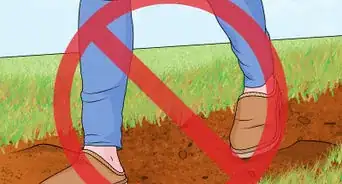
- Don’t store your shoes in any kind of furniture that’s located in a basement, attic, garage, or another place that gets cold in the winter and hot in the summer. The shoe materials will break down more quickly under these conditions.
Method 5
Method 5 of 11:Shoebox or cardboard box
-
1The original shoebox is the best option for long-term storage. Okay, so there’s a decent chance that you didn’t actually save all the original boxes for your shoes. In that case, try asking around at any retailers that sell shoes for extra shoeboxes. Or, if needed, opt for any kind of cardboard box—like a package delivery box—that’s the right size for your pair of shoes.[5]
- For extra protection, individually wrap the shoes in a layer of acid-free tissue paper before putting them in the box.
- While they seem like a good idea, avoid using clear plastic shoe storage boxes. They don’t allow for enough air circulation. If you want to be able to “see” your shoes in the box, take a picture of the shoes and tape it to the outside of the shoebox.

Method 6
Method 6 of 11:Shoe-stuffing paper
-
1Use acid-free tissue paper—the kind you find stuffed in new shoes. Stuffing your shoes with balled-up paper helps them retain their shape during long-term storage. Tissue paper is ideal for this job, but make sure it’s acid-free tissue paper since acidic paper can damage shoe materials. And don’t jam your shoes full of paper—add just enough so that they keep their natural shape.[6]
- Don’t use newspaper—it’s not acid-free and the print might discolor your shoes.
Method 7
Method 7 of 11:Cedar shoe balls or trees
-
1Cedar shoe trees or balls offer the best footwear protection. Bunched-up acid-free tissue paper is fine for most of your pairs of shoes, but invest in cedar for your favorite and/or most expensive shoes. Shoe trees and shoe balls both help your footwear retain its shape, and cedar has a great fresh scent that repels moths and other bugs.[7]
- Shoe trees are available at shoe stores or online.
- Use cedar instead of mothballs to keep bugs away. Mothballs are made with toxic chemicals that aren’t safe for kids or pets and that create an unpleasant scent that’s very difficult to get rid of.
Method 8
Method 8 of 11:Long boot supports
-
1Keep long boots on stands or stuff them to hold their shape. Boot stands are an ideal option here—just flip the boots upside-down and set each boot on one of the pegs. Alternatively, keep your boots right-side-up and slide a cut-to-length piece of foam pool noodle into the upper section of each boot.[8] Empty wine bottles also work here.[9] Rolled up magazines do, too!
- If the tops of your long boots flop over, they could end up with a permanent crease after just a few months.

Method 9
Method 9 of 11:Shoe cleaning
-
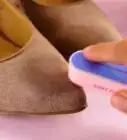
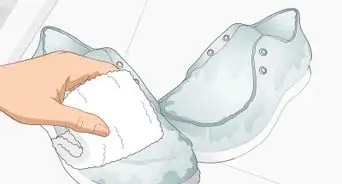
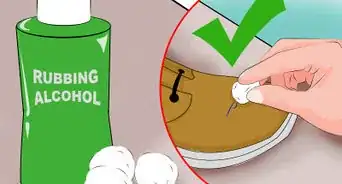
1A quick pre-storage cleaning helps shoes last much longer. Your shoes pick up dirt, dust, and other residues that could cause the materials they’re made from to degrade over time. This is especially true for leather and suede, but all shoes benefit from being cleaned up before you store them. If you use any water during the cleanup, let your shoes air dry fully before putting them in storage.[10]
- Clean leather and suede shoes by brushing off dirt and dust with a soft, non-scratchy brush. Use a special leather or suede cleaner to remove stains.
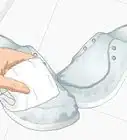
- Clean canvas shoes by brushing them off, then using soapy water to remove stains.
- Wash plastic shoes with soap and water.
Method 10
Method 10 of 11:Shoe sorting
-
1Arrange them by purpose and style, and weed out extras. While your everyday shoes don’t necessarily need to be perfectly sorted and arranged, it’s definitely worth your while to sort your shoes for longer-term storage. Sorting by season, purpose, and style makes it easier to find and access the shoes you want whenever you want them. And it keeps things looking nice and neat![11]
- For example, group together all your dress shoes, your winter boots and other winter shoes, your flip flops, sandals, and other summer shoes, and your exercise shoes and casual shoes.
- While sorting and arranging your shoes for storage, weed out shoes that you haven’t worn in a while and probably won’t wear again. Donate or sell them to declutter your collection and make storing your shoes that much easier.

Method 11
Method 11 of 11:Shoe storage “don’ts”
-
1Make sure your shoes are dry, can breathe, and aren’t scrunched. Treat your shoes well and they’ll return the favor! Keep the following “don’ts” in mind when it comes to shoe storage:[12]
- Don’t store shoes that are wet. Wet shoes get stinky and may even start to rot. Set up a fan to blow air over the outside of your shoes if you want them to dry faster. To help dry out the inside, stuff in some acid-free tissue paper for about an hour to soak up the moisture.
- Don’t seal up your shoes in plastic. This is especially important for leather and suede, but all shoes need to breathe! Wrapping, bagging, or boxing your shoes in plastic could cause them to end up moldy and discolored.
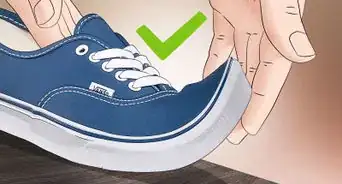
- Don’t stack shoes on top of each other. It’s okay to save a bit of room by stacking your flip flops, but avoid stacking any shoes that have more structure to them. Otherwise, within a few months or even weeks, your shoes will look more worn out and less stylish!

Community Q&A
-
QuestionHow should I store shoes that I don't wear a lot?
 Caitlin JaymesCaitlin Jaymes is a Closet Organizer and Fashion Stylist based in Los Angeles, California. With a background in Fashion PR and Fashion Design, she specializes in creating wardrobes for her clients with pieces they already own. She has experience working with celebrities, editorial shoots, and men and women of all ages. Caitlin uses fashion and organization to help instill and influence confidence, ambition, and stress-free lifestyles for all her clients. She runs her business by two guiding principles: “fashion has no rules, only guidance on how to look and feel your best” and “life has too many stressors, don’t let clutter be one of them.” Caitlin’s work has been featured on HGTV, The Rachael Ray Show, VoyageLA, Liverpool Los Angeles, and the Brother Snapchat Channel.
Closet Organizer & Fashion StylistYou can store them in a coat closet, under your bed, or on a shelf in your closet. You can also store them on hanging shelves. -
QuestionShould I leave the shoes with the paper it comes with ?
 wikiHow Staff EditorThis answer was written by one of our trained team of researchers who validated it for accuracy and comprehensiveness.
Staff AnswerwikiHow Staff EditorStaff AnswerYes, if you're putting the shoes in storage for any length of time. New shoes come stuffed with acid-free tissue paper that helps them keep their shape without trapping in moisture or reacting with the shoe materials. -
QuestionIs it safe to store leather shoes in sealed plastic boxes? Will they get moldy?wikiHow Staff EditorThis answer was written by one of our trained team of researchers who validated it for accuracy and comprehensiveness.
Staff AnswerwikiHow Staff EditorStaff AnswerAvoid doing this! Leather shoes need to breathe or the material will start to mold and break down. Wrap the shoes with acid-free tissue paper, if desired, and keep them in a cardboard box--ideally the original shoebox. Tape a picture of the shoes on the outside of the box for convenience. -
QuestionShould i use leather cream on shoes before storing them?wikiHow Staff EditorThis answer was written by one of our trained team of researchers who validated it for accuracy and comprehensiveness.
Staff AnswerwikiHow Staff EditorStaff AnswerIt's a good idea to clean and treat shoes before storing them, but make sure they're completely dry before wrapping them in acid-free tissue paper and putting them in a cardboard box (like the original shoebox). -
QuestionWhat is best to put in the toes of my running shoes so they keep their shape in storage?
 Community AnswerYou can use shoe forms or just some wadded up newspaper.
 -
QuestionHow do I store the leather shoes after manufacturing?
 Community AnswerIf you love those shoes, get a dust cover. Place them side by side on a shelf with the dust cover over them.
 -
QuestionShould I store my shoes in sealed plastic boxes?Community AnswerYou may store your shoes in sealed plastic boxes. That's a good way to organize and protect them.
-
QuestionWhat is the ideal temperature and humidity in which to store shoes?
 Community AnswerThe temperature and humidity that humans find pleasant are also the best for your shoes: No extremes.




References
- ↑ https://decoratedlife.com/creative-and-efficient-ways-to-store-your-shoes/
- ↑ https://decoratedlife.com/creative-and-efficient-ways-to-store-your-shoes/
- ↑ https://simplyspaced.com/2016/10/40-creative-ways-organize-shoes/
- ↑ https://www.thefootwearacademy.com/how-to-store-shoes-long-term-to-prevent-mold
- ↑ https://www.naplesnews.com/story/life/columnists/2018/05/03/get-organized-foolproof-ways-organize-all-your-shoes/546475002/
- ↑ https://www.thefootwearacademy.com/how-to-store-shoes-long-term-to-prevent-mold
- ↑ https://savvyaboutshoes.com/how-to-keep-shoes-from-dry-rotting/
- ↑ https://www.practicallyfunctional.com/pool-noodle-as-boot-filler/
- ↑ https://www.thekitchn.com/reuse-wine-bottles-boot-savers-23086969
About This Article

Before you store your shoes, stuff each pair with balled acid-free paper or cut-up toilet paper rolls to help them retain their shape. Then, place the shoes in a cool and dry place, such as a closet or under a bed. If you want to save space while also keeping your shoes in good condition, try purchasing a shoe rack or repurposing a wooden ladder into a shoe rack. To see more storage ideas and tips on stacking shoes to save space, read on!