This article was co-authored by Lyssandra Guerra and by wikiHow staff writer, Hannah Madden. Lyssandra Guerra is a Certified Nutrition & Wellness Consultant and the Founder of Native Palms Nutrition based in Oakland, California. She has over five years of nutrition coaching experience and specializes in providing support to overcome digestive issues, food sensitivities, sugar cravings, and other related dilemmas. She received her holistic nutrition certification from the Bauman College: Holistic Nutrition and Culinary Arts in 2014.
There are 10 references cited in this article, which can be found at the bottom of the page.
This article has been viewed 14,618 times.
If you work long hours or you track your calorie intake, you may have started meal prepping, or preparing certain meals ahead of time. Knowing how to store your food is important to protect yourself from food borne illnesses and diseases. You can put your meals in the fridge or the freezer to keep your food safe and make it taste good when you reheat it.
Steps
Method 1
Method 1 of 3:Keeping Meals in the Fridge
-
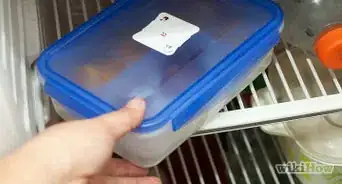
1Place your food into airtight containers. Glass or plastic containers that have lids are great for storing food in. Keep some airtight containers in your kitchen to store your food in for the easiest option.[1]
- You can also use sealable plastic bags for non-liquid food items if you don’t have any containers.
- If your food is warm from the oven, you don’t need to let it cool down first before you place it into a container.[2]
-
2Store cut fruits and vegetables in a container with a paper towel. Line your airtight container with a dry paper towel and then place your fruit or vegetables on top of it. The paper towel helps to keep out moisture and makes your produce stay fresh longer.[3]Advertisement
-
3Store your food in the fridge below 40 °F (4 °C). Most fridges are set around 35 to 38 °F (2 to 3 °C). Check the temperature on your fridge before you store your food to make sure it will stay cold enough throughout the week.[4]
- Most fridges have temperature dials on the inside that you can check.
-
4Put your containers on a shelf, not in the door of the fridge. The door of the fridge is the most susceptible to temperature change since it swings out toward the open air. Put your containers on the middle shelf of your fridge to keep them at the most level temperature.[5]
- The top shelf of the fridge is usually the warmest, so it’s best to keep any cooked meat on the middle shelf of your fridge.
-
5
-
6Consume uncut fruit and vegetables within 2 weeks. Try to store your fruits and vegetables as whole pieces to make them last longer. You can keep your fruits and vegetables in the fridge for up to 14 days.[8]
- If you do cut up your fruits and vegetables, eat them within 3 days.
- If you notice any discoloration on your fruits or vegetables, cut those parts off before you eat them.
Advertisement


Method 2
Method 2 of 3:Storing Meals in the Freezer
-
1Put your food into plastic airtight containers. Choose a plastic bag that seals or a plastic container with a lid to put your food in that your plan to freeze. Stay away from glass containers unless they are tempered or specifically made to be frozen.[9]
- Glass expands as it gets cold, so it could crack if it is in your freezer for a long time.
-
2Store meat, fruit, and vegetables in the freezer. Cooked beef, poultry, and fish, as well as cut fruit and vegetables can be stored in the freezer in airtight containers. Avoid freezing deli meats or dairy products in the freezer since the temperature could change their texture and taste.[10]
- Freezing your food is the best protection against food-borne illnesses and food poisoning.
-
3Eat food stored in the freezer within 6 months. Since the freezer is so cold, you can keep meals in there a lot longer. Try to eat your food within 6 months of freezing it in an airtight container.[11]
Tip: Food in the freezer will stay good for 8 to 12 months, but it probably won’t taste as great.
-
4Cut off any parts of your food that have freezer burn. Freezer burn happens when your food is exposed to the moisture in the freezer. If you notice ice crystals on any parts of your food, cut those areas off before you eat it for the best taste and texture.[12]
- Avoid freezer burn by making sure your food is sealed in an airtight container.
Advertisement


Method 3
Method 3 of 3:Reheating Your Meals
-
1Thaw frozen meals in your fridge overnight before reheating them. Take your meals out of the freezer and put them in the fridge for at least 8 hours. This gives the food a chance to warm up without going bad.[13]
- You also won’t have to heat your food up as long if you let it thaw before you eat it.
-
2Microwave your meals if you use glass containers. If your food from the fridge or the freezer is packed in a glass container, you can put the entire thing in the microwave. Turn the microwave on in 1-minute increments and stir your food around to get the best-tasting meal.[14]
Warning: Never put a glass container in the oven. The heat of the oven could cause your container to shatter.
-
3Transfer your meals to a plate if you use plastic containers. Plastic containers shouldn’t be put in the microwave, since the chemicals from the plastic can leach into your food over time. Dump your food onto a plate before putting it in the microwave at home or at work.[15]
- The chemicals in plastic typically only leach out when it is heated up, not when it is cold or at room temperature.
-
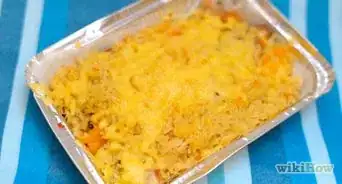
4Heat your food in the oven for a more even temperature throughout. If you have the time, spread your food on a baking sheet lined with parchment paper. Set your oven to 325 °F (163 °C) and cook your food for 20 to 25 minutes.[16]
- Try to put things that can get soggy, like potatoes or vegetables, into the oven instead of the microwave.
-
5Make sure your reheated food reaches 165 °F (74 °C). Use a meat thermometer to check the internal temperature of all of your food, including vegetables. If it has not reached the correct temperature, put it back in the oven or microwave until it does.[17]
- If you are reheating sauces or gravy, wait until they reach a boil before you eat them.
Advertisement


Community Q&A
-
QuestionHow do I stay organized for meal prep?
 Lyssandra GuerraLyssandra Guerra is a Certified Nutrition & Wellness Consultant and the Founder of Native Palms Nutrition based in Oakland, California. She has over five years of nutrition coaching experience and specializes in providing support to overcome digestive issues, food sensitivities, sugar cravings, and other related dilemmas. She received her holistic nutrition certification from the Bauman College: Holistic Nutrition and Culinary Arts in 2014.
Certified Nutrition & Wellness ConsultantWhen you're meal prepping, it's important to keep everything organized in your fridge so you don't forget what's in there. For example, you might keep all of your hardy vegetables in one crisper drawer and all of your leafy greens in another. Also, if you chop your vegetables ahead of time, place them in a clear container so you can easily see what's inside.
Warnings
- Never eat food if it has been stored for longer than the recommended amount of time.Thanks!
- If your food smells rotten or looks discolored, don’t eat it.Thanks!
- Always store your food in the fridge or freezer so that it stays too cold for bacteria to live on it.Thanks!

References
- ↑ https://www.freshnlean.com/meal-prep-guide/
- ↑ https://www.fsis.usda.gov/wps/portal/fsis/topics/food-safety-education/get-answers/food-safety-fact-sheets/safe-food-handling/leftovers-and-food-safety/
- ↑ https://www.youtube.com/watch?v=Yn_ouIY2ecM&feature=youtu.be&t=89
- ↑ https://www.youtube.com/watch?v=Qc2j6v5v_Fk&feature=youtu.be&t=100
- ↑ https://www.youtube.com/watch?v=Yn_ouIY2ecM&feature=youtu.be&t=136
- ↑ https://www.fsis.usda.gov/wps/portal/fsis/topics/food-safety-education/get-answers/food-safety-fact-sheets/safe-food-handling/leftovers-and-food-safety/
- ↑ https://www.fsis.usda.gov/wps/portal/fsis/topics/food-safety-education/get-answers/food-safety-fact-sheets/safe-food-handling/leftovers-and-food-safety/
- ↑ https://www.fsis.usda.gov/wps/portal/fsis/topics/food-safety-education/get-answers/food-safety-fact-sheets/safe-food-handling/leftovers-and-food-safety/
- ↑ https://www.realsimple.com/food-recipes/shopping-storing/freezing/freezer-fundamentals
- ↑ https://www.youtube.com/watch?v=Qc2j6v5v_Fk&feature=youtu.be&t=167
- ↑ https://extension.umn.edu/preserving-and-preparing/science-freezing-foods
- ↑ https://extension.umn.edu/preserving-and-preparing/science-freezing-foods
- ↑ https://www.fsis.usda.gov/wps/portal/fsis/topics/food-safety-education/get-answers/food-safety-fact-sheets/safe-food-handling/leftovers-and-food-safety/
- ↑ https://www.mayoclinic.org/healthy-lifestyle/nutrition-and-healthy-eating/expert-answers/bpa/faq-20058331
- ↑ https://www.mayoclinic.org/healthy-lifestyle/nutrition-and-healthy-eating/expert-answers/bpa/faq-20058331
- ↑ https://ask.usda.gov/s/article/What-methods-of-reheating-food-are-safe
- ↑ https://ask.usda.gov/s/article/What-methods-of-reheating-food-are-safe
About This Article