This article was medically reviewed by Jonas DeMuro, MD. Dr. DeMuro is a board certified Pediatric Critical Care Surgeon in New York. He received his MD from Stony Brook University School of Medicine in 1996. He completed his fellowship in Surgical Critical Care at North Shore-Long Island Jewish Health System and was a previous American College of Surgeons (ACS) Fellow.
There are 8 references cited in this article, which can be found at the bottom of the page.
wikiHow marks an article as reader-approved once it receives enough positive feedback. In this case, 100% of readers who voted found the article helpful, earning it our reader-approved status.
This article has been viewed 30,976 times.
Typically, mild bleeding due to cuts, scrapes, lacerations, or other minor skin wounds can be stopped and the wound treated at home. Bleeding as a result of a minor head wound can also be treated at home in most situations. The main thing is to apply pressure, clean the wound, and bandage it.
Steps
Method 1
Method 1 of 2:Stopping the Bleeding
-
1Wash your hands. Before working on someone, it's important to wash your hands if possible. That way, you won't introduce infection to the wound. Also, put on medical gloves if they are available.[1]
- Gloves will protect both you and the person you're caring for from bloodborne illnesses including HIV and viral hepatitis.
- If gloves are not available, substitute plastic bags or some other impermeable material. You can also use many layers of clean cloth or another clean material. In this case, instead of putting pressure on the wound yourself, ask the injured person to to do so.[2] Only use your bare hands if it is a serious, dire medical emergency. Don't risk your health![3]
- Wash your hands for at least 20 seconds in warm water with soap. Scrub them thoroughly.[4] If soap and water are not available, an alcohol-based sanitizer can be used instead.
-
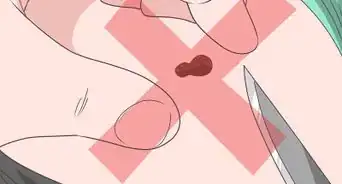
2Look to see if it has stopped bleeding. A minor cut by definition should stop bleeding on its own fairly quickly. The body's response is to clot the wound, and with a small cut, it should stop bleeding fairly quickly.[5]
- Often abdominal and chest wounds are more serious than they look. You should always have these checked out by a professional.
- Mild bleeding can be a serious situation if the person is on a blood thinner, or it is a puncture wound.
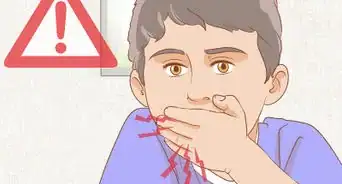
- Mild bleeding should only affect the top layers of the skin. You should not be able to see organs underneath, for instance, and the wound should not be gushing or have a pulsating flow — these things indicate a medical emergency and you should call 991 immediately. Mild cuts should "ooze," meaning bleed slowly.[6]
-
3Apply pressure if it doesn't stop bleeding. If it hasn't stopped bleeding in a minute or two, apply pressure to the wound. Place a clean cloth or sterile bandage over the cut. Hold it in place with your hand, applying steady and light pressure for a full 15 minutes. If the bandage soaks through, do not lift it up. Instead, apply an additional bandage on top of the first.[7]
- Again, if you do not have gloves or some type of protective barrier on your hands, ask the person to apply pressure to her wound by holding the bandaging in place.
-
4Elevate the wound. If it still doesn't stop, try elevating the wound. Elevating the wound just means to get it above the person's heart. That way, blood has to travel against gravity to get to the wound. This lessens the amount of blood at the site, making it easier for the body to stop the bleeding.[8]
- If you think the person may have a broken bone near the cut, you don't want to move that part of the body, as it can make the fracture and surrounding structure worse. You may need to skip this step if you think that's a possibility.
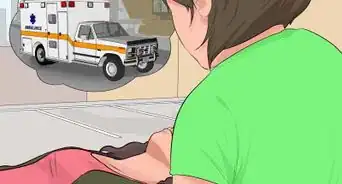
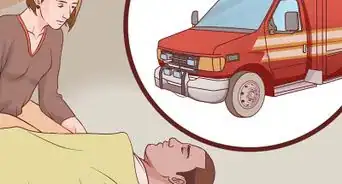
- If it simply won't stop bleeding, even if it's minor, call 911 or visit an emergency room.


Method 2
Method 2 of 2:Bandaging the Cut
-
1Wash the wound. Once you've stopped the bleeding, you need to wash out the wound. Use soap and water to clean it out, making sure to remove any dirt from the wound.[9] This may be more easily done under running water or even in a shower.
- If some of the dirt in the wound is stubborn, you can pluck it out with tweezers. Make sure to clean the tweezers with rubbing alcohol before using them so you don't introduce more bacteria.
- If you can't get the wound completely clean, talk to your doctor.[10]
-
2Use an antibiotic ointment. Use antibiotic ointment to lightly cover the wound. The idea is to keep the wound slightly moist. The point of the ointment is to help prevent infection.[11]
-
3Cover the wound. Once you've applied the ointment, it's time to cover it. You can use a regular adhesive bandage or simply sterile gauze and medical tape. Make sure the dressing covers the whole wound.[12]
- If it's just a minor scrape, however, you can leave it uncovered. Covering it helps keep infection out.[13]
-
4Change the bandage daily. You should change the bandage at least once a day. In addition, you should change it if it's gotten wet or soiled. Therefore, if it's near your hands, you may need to change it frequently as you wash your hands throughout the day.[14]
- As you change it, check on the cut. Once it's healed enough to be mostly scabbed over, you can leave the bandage off.
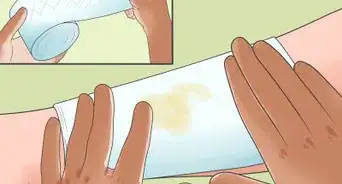
- Watch for signs of infection, which include pus, redness, swelling, decreased mobility, and tenderness. The skin around the cut may also feel warm. Call your doctor if you suspect infection.[15]





References
- ↑ http://www.mayoclinic.org/first-aid/first-aid-cuts/basics/art-20056711
- ↑ http://www.webmd.com/first-aid/how-to-stop-bleeding-from-a-skin-wound
- ↑ http://www.webmd.com/first-aid/how-to-stop-bleeding-from-a-skin-wound
- ↑ http://www.cdc.gov/features/handwashing/
- ↑ http://www.mayoclinic.org/first-aid/first-aid-cuts/basics/art-20056711
- ↑ http://www.nytimes.com/health/guides/injury/bleeding/overview.html
- ↑ http://www.mayoclinic.org/first-aid/first-aid-cuts/basics/art-20056711
- ↑ http://www.health.harvard.edu/family_health_guide/emergencies-and-first-aid-direct-pressure-to-stop-bleeding
- ↑ http://kidshealth.org/en/parents/bleeding.html
- ↑ http://www.mayoclinic.org/first-aid/first-aid-cuts/basics/art-20056711
- ↑ http://www.mayoclinic.org/first-aid/first-aid-cuts/basics/art-20056711
- ↑ http://kidshealth.org/en/parents/bleeding.html
- ↑ http://www.mayoclinic.org/first-aid/first-aid-cuts/basics/art-20056711
- ↑ http://www.mayoclinic.org/first-aid/first-aid-cuts/basics/art-20056711
- ↑ http://kidshealth.org/en/parents/bleeding.html
About This Article
If you need to stop mild bleeding during first aid, first wash your hands and put on medical gloves if you have them. If the wound doesn’t stop bleeding on its own after 1-2 minutes, apply a clean cloth or bandage over the cut and hold it in place with steady, light pressure for 15 minutes. If the bleeding still doesn’t stop, elevate the wound so it is above the person’s heart. If the wound is gushing or seems deep, call emergency medical services immediately. If the bleeding does stop, place antibiotic ointment and a bandage over the cut. To learn more from our Clinical Surgeon co-author, like how often to replace a bandage, keep reading!














































Medical Disclaimer
The content of this article is not intended to be a substitute for professional medical advice, examination, diagnosis, or treatment. You should always contact your doctor or other qualified healthcare professional before starting, changing, or stopping any kind of health treatment.
Read More...