This article was written by Luna Rose. Luna Rose is an autistic community member who specializes in writing and autism. She holds a degree in Informatics and has spoken at college events to improve understanding about disabilities. Luna Rose leads wikiHow's Autism Project.
There are 14 references cited in this article, which can be found at the bottom of the page.
This article has been viewed 49,264 times.
Stimming, a form of fidgeting frequently found in autistic people, is a helpful tool for focusing and self-control.[1] However, there are certain times when you may want to avoid distracting people or receiving negative attention. This article will help you fulfill your needs without drawing attention to them.
Steps
Part 1
Part 1 of 3:Considering the Situation
-
1Ask yourself why you don't want to attract attention. Are you concerned about legitimately bothering people (e.g. disrupting people's concentration during an exam) or just afraid of looking weird? Be honest with yourself.
-
2Consider the consequences of stimming conspicuously. Ask yourself what is the worst thing that could happen. For example...
- At an exam, you could disrupt other students' concentration and make it even more stressful for them.
- At a supermarket, someone could stare at you.
- At a family gathering, your crotchety old grandpa could scowl disapprovingly and imply that your father failed to parent you correctly.
-
3Ask yourself if you would be okay with these consequences. For example, you might decide to take one for the team at the family reunion, but that you don't care if random strangers publicly display their bad manners in the supermarket.
- Some autistic people script their responses to rude people in advance. For example, it may help to decide that "What's wrong with you?" merits a "What's wrong with your manners?", and that if someone stares at you flapping, you shall flap even more vigorously and stare right back.
- Many autistic people find that they feel better not censoring themselves.[2]
- It is okay to stim discreetly in public too. You may feel too tired to handle judgmental looks from strangers, or need all your energy to handle the sensory stimuli of crowds. Do what feels best for you.
-
4Remember that by stimming, you are not in the wrong. Stimming is a natural and healthy behavior that helps you self-regulate and function better.[3] [4] Nobody deserves to be shamed for putting forth their best effort to interact with the world.[5] [6]
- You are allowed to be yourself both in public and private.
Keep in mind: You have no obligation to "act normal." You don't owe anyone a smile, eye contact, or a statue-like stance. As long as you are respecting their space, you can do what makes you comfortable. If people think it's odd, that's their problem.


Part 2
Part 2 of 3:Prepare for an Event
-
1Consider taking breaks. See if you could temporarily withdraw from the situation to stim and rebalance yourself. For example, at a party, you could take a long bathroom break to stim and relax, or offer to drive and pick up the pizza halfway through so you can be alone in the car.
- If everyone present knows you are easily overwhelmed, you may be able to retreat to a calming down corner or quiet space without anyone thinking this is unusual.
-
2Communicate your needs to others beforehand. You can help them understand what to expect. This makes your behavior seem less alarming when they see it happen. Whether it's your extended family or your college professor, they may find it helpful to understand you better.
- Example script: "Hi, I just wanted to let you know that I have a disability, and this party is going to be a little challenging for me. I may need to take breaks from socializing, and possibly leave early. If you see me acting a little strange or avoiding people, please know that everything's okay and I'll re-engage as soon as I feel well enough."
- People like to feel helpful. Often they're accommodating once they know what's going on.
-
3See if you can modify the situation to your benefit. You may be able to remove the source of your worries from the picture.
- Time: Try going out during less busy times. For example, visit the grocery store early in the morning or late at night. There will be fewer people to crowd you or judge you.
- People: Spend more time with people who understand and reduce time spent with people who judge you. For example, at a family reunion, you could hang out with the kids and avoid your grumpy grandpa.
- Space: Try seeing if you can go to quieter places. For example, many disabled students have the right to take exams in a quiet room. There, you can flap your arms to your heart's content without fear of disturbing your classmates.
-
4Get some activity if you tend to have lots of energy. If you're a sensory-seeking fidgeter, getting enough physical activity will reduce the need to stim when you're in social situations. It will also help you feel calm and energized.
- Run around the block
- Jump (possibly on a trampoline)
- Dance to your favorite music
- Climb trees and other objects
- Swing
-
5Get some deep pressure beforehand if you need to relax. Browse the internet with a weighted blanket on your legs, enjoy a long bear hug with a loved one, or offer to exchange back rubs with your sister. In a pinch, pile heavy things upon yourself, or pull your clothing tightly over your body. Deep pressure will help you feel more relaxed before the big event.
-
6Schedule yourself relaxation time before and after the event. Avoid overtaxing yourself. If you're feeling distressed, you'll need to stim more to calm down. It's best to do something fun, like indulging in a special interest or reading a good book, for an hour before the big event. Afterwards, you'll probably feel tired, so don't overestimate your capacity to handle things then either.
-
7Plan ways to reduce disruptive sensory input. If you feel more comfortable, you won't need to stim as much. Think about what tends to trigger stress or the need to stim. See if you can block it out.
- Visual: Wear sunglasses. Pull up your hood to block light and movement from the side.
- Auditory: Wear earplugs or noise-canceling headphones. An extra-thick hoodie may help a little too.
- Scents: Chewing gum may help block out smells. See if a face mask helps too. (Note: Medical masks are designed to block germs, which can be larger than scent molecules, so smells may still get through.[7] [8] )
-
8Pick out some subtle stims beforehand. Read lists of stims,[9] find what sounds useful, and practice using the stim to see if it works. That way, you won't suddenly discover that the replacement stim you chose is ineffective, and then be left wondering what to do.
- The autistic community offers plenty of advice on stimming.
- It helps to think of several alternative stims, in case you don't feel like one of them would help you after all. That way, you'll have several backups ready to go.
-
9Consider if skipping the event is the way to go. Hiding or holding back your autistic traits can be draining and doing it too often could hurt your mental health.[10] Try to avoid unnecessary stress. If an event sounds like torture, maybe you shouldn't force yourself to go.
- You can skip optional social events by saying you're not feeling up for them. If the event is in someone's honor, offer to catch up with them one on one later. (You can always bring a gift or pay for their meal then.)
- In some cases for home life, other residents may be able to swap chores with you. For example, your husband might be willing to do all the shopping if you're always the one who cleans the bathrooms.


Part 3
Part 3 of 3:Choose Alternative Stims
-
1Use tools to keep your hands busy. You might use a designated fidget toy or a random object like a paper clip or rubber band. Handheld fidget toys could involve...
- Tangles
- "Sea urchin" toys to rub against fingers
- Slinkies
- Bracelets (large, round beads with smaller beads as spacers work best)
- Putty (such as Theraputty).
-
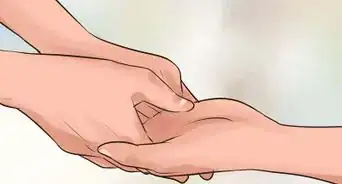
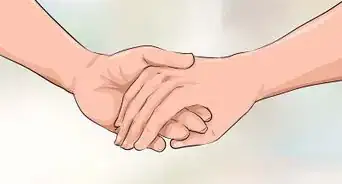
2Get deep pressure. This provides proprioceptive input, increasing bodily awareness and helping with calmness.
- Wrap your arms tightly around your body and squeeze.
- Apply lotion or hand sanitizer and rub it in well.
- Squeeze your hands together.
- Wear a heavy leather jacket or weighted vest.
-
3Use your mouth. The mouth muscles are used for self-calming, and tasting things can also be considered a stim.
- Suck on a lollipop or hard candy.
- Chew gum.
- Buy a chewy bracelet or toy designed for stimming. These do exist at reasonable prices.[11]
-
4Find natural ways to move. Sit on an exercise ball or rocking chair. Consider staying standing and moving around to get things for people, or slowly wandering around the room as people talk. Pacing is considered acceptable in some environments.
-
5Find quiet auditory stims. Depending on the noise level, you should be able to make quiet stims that satisfy your need for sound without disturbing others.
- Click your teeth together. Even in a silent room, people shouldn't be able to hear this.
- Listen to music with headphones.
- In louder rooms, tap your feet, click your tongue, drum your fingers, hum, use echolalia,[12] tap your pencil, etc.
- Only click your pen if the room is quite loud; this can be a pet peeve.


Warnings
- Don't start using stims that could cause harm. Examples include biting nails, scratching or picking skin, and pulling hair. These can become very difficult to quit.Thanks!
- Be careful when researching alternative stims online. Many articles, especially older ones, speak of extinguishing stimming as the goal, and present a negative view of autism that may be hurtful to read. Try to search mainly in the autistic community.Thanks!











References
- ↑ http://www.friendshipcircle.org/blog/2012/03/22/the-cause-of-stimming-whats-your-stim/
- ↑ https://www.ncbi.nlm.nih.gov/pmc/articles/PMC6728747/
- ↑ https://www.health.com/condition/anxiety/what-is-stimming
- ↑ http://musingsofanaspie.com/2013/06/18/a-cognitive-defense-of-stimming-or-why-quiet-hands-makes-math-harder/
- ↑ http://juststimming.wordpress.com/2011/10/05/quiet-hands/ Julia Bascom: Quiet Hands
- ↑ http://thecaffeinatedautistic.wordpress.com/2013/02/10/on-stimming-and-why-quiet-handsing-an-autistic-person-is-wrong/
- ↑ https://dearpandemic.org/if-masks-work-why-can-i-still-smell-farts/
- ↑ https://www.ncbi.nlm.nih.gov/pmc/articles/PMC7447000/
- ↑ Different Stims from Wrong Planet
- ↑ https://www.healthline.com/health/autism/autism-masking#effects
- ↑ http://www.friendshipcircle.org/blog/2013/10/07/10-sensory-chew-toys-for-children-with-autism-other-special-needs/
- ↑ http://musingsofanaspie.com/2013/09/18/echolalia-thats-what-she-said/
- http://autisticadvocacy.org/ – research source
- http://autismwomensnetwork.org/ – research source














































Medical Disclaimer
The content of this article is not intended to be a substitute for professional medical advice, examination, diagnosis, or treatment. You should always contact your doctor or other qualified healthcare professional before starting, changing, or stopping any kind of health treatment.
Read More...