X
wikiHow is a “wiki,” similar to Wikipedia, which means that many of our articles are co-written by multiple authors. To create this article, volunteer authors worked to edit and improve it over time.
This article has been viewed 11,369 times.
Learn more...
If you're looking for a good milker for your goat herd, there are specific things to look for. This article will help you on how to find the good milker to add to the farm!
Steps
-
1Consider the character of the doe. Is she well behaved and docile? This will make for a better milker than an agitated and nervous doe.
- Look for an alert attitude. Check her tail – if it's droopy, it can mean that something is wrong.
-
2Check her udder. It should be soft, wide, and round.
-
3Look at the teats. Symmetry is an important signal; are her teats all the same size?
- Teats should not be so long that they drag on the ground. Check that they are sitting high enough and unlikely to get caught up in her legs when she walks.
-
4Feel and look at her rib cage. It should be well-rounded. This indicates that she is able to accommodate a lot of feed that is then turned into milk. She should also have a good appetite (the only time this diminishes in a healthy doe is during labor).
- In conjunction with this, she should have no problems chewing, eating, and swallowing.
-
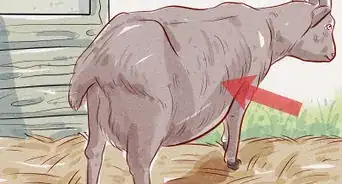
5Look at her legs and gait. She should have strong legs and not have difficulties walking. If she has a hunched back, this can indicate that she is unwell or that something is wrong.
- Check her hoofs. Hoof rot can manifest itself in lameness, a stench, and black deterioration of the inner hoof.
-
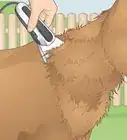
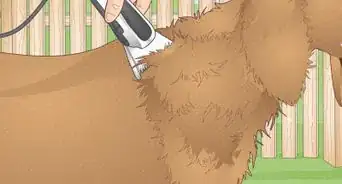
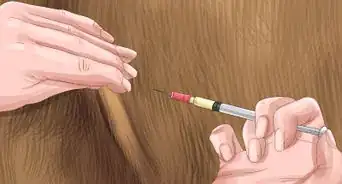
6Check the condition of her coat. A good sign is a smooth coat with soft skin, with no bare patches in the coat.
- If her coat is dull, she probably has parasites. Lice may be a problem if there is listlessness, weakness, and anemia.
- If her coat is fluffed up, this can mean that the doe is unwell.
-
7Look at her eyes. They should be clear and bright, indicating that she is not suffering from an illness.
-
8
-Step-1.jpg)
-Step-2.jpg)
-Step-3.jpg)
-Step-4.jpg)
-Step-5.jpg)
-Step-6.jpg)
-Step-7.jpg)
-Step-8.jpg)
Community Q&A
-
QuestionAre Pygmy goats good milk producers?
 KarinTop AnswererThey produce milk, but they only produce one quart to two-thirds of a gallon (average being 1 to 2 quarts) per day, so they don't produce much. However, they produce really high butterfat milk that ranges from 4.5 to 11% milk butterfat.
 -
QuestionWhat is the best time to breed goats?
 Community AnswerMost breeders or farmers breed their goats in the fall so the kids are born in spring.
Warnings
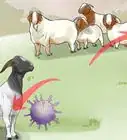
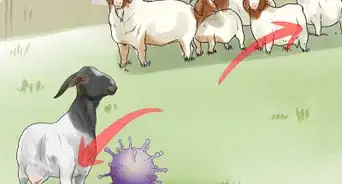
- A healthy goat is important for your health too. And so is hygienic treatment of the milk. Diseases that can be passed on to humans from goats include brucellosis, tuberculosis, leptospirosis, listeriosis, etc.[2] All of these are very serious diseases.Thanks!
Things You'll Need
- Herd to choose doe from










References
- ↑ http://members.toast.net/dawog/Goats/DairyGoatFactBook.htm
- ↑ http://www.7mfarm.com/goat-health2.html
- Carleen Madigan, Back Garden Self-Sufficiency, p. 261, (2010), ISBN 978-1-60469-103-0 – research source