This article was co-authored by wikiHow Staff. Our trained team of editors and researchers validate articles for accuracy and comprehensiveness. wikiHow's Content Management Team carefully monitors the work from our editorial staff to ensure that each article is backed by trusted research and meets our high quality standards.
This article has been viewed 3,813 times.
Learn more...
This wikiHow shows you several ways to speed up your Mac. A slow Mac can be caused by several issues, but turning off visual effects, closing resource-heavy programs, updating your OS, and managing your startup programs are a few ways to help speed things along.
Steps
Method 1
Method 1 of 4:Managing your Startup Programs
-
1
-
2
-
3Click on Users & Groups. The icon has a silhouette of two people.
-
4Select your name from the Current User list.
-
5Click on the Login Items tab. You will get a list of programs that open automatically when you log in.
-
6Uncheck any programs that you don't need when your Mac starts up. Fewer programs at startup will help your Mac launch faster and will not hog up your computer's resources in the background.


Method 2
Method 2 of 4:Updating your OS
-
1
-
2Click on Software Update to check for updates. If your mac is up to date then it will tell you.
-
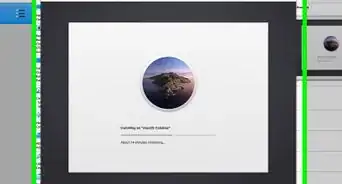
3Download any updates and restart your mac. Updating your macOS will sometimes help fix bugs or clean up files that may have been slowing your computer down in previous OS versions.


Method 3
Method 3 of 4:Turning off Visual Effects
-
1
-
2Select Dock from the menu.
-
3
-
4
-
5Select Scale Effect from the drop-down menu.
- It's located next to Minimize Windows Using.
-
6Exit to save your settings. Visual effects may sometimes cause your Mac to run slower as its an extra feature that can be resource-hungry. Turning them off can greatly increase the speed of your mac.


Method 4
Method 4 of 4:Closing Resource Heavy Programs
-
1Open Finder (CMD + Spacebar) and type in Activity Monitor. Activity Monitor lets you see which programs on your Mac are taking up a lot of resources to run. Closing or uninstalling these programs can help speed up your mac.
-
2Click on Activity Monitor to open it. Activity Monitor can also be found within the Utilities folder inside the Applications folder
-
3Click on the CPU % tab. The higher the percentage, the more that resource is using up your CPU. Programs that use a lot of your CPU will slow down your computer.
-
4Close the programs with the highest CPU percentage. You can do this by clicking the program on the list and then the X in the top left-hand corner of the Activity Monitor.
- If you recognize the program and don't really need it, then consider removing the program from your mac. If it's making your mac run slow and you rarely use it then uninstalling it may be the best choice.










-Step-21-Version-2.webp)
About This Article

1. Click the apple icon at the top left.
2. Click Software Update to check for updates.
3. Download any updates.
4. Restart your mac.