This article was co-authored by Catherine Cheung, DPM and by wikiHow staff writer, Hannah Madden. Dr. Catherine Cheung is a board certified Podiatrist based in San Francisco, California. Dr. Cheung specializes in all aspects of foot and ankle care, including complex reconstruction. Dr. Cheung is affiliated with the Brown & Toland Physicians and the Sutter Medical Network. She earned a DPM from the California College of Podiatric Medicine, completed her residency at the Encino Tarzana Medical Center, and completed a fellowship at the Kaiser Permanente San Francisco Medical Center. She is board certified by the American Board of Podiatric Surgery.
There are 22 references cited in this article, which can be found at the bottom of the page.
This article has been viewed 13,519 times.
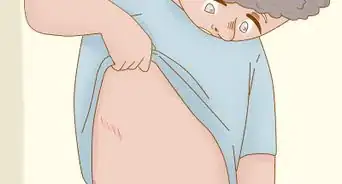
If your legs constantly feel swollen or rashy, it could be disrupting your daily life. Itchy legs can be caused by a range of medical conditions, allergies, or environmental factors, so take some time to figure out what the cause of your itching is. Once you know that, you can treat your legs and soothe your uncomfortable-feeling skin.
Steps
Method 1
Method 1 of 7:Itchy Legs FAQs
-
1Why are my legs itchy? Itchy skin can be caused by a number of factors, including temperature, exercises, allergies, dry skin, medical conditions, stress, and shaving. Narrowing down why your legs are itchy can help you treat the cause, but it’s okay if you aren’t 100% sure why your legs have started itching.[1]
- Even if you don’t know the cause of your itchy legs, you can still treat the symptoms.
- If you aren’t sure exactly why your legs are itching, think about what you’ve done or come into contact with in the past week or so. Chances are, it’s something new in your environment that your skin isn’t agreeing with.
-
2What are the symptoms of itchy legs? Peeling, redness, rash, dryness, sores, blisters, scaliness, roughness, and pain. You might experience some or all of these symptoms as you deal with itchy legs.[2]
- These symptoms usually get more severe the longer your skin has been itchy.
-
3How can I avoid making my itchy legs worse? Don’t scratch! Although it might be the first thing you want to do, scratching can make your itch worse (and it could even introduce germs to your skin). You can cut your nails to avoid scratching if you need to.[3]
- If your itch is really bad, you might be scratching yourself in your sleep. Try wearing gloves or mittens to bed to cover your hands.
-
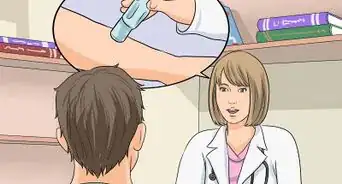
4When should I see a doctor? If you can’t figure out what your itch is caused by or how to make it better, visit a doctor or a dermatologist. They can help you diagnose the cause of the itching and treat the itch with medication.[4]
- If you’ve recently exercised and are experiencing hives, fatigue, warmth, itching, or unconsciousness, seek medical help right away. This could be a sign of exercise-induced anaphylaxis, and it can be life-threatening.[5]


Method 2
Method 2 of 7:Heat or Cold
-
1Take off any hot or itchy clothing. If you feel too hot or really sweaty, you may just be overdressed. Strip off a few layers to soothe your skin and let it breathe.[6]
- Try to wear soft, lightweight clothing in the summer to avoid getting overheated.
- While it may sound counterintuitive, overdressing in the winter can make you too hot. If you find yourself sweating while you’re sitting down and inactive, strip off a few layers.
-
2Use a cold compress to soothe your skin. Try an ice pack wrapped in a towel or a cold cloth from the freezer. Press it against your skin for 10 minutes at a time until your legs aren’t itchy anymore.[7]
- Never put an ice pack on your bare skin! Always wrap it in a towel to avoid getting too cold.
-
3Pat your skin in a cool bath. Run a bath full of water that’s a little bit cooler than room temperature. Soak your legs in it and gently pat them, but don’t rub them.[8]
- Rubbing your legs can irritate them further, so only use short patting motions to get your skin wet.
- When you’re done with your bath, let your skin air dry instead of toweling off to avoid irritating your skin.
-
4Moisturize your legs. Use calamine lotion to soothe your skin and hydrate any dry, itchy areas. Avoid using creams and ointments that contain petroleum or mineral oil, as those ingredients can make your itching worse.[9]
- You can find calamine lotion at most drug stores.
-
5Hydrate your skin with a humidifier. If your legs itch when you’re sleeping, the dry air may be affecting them. Set up a humidifier in your room to moisturize the air.[10]
- This is especially important if you live in a dry area.


Method 3
Method 3 of 7:Exercise
-
1Moisturize your skin. After you shower, rub on a moisturizing lotion to hydrate your skin and lock it in. Rub gently and carefully to avoid irritating your skin even further.[11]
- If your skin is super itchy, a calamine lotion can help soothe it.
-
2Try a numbing spray or cream. These over-the-counter ointments can help treat your itchy skin and soothe inflammation. Look for hydrocortisone cream or spray and follow the directions on the bottle carefully.[12]
- You’ll most likely need to apply the spray or cream twice a day or whenever your legs feel itchy.
-
3Take an antihistamine. These oral medications will help reduce the inflammation and itching from the inside out. Pick up a bottle of diphenhydramine, brompheniramine, or clemastine from your local drug store and follow the instructions carefully.[13]
- If you have high blood pressure or an overactive thyroid gland, talk to your doctor before taking antihistamines.
-
4Reduce the intensity of your workouts. If you’re working out too hard, it could make your itchy legs worse. Try to reduce the intensity and the length of your workouts to let your legs heal.[14]
- This is especially important if you haven’t exercised in a while. Your body may need some time to adjust to your new routine.
-
5Wear moisture-wicking workout clothes. Go for workout clothes made of polyester rather than cotton. The fabric will help lift and wick moisture off your body, letting it evaporate instead of sit on your skin and cause irritation.[15]
- You can check the tag on your workout clothes before buying them to see what they’re made of.
-
6Avoid exercising in hot weather. Extreme heat can make your legs itch worse, especially if they’re prone to irritation. During the summer, try to find an indoor gym or track to do your workouts so you can stay cool.[16]
- If you are going to work out in warm weather, make sure you wear the right clothing. Loose, moisture-wicking clothes will keep you more comfortable than tight fabrics.


Method 4
Method 4 of 7:Allergies or Dry Skin
-
1Take an antihistamine. An over the counter medication, like diphenhydramine, brompheniramine, or clemastine, can reduce swelling and itching. Talk to your doctor before taking any new medication.[17]
- You can find these medications at any drug store near you.
-
2Moisturize any dry skin. After you get out of the shower, use a moisturizer to lock in hydration. Ideally, you should moisturize every day to keep your skin soft and smooth.[18]
- Focus on any part of your legs that looks dry or flaky.
- If you live in a dry environment, consider putting a humidifier in your home or office to hydrate your skin.
-
3Try calamine lotion for allergic reactions. Calamine lotion can help soothe itchy, rashy, or red skin. Spread a thin layer all over your legs to stop the itching and burning you might be feeling.[19]
- If you came into contact with an allergen, make sure you wash your skin off before adding any lotion.
- If you came into contact with poison ivy, you may need to use an anti-itch cream as well as a drying cream.
-
4Take a colloidal oatmeal bath. Run a bath with water that’s a little bit cooler than room temperature. Add a 1 to 2 scoops of colloidal oatmeal to the water, then soak your itchy legs to soothe them and reduce the irritation.[20]
- You can find colloidal oatmeal at most drug stores. It’s made of oats that have been ground up into a fine powder to help them dissolve in a bath.
-
5Smooth on some hydrocortisone cream. This over-the-counter cream can help soothe inflammation and reduce irritation. You can find it at most drug stores, and make sure you follow the directions on the bottle.[21]
- You’ll most likely need to apply the cream once or twice a day until your itching stops.
-
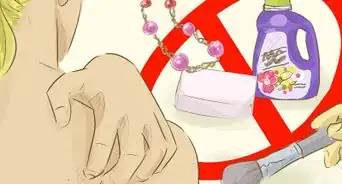
6Avoid allergens in the future. If you’re not sure what caused your allergic reaction, try switching out any soaps or lotions that you’re using. Your laundry detergent, clothing, and the food you’re eating could be the cause of your allergies, so if you’re not sure, talk to a dermatologist.[22]
- Go for mild, fragrance-free soaps, detergents, and beauty products.
- Try wearing cotton and wool instead of synthetic fabric.


Method 5
Method 5 of 7:Shaving
-
1Try a warm compress. Run a wash cloth under warm (but not hot) water. Press it against your skin for 15 to 20 minutes at a time, and try to use it 3 to 4 times per day.[23]
- If you notice small, red bumps that look like acne, you may have folliculitis, or a skin infection in your hair follicles. It’s relatively common after shaving, and it should go away with time.
-
2Moisturize your legs with lotion. Over-the-counter hydrocortisone creams can help soothe inflammation and swelling. Rub a cream over the itchy areas and let it soak in whenever your legs feel itchy.[24]
- If your legs get super itchy for a long period of time, your doctor may prescribe you an antibiotic cream to treat the infection in your hair follicles.
-
3Clean the area twice a day. Use a warm, soapy wash cloth to gently pat the area clean in the shower or bath. Use a dry towel to pat it dry, and don’t share your towels with anyone else until your legs stop itching.[25]
- Keeping the area clean will help your skin heal much faster.
-
4Avoid shaving until your legs stop itching. Try to wait at least 30 days after you shave to wax, pluck, or shave again. This will give your skin time to heal and soothe itself without adding more irritation.[26]
- When you are ready to shave again, try soaking your skin in warm water to open up your pores first. This will help minimize itching after you shave.
- If your skin still itches after 30 days, you may need to talk to a dermatologist.


Method 6
Method 6 of 7:Insect Bites
-
1Soothe itchy skin with a cold cloth. Run a wash cloth under cold water and press it against your skin. Keep doing this for 10 to 20 minutes at a time until your skin feels slightly less itchy.[27]
- You can also fill a bag with ice and wrap it in a tea towel instead.
-
2Use a topical anti-itch cream. Go for 0.5% or 1% hydrocortisone cream to help soothe your itchy skin. You can also apply calamine lotion several times per day.[28]
- Keep using your lotion until your bug bites go away.
-
3Try an over-the-counter antihistamine. Oral antihistamine tablets can help you reduce your swelling and itching from the inside out. Pick up a bottle of these at your local drug store and follow the instructions on the back.[29]
- If you have high blood pressure or you’re on other medications, talk to your doctor before taking antihistamines.
-
4See a doctor if the itching doesn’t go away. Usually, insect bite symptoms will disappear after 1 to 2 days. If they don’t, you may be having a more severe reaction.[30]
- If you have trouble breathing, feel dizzy, or lose consciousness, seek medical help right away.
-
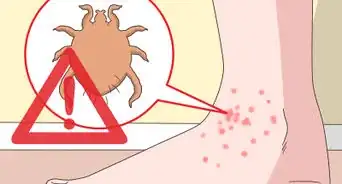
5Prevent bug bites by wearing the right clothing. To prevent bug bites, try wearing long pants and tall socks whenever you’re outside. Mosquitoes tend to go for the ankles and the back of the knees, so cover these areas first.[31]
- You can also treat your clothing with an insect repellent before you put on your outfit for the day.


Method 7
Method 7 of 7:Medical Conditions or Stress
-
1Try an over-the-counter cream for itching. A hydrocortisone cream can help relieve itching and soothe your inflamed skin. If an over-the-counter medication isn’t strong enough, talk to your doctor about a prescription-strength one.[32]
- If your itching is bad enough, your doctor may inject medication straight into your skin to reduce inflammation.
-
2Treat poor circulation with compression stockings. If you have varicose eczema, your inflamed skin may be caused by bad circulation. Wear compression stockings on a daily basis to promote blood flow and soothe your skin.[33]
- In some cases, compression stockings can make itchy skin worse. If that happens, you can stop wearing your compression stockings.
-
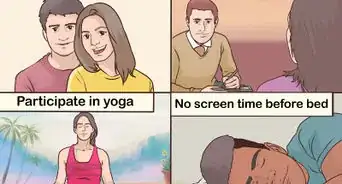
3Meditate or do yoga to reduce stress. Anxiety and stress can trigger itchy and inflamed skin. Try to reduce your stress levels with daily meditation, yoga, and exercise.[34]
- If you find yourself anxious or stressed a lot, try talking to a mental health professional. They can help you find the root of your anxiety to tackle the problem.
-
4Ask your doctor about any side effects of your current medication. Certain pain medications have side effects that can cause itchy skin. If you’re taking a daily medication, talk to your doctor to see if it might be the cause.[35]
- If your medication is the problem, you may need to reduce your dosage or switch to a different medication.


Expert Q&A
-
QuestionWhat causes itchy skin on the bottom of your legs?
 Catherine Cheung, DPMDr. Catherine Cheung is a board certified Podiatrist based in San Francisco, California. Dr. Cheung specializes in all aspects of foot and ankle care, including complex reconstruction. Dr. Cheung is affiliated with the Brown & Toland Physicians and the Sutter Medical Network. She earned a DPM from the California College of Podiatric Medicine, completed her residency at the Encino Tarzana Medical Center, and completed a fellowship at the Kaiser Permanente San Francisco Medical Center. She is board certified by the American Board of Podiatric Surgery.
Board Certified PodiatristIf the itchy skin is on the bottom of your legs, it might be due to wearing non-breathable socks all day.



References
- ↑ https://www.healthdirect.gov.au/itchy-skin
- ↑ https://www.healthdirect.gov.au/itchy-skin
- ↑ https://www.aad.org/public/everyday-care/itchy-skin/itch-relief/relieve-uncontrollably-itchy-skin
- ↑ https://www.aad.org/public/everyday-care/itchy-skin/itch-relief/relieve-uncontrollably-itchy-skin
- ↑ https://www.ncbi.nlm.nih.gov/pmc/articles/PMC3020292/
- ↑ https://www.mayoclinic.org/diseases-conditions/heat-rash/symptoms-causes/syc-20373276
- ↑ https://www.axahealth.co.uk/health-information/womens-health/i-have-really-itchy-lower-legs/
- ↑ https://www.mayoclinic.org/diseases-conditions/heat-rash/diagnosis-treatment/drc-20373282
- ↑ https://www.mayoclinic.org/diseases-conditions/heat-rash/diagnosis-treatment/drc-20373282
- ↑ https://www.mayoclinic.org/diseases-conditions/itchy-skin/diagnosis-treatment/drc-20355010
- ↑ https://www.mayoclinic.org/diseases-conditions/itchy-skin/diagnosis-treatment/drc-20355010
- ↑ https://medlineplus.gov/ency/article/002208.htm
- ↑ https://medlineplus.gov/ency/article/002208.htm
- ↑ https://dermnetnz.org/topics/exercise-induced-vasculitis/
- ↑ https://www.mayoclinic.org/diseases-conditions/itchy-skin/diagnosis-treatment/drc-20355010
- ↑ https://dermnetnz.org/topics/exercise-induced-vasculitis/
- ↑ https://www.healthdirect.gov.au/itchy-skin
- ↑ https://www.aad.org/public/everyday-care/itchy-skin/itch-relief/relieve-uncontrollably-itchy-skin
- ↑ https://myhealth.alberta.ca/Health/aftercareinformation/pages/conditions.aspx?hwid=uh3252
- ↑ https://kidshealth.org/en/parents/rashes-sheet.html
- ↑ https://my.clevelandclinic.org/health/diseases/6173-contact-dermatitis/management-and-treatment
- ↑ https://my.clevelandclinic.org/health/diseases/6173-contact-dermatitis/prevention
- ↑ https://www.aad.org/public/diseases/a-z/folliculitis
- ↑ https://www.mayoclinic.org/diseases-conditions/folliculitis/diagnosis-treatment/drc-20361662
- ↑ https://www.mayoclinic.org/diseases-conditions/folliculitis/diagnosis-treatment/drc-20361662
- ↑ https://www.aad.org/public/diseases/a-z/folliculitis
- ↑ https://www.mayoclinic.org/first-aid/first-aid-insect-bites/basics/art-20056593
- ↑ https://www.mayoclinic.org/first-aid/first-aid-insect-bites/basics/art-20056593
- ↑ https://www.nhs.uk/conditions/insect-bites-and-stings/treatment/
- ↑ https://www.nhs.uk/conditions/insect-bites-and-stings/treatment/
- ↑ https://www.aad.org/public/everyday-care/injured-skin/bites/prevent-treat-bug-bites
- ↑ https://www.mayoclinic.org/diseases-conditions/neurodermatitis/diagnosis-treatment/drc-20375639
- ↑ https://www.nhs.uk/conditions/varicose-eczema/
- ↑ https://www.mayoclinic.org/diseases-conditions/neurodermatitis/symptoms-causes/syc-20375634
- ↑ https://www.mayoclinic.org/diseases-conditions/itchy-skin/symptoms-causes/syc-20355006













































Medical Disclaimer
The content of this article is not intended to be a substitute for professional medical advice, examination, diagnosis, or treatment. You should always contact your doctor or other qualified healthcare professional before starting, changing, or stopping any kind of health treatment.
Read More...