This article was co-authored by Alex Dimitriu, MD and by wikiHow staff writer, Hunter Rising. Alex Dimitriu, MD is the Owner of Menlo Park Psychiatry and Sleep Medicine, a clinic based in the San Francisco Bay Area with expertise in psychiatry, sleep, and transformational therapy. Alex earned his Doctor of Medicine from Stony Brook University in 2005 and graduated from the Stanford University School of Medicine's Sleep Medicine Residency Program in 2010. Professionally, Alex has dual board certification in psychiatry and sleep medicine.
There are 12 references cited in this article, which can be found at the bottom of the page.
This article has been viewed 54,727 times.
It’s always so relaxing when you have nothing to do in the morning and get to sleep in. If you’re looking to catch a few more ZZZs in the morning, there’s so much you can do to stay asleep. We’ll start with ways to get better rest the night before, and then cover how to fall back asleep if you wake up too early!
Steps
Method 1
Method 1 of 14:Spend time outside the day before.
-
1You’ll get better sleep after being out in the sun. When it’s dark, your body makes more melatonin, which helps you fall asleep. To feel more alert during the day, go outside to walk, exercise, or just relax while the sun’s out. Since you spent time outside, you’ll produce more melatonin at night and sleep better once you go to bed.[1]
- If you can’t get outside, open the shades and let in as much natural light as possible. You can also buy a light therapy box online to simulate natural sunlight.

Method 2
Method 2 of 14:Go to bed 1–2 hours later than usual.
-
1You’ll need to sleep later in the morning to get a full night’s rest. If you follow a consistent sleep schedule, try pushing the time you normally go to bed a little later. Since your body is used to getting a certain number of hours of sleep, it will adjust and be easier to sleep in.[2]
- Your body adapts better if you make changes to your sleep schedule gradually. If you change it by more than 2 hours a night, it could be harder to get used to.

Method 3
Method 3 of 14:Avoid caffeine and alcohol before bed.
-
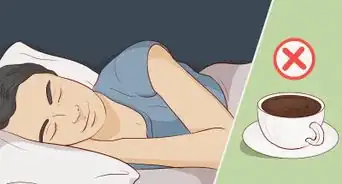
1These disrupt your sleep cycle so you’re more likely to wake up early. Stop drinking any caffeinated drinks or alcohol in the evening a few hours before you plan on sleeping. Since they’re stimulants, they might keep you awake or make you have trouble getting a full night of sleep.[3]
- Be careful of hidden sources of caffeine, such as chocolate.[4]

Method 4
Method 4 of 14:Limit screen time 1 hour before bed.
-
1Blue light from devices interferes with your sleep cycle. Take a break from electronics at least 1 hour before you try falling asleep. Try to limit using your phone or watching TV in your bedroom since you’re more likely to stay awake and get a bad night of sleep.[5]
- As an alternative, try turning on Night Shift (iOS), Night Light (Windows 10), or use an app like F.lux to reduce the blue light from your device's screen.[6]

Method 5
Method 5 of 14:Take a warm shower before bed.
-
1The heat from a shower helps you relax and get better sleep. About 1–2 hours before you go to bed, hop in the shower and turn it to a hot, comfortable temperature. Stay in the water for about 10 minutes before turning your shower off.[7]
- If you want something more relaxing, then sit in the tub instead.[8]

Method 6
Method 6 of 14:Try a melatonin supplement.
-
1Boost your body’s melatonin levels to help improve your sleep cycle. Your body naturally makes melatonin during the day, but a supplement can help out if you have trouble staying asleep. Aim to take 1–3 mg of melatonin about 1 hour before you lie down so you feel sleepy when it’s time for bed.[9]
- If you still feel drowsy the next day when you wake up, you may have had too large of a dose. Try a lower dose next time.

Method 7
Method 7 of 14:Make your room as dark as possible.
-
1Block out any light so it doesn’t wake you up in the morning. If you have windows in your room, get curtains that completely block the light so your room stays dark. When you go to bed, turn off all light sources in your room so your room stays completely dark.[10]
- If you can’t make your room dark enough, wear an eye mask to sleep to block out the light.

Method 8
Method 8 of 14:Keep your room near 65 °F (18 °C).
-
1You’ll get the best sleep if you’re not too hot or too cold. Your room should be at a temperature where you can lie comfortably under the covers without getting too hot or sweating.[11] Set your thermostat to around 65 °F (18 °C), or run an air conditioner or fan while you sleep so you stay cool.[12]
- You may need to raise or lower the temperature if your body is more sensitive to heat.

Method 9
Method 9 of 14:Set your phone to silent.
-
1Don’t let a text or phone call wake you up throughout the night. Turn the volume down on your phone and shut off any alarms you’ve set. Keep your phone away from your bed so you aren’t tempted to use it.[13]
- Don’t stay up too late chatting with your friends. You can always check any missed calls or texts when you wake up.

Method 10
Method 10 of 14:Put in earplugs before you drift off.
-
1Try these if your room isn’t quiet or you're a light sleeper. You sleep a lot better when there’s peace and quiet, wear earplugs while you’re sleeping. That way, other people outside or in your home moving around early in the morning won’t disturb your sleep.[14]

Method 11
Method 11 of 14:Relax your body if you wake up.
-
1Release tension in your body so you can drift back off to sleep. If you’ve woken up, close your eyes and slowly focus on the muscles in your body. Start with your face and slowly relax your muscles as you take deep breaths. Work your way down your body to help you sink into your bed and get some more rest.[15]
- Try tensing your muscles slightly before releasing all the tension for even deeper relaxation.

Method 12
Method 12 of 14:Listen to calm music to drift back to sleep.
-
1Pick some slow, quiet tunes to use as lullabies. Look for slow instrumental music to play in the background. Avoid anything with a lot of vocals or with a fast beat since those could wake you up even more. Just close your eyes and just focus on the music so you can relax again.[16]
- You can also use a white noise machine to help you fall asleep again.

Method 13
Method 13 of 14:Stop looking at the clock.
-
1Checking the clock only makes you more stressed about the time. If you’ve woken up too early, keep your eyes closed and avoid checking how long you’ve been awake. Turn your clock away from you or face the other side of the room so you aren’t tempted to check it again.[17]

Method 14
Method 14 of 14:Get out of bed if you’re awake for 20 minutes.
-
1Lying in bed when you’re not tired can affect how you sleep later on. Even though you want to sleep in, forcing yourself to stay in bed while you’re awake can actually make it harder for you to fall asleep. Get up and leave your bedroom to do something else, like read a book, until you feel tired again.[18]

Warnings
- Sleeping in for too long may disrupt your body’s internal clock and could affect your sleep schedule.[20]Thanks!










References
- ↑ https://www.helpguide.org/articles/sleep/getting-better-sleep.htm
- ↑ https://www.sleepfoundation.org/sleep-hygiene/healthy-sleep-tips
- ↑ https://www.psychologytoday.com/us/blog/sleep-newzzz/201902/your-solution-waking-too-early
- ↑ Alex Dimitriu, MD. Sleep Specialist. Expert Interview. 15 October 2020.
- ↑ https://www.nhs.uk/live-well/sleep-and-tiredness/sleep-tips-for-teenagers/
- ↑ Alex Dimitriu, MD. Sleep Specialist. Expert Interview. 15 October 2020.
- ↑ https://pubmed.ncbi.nlm.nih.gov/31102877/
- ↑ https://www.psychologytoday.com/us/blog/sleep-newzzz/201908/how-hot-baths-help-you-sleep-and-alleviate-pain
- ↑ https://www.sleepfoundation.org/melatonin
- ↑ https://www.hopkinsmedicine.org/health/wellness-and-prevention/how-to-sleep-well-despite-changes-in-your-schedule
- ↑ Alex Dimitriu, MD. Sleep Specialist. Expert Interview. 15 October 2020.
- ↑ https://www.sleepfoundation.org/sleep-hygiene/healthy-sleep-tips
- ↑ https://www.hopkinsmedicine.org/health/wellness-and-prevention/how-to-sleep-well-despite-changes-in-your-schedule
- ↑ https://www.mayoclinic.org/healthy-lifestyle/adult-health/expert-answers/shift-work/faq-20057991
- ↑ https://www.hopkinsmedicine.org/health/wellness-and-prevention/up-in-the-middle-of-the-night-how-to-get-back-to-sleep
- ↑ https://health.clevelandclinic.org/5-strategies-that-will-help-you-get-back-to-sleep/
- ↑ https://health.clevelandclinic.org/5-strategies-that-will-help-you-get-back-to-sleep/
- ↑ https://health.clevelandclinic.org/5-strategies-that-will-help-you-get-back-to-sleep/
- ↑ https://www.helpguide.org/articles/sleep/getting-better-sleep.htm
- ↑ https://www.nhs.uk/live-well/sleep-and-tiredness/sleep-tips-for-teenagers/
About This Article

Medical Disclaimer
The content of this article is not intended to be a substitute for professional medical advice, examination, diagnosis, or treatment. You should always contact your doctor or other qualified healthcare professional before starting, changing, or stopping any kind of health treatment.
If you want to sleep in, make sure you close your blinds and shut your door to keep out as much light as possible. You should also try to keep your room at 65°F since most people sleep better in a cool room. To make sure outside noises don’t keep you up, try playing static on a radio or running a fan to mask unwanted noises. If that still isn’t enough, you can try staying up later that usual so you’ll be tired in the morning, but you could just end up more tired than before. For tips on avoiding sleep disruptions, scroll down . . .