This article was co-authored by wikiHow Staff. Our trained team of editors and researchers validate articles for accuracy and comprehensiveness. wikiHow's Content Management Team carefully monitors the work from our editorial staff to ensure that each article is backed by trusted research and meets our high quality standards.
Learn more...
Brick floors are gaining popularity due to their inherent durability and aesthetic appeal. Both inside and out, a brick floor adds a rustic flair—and they're generally cheaper than other stone or masonry flooring.[1] But should you seal your brick floors? Here, we've gathered answers to all of your most common questions about sealing and maintaining brick floors so they'll look their best for decades to come.
Steps
Question 1
Question 1 of 9:Why should you seal a brick floor?
-
1Sealing your floor makes it easier to clean and maintain. With a sealer, the brick is much less likely to get stained. You also don't have to worry as much about the bricks absorbing moisture, which can eventually lead to cracks.[2]
- On an exterior brick floor, a sealer can keep moss and mildew from growing in the bricks. You can also use an anti-graffiti sealer.

Question 2
Question 2 of 9:What happens if you don't use a sealer?
-
1Your floor might be more difficult to keep clean. Since the sealer prevents dirt and grime from penetrating the brick, you can sweep it up more easily. If you don't use a sealer, you also risk stains, which can set into the brick and be difficult to remove.[3]
- On exterior brick floors, sealers can help reduce moss and mildew growth. A penetrating anti-slip sealer keeps the bricks from getting slick when it rains.

Question 3
Question 3 of 9:When should you apply sealer?
-
1Wait at least one month to allow the brick to cure. This time allows all the moisture in the bricks to evaporate so you don't trap any moisture in the bricks. Trapped moisture can cause bricks to expand or crack.[4]
- If you have a new brick floor, ask if the bricks have already been treated with a penetrative sealer. If they have, you don't need to seal them at all. Brick manufacturers are required to disclose any sealers or other treatments used on their bricks, so all you have to do is ask.

Question 4
Question 4 of 9:What type of sealer should you use?
-
1Use one that's specially formulated for clay brick. There are many different types of brick sealers available depending on the type of finish you want and your floor's exposure (interior or exterior). If you have a new brick floor, consult the manufacturer of the bricks—they can tell you which sealer they recommend. Here are some basic types:[5]
- Acrylic: Strong water repellent with a high gloss finish that can be slippery; better indoors (can degrade in UV light)
- Urethane: Excellent water repellent with good gloss; better indoors (can degrade in UV light)
- Siloxane/Silane: Penetrate the brick for excellent water repellency; long-lasting and difficult to remove; suitable for indoor and outdoor surfaces
- RTV silicone rubber: Penetrates and can help bridge hairline cracks in brick; often used in anti-graffiti coatings; suitable for indoor and outdoor surfaces

Question 5
Question 5 of 9:What's the best way to seal a brick floor?
-
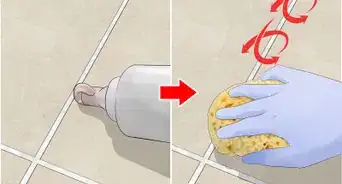
1Apply a smooth, thin coating with a paintbrush or roller. Go slowly and be careful not to overwork an area. Follow the instructions on the product label carefully. You might need more than one coat—just keep in mind that the more coats you apply, the glossier your finish will be.[6]
- Make sure the floor is clean and thoroughly dry before applying the sealer.
- For exterior surfaces use an anti-slip penetrating brick paver sealer. This will keep the bricks from getting slick when it rains.[7]

Question 6
Question 6 of 9:How often should the floor be resealed?
-
1Most sealers should be reapplied every 5 to 15 years. This is a broad range because the durability of your sealer depends on the type used as well as the amount of foot traffic on your brick floor. The product's bottle likely includes information about how often the product should be reapplied. You can also look up this information on the manufacturer's website. Here are average lifespans for most common types of sealers:[8]
- Acrylics (glossy finish): 5 to 7 years
- Urethanes (glossy finish): 1 to 3 years
- Siloxanes/Silanes (penetrants): 10 to 15 years
- RTV silicone rubber (penetrant): 5 to 10 years

Question 7
Question 7 of 9:Do you need to hire a professional?
-
1No, sealer is easy to apply yourself. When you buy sealer, the bottle has instructions on how to apply it to your floor. Follow those instructions precisely for best results. If you do hire someone to do it for you, look for someone who has at least 5 years' experience applying the specific type of product you plan to use.[9]
- If you have a new brick floor, ask the contractors who laid the brick about sealing it.

Question 8
Question 8 of 9:Can you paint instead of sealing?
-
1Yes, you can paint a brick floor for decorative purposes. Painting a brick surface is a big decision because it can't really be reversed. If you decide to paint your brick floor, you'll have to repaint it every 3-5 years. This means you'll have a lot more maintenance than if you use a clear sealer, which typically only has to be reapplied every 5-15 years.[10]
- If you decide you'd rather paint than seal, talk to a contractor who has experience painting brick. The process and preparation all depend on the type of paint used.
- If the brick was previously painted and you want to repaint it, you'll have a lot more work to do to prepare the floor for a fresh coat than you would if it was new brick.

Question 9
Question 9 of 9:How do you clean a brick floor?
-
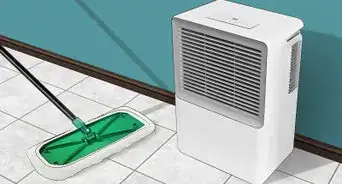
1Vacuum or sweep the bricks once a week. This will keep the light dirt and dust from building up on your brick floor. Once every 3 months, use a solution of 1 cup (240 mL) of vinegar to 1 gallon (3.8 L) of water to mop the floor.[11]
- When mopping, go in small, 3 by 3 feet (0.91 m × 0.91 m) sections. Before the solution is dry, go over the section again with a dry mop to pick up any dirt and dust and keep the solution from causing spotting.

Warnings
- Solvent-based sealers release toxic fumes and are highly flammable. If you use a solvent-based sealer, make sure the area is well-ventilated during application.[12]Thanks!





References
- ↑ https://www.bobvila.com/articles/brick-floors/
- ↑ https://www.bobvila.com/articles/brick-floors/
- ↑ https://www.homeflooringpros.com/brick-flooring/
- ↑ https://www.gobrick.com/docs/default-source/read-research-documents/technicalnotes/6a-colorless-coatings-for-brick-masonry.pdf?sfvrsn=0
- ↑ https://www.gobrick.com/docs/default-source/read-research-documents/technicalnotes/6a-colorless-coatings-for-brick-masonry.pdf?sfvrsn=0
- ↑ http://www.pinehallbrick.com/wp-content/uploads/2017/01/InteriorBrickFloor.pdf
- ↑ https://www.bobvila.com/articles/brick-floors/
- ↑ https://www.gobrick.com/docs/default-source/read-research-documents/technicalnotes/6a-colorless-coatings-for-brick-masonry.pdf?sfvrsn=0
- ↑ http://www.pinehallbrick.com/wp-content/uploads/2017/01/InteriorBrickFloor.pdf
About This Article