This article was co-authored by wikiHow Staff. Our trained team of editors and researchers validate articles for accuracy and comprehensiveness. wikiHow's Content Management Team carefully monitors the work from our editorial staff to ensure that each article is backed by trusted research and meets our high quality standards.
This article has been viewed 1,453 times.
Learn more...
The 2 most reliable ways that you can send money to India are by wiring it through a money transfer company, or by making a bank transfer. Prices can vary widely between companies and banks so it is best to compare rates before choosing the best option. Keep in mind that fees will apply when you send the money and sometimes also when your recipient gets the money. To keep your money safe and secure, avoid using any money sending services that withhold fee information from you before you make the transaction.
Steps
Method 1
Method 1 of 2:Wiring Money to India
-
1Compare different money wiring services before choosing a company. Contact several money transfer businesses and inquire about the fees they charge to wire money to India, and where they have branches located in the country. Ask them how much of what you pay will actually be received by your recipient. Additionally, ask if your recipient will receive the payment in your currency or in rupees.[1]
- Ask the recipient what international money transfer companies are located near them to narrow down your search.
- If a business refuses to give you this information, avoid using their services.
- Most money transfer businesses will convert the funds before sending them, but it is best to be sure.
- Fees may be charged as a flat rate or as a percentage of the money being sent.
- Some businesses may charge additional, optional fees to send money faster.
-
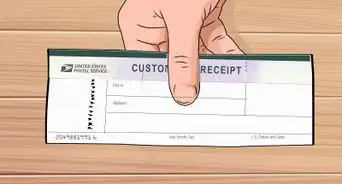
2Provide the recipient’s name, the transfer amount, and the destination. Fill out a small form for the transaction or tell a money wiring service clerk the relevant information about your transaction. This will generally include the recipient's full name, address, and sometimes a telephone number to reach them. You should also indicate the exact amount you wish to have transferred.[2]
- You should also provide your own full name and any other information requested, such as a phone number or address.
-
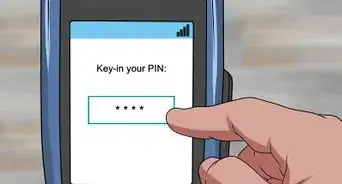
3Review and pay for for the transfer upfront with cash, a debit card, or a credit card. You will have to pay for the money transfer right away and not when your recipient actually gets the money in India. Review the full amount and individual charges before paying to make sure that it is the same as what you were told initially. The total amount will include:[3]
- Your usual state and local taxes.
- The money wiring service's fees for the transfer.
- The exchange rate, which will vary day by day.
-
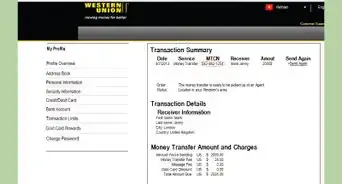
4Find out what procedure your recipient has to follow to get their money. Ask the money wiring service how your recipient can access the money you send to them. With some companies, they may need to provide a valid proof of identification when they present themselves at their local branch to pick up the money. With other companies, you may need to choose a security question for your recipient to answer.[4]
- A valid proof of identification may include a passport or a driver's license.


Method 2
Method 2 of 2:Doing a Bank-to-Bank Transfer
-
1Contact your bank to hear your options for transferring money to India. Each bank has its own rates, options, and procedures for transferring money overseas. Contact your bank by phone or in person to find out if they will transfer money to the recipient’s bank in India, and what they will charge you to do so. You should also ask if there are limits to how much you can send at once, and if any fees will be charged to the recipient.[5]
- Your bank’s exchange rate will also vary from other money transferring services and will fluctuate daily.
-
2Provide the routing and account numbers for and your recipient. Call your bank branch and ask to make an international money transfer. Provide your 9-digit routing number and your bank account number as well as any other identifying information that is requested of you. Next, give the phone agent your recipient’s digit routing number and bank account number.[6]
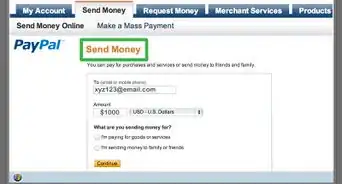
- If you are signed up for online banking services and wish to transfer money online, fill in this information in the online form provided.
-
3Indicate how much you want your recipient to get after fees. Specify the dollar amount in your own currency that you want to send to India. Your bank will charge fees and exchange rates on top of this amount. Inform your bank if you want to cover any transfer fees your recipient may be charged by their bank in India upon receiving the money.[7]
- For guidance through this process, it is best to speak to a telephone agent for your bank or visit your local branch to complete the transaction.
-
4Wait 4-6 business days for your recipient to get the money transfer. A standard international bank transfer takes between 4-6 working days. If you need the money transferred sooner, ask your bank if they offer an express service for an additional fee. Contact the recipient to confirm that they received the money and that they were given the correct amount.[8]












References
- ↑ https://www.consumer.gov/articles/1008-sending-money-overseas
- ↑ https://www.nerdwallet.com/blog/banking/what-is-a-wire-transfer/
- ↑ https://www.consumer.gov/articles/1008-sending-money-overseas
- ↑ https://www.consumer.gov/articles/1008-sending-money-overseas
- ↑ https://www.consumerreports.org/cro/2012/03/the-best-ways-to-send-money-abroad/index.htm
- ↑ https://www.consumerreports.org/cro/2012/03/the-best-ways-to-send-money-abroad/index.htm
- ↑ https://www.moneyadviceservice.org.uk/en/articles/how-to-send-money-overseas
- ↑ https://www.moneyadviceservice.org.uk/en/articles/how-to-send-money-overseas
About This Article