This article was co-authored by Geraldine Grace Johns and by wikiHow staff writer, Hunter Rising. Geraldine Grace Johns is a Professional Ballerina and the Owner of Grace Ballet in New York and Los Angeles. Geraldine toured through New Zealand, Australia, Japan, and Korea as Jammes in Ken Hill's Original Phantom of the Opera. She has studied with the Royal Academy of Dance in London and taught for the Kudo School of Ballet in Yokohama. Geraldine also ran her own Royal Academy of Dance School in New Zealand before studying at the Neighborhood Playhouse School of the Theatre in New York City. Geraldine was a guest coach and Master Class teacher in Toronto for the Canadian Royal Academy of Dance's "Dance Challenge" in 2018, 2019, and 2020. She was also a guest coach and Master Class teacher for the USA Royal Academy of Dance Challenge in Long Beach, California in 2019 and 2020.
There are 11 references cited in this article, which can be found at the bottom of the page.
This article has been viewed 9,557 times.
Ballet takes a lot of hard work to master, and you should be so proud of yourself for sticking with it. Even after you practice a lot, it’s sometimes hard to tell how much better you’ve gotten and if you’re ready to try more advanced techniques. Luckily, tracking your progress is pretty easy if you know what to look for. We’ll start with a few things to test your basic skills and move onto ways to get feedback while you’re performing.
Steps
Method 1
Method 1 of 10:Go back to your basic poses.
-
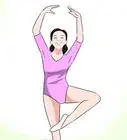
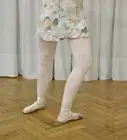
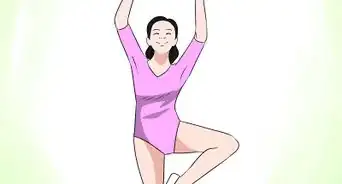
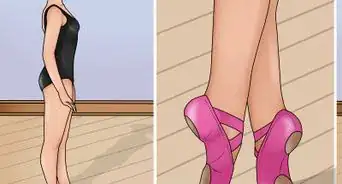
1If you can hit your poses and positions with ease, you’ve gotten better. If you feel like you’re hitting a wall trying to learn more ballet techniques, try out some of the poses you first learned. Start with your basic foot and arm positions. Then, practice some beginner techniques like your pliés, elevés, tendus, and sautés to see if they come easily to you.[1] If you don’t have any difficulty performing them, then you’ve definitely improved since you first started.[2]
- If you have trouble hitting your poses, go through a mental checklist of things to improve, such as the muscles you’re engaging and your starting and ending positions.

Method 2
Method 2 of 10:Test your balance on one foot.
-
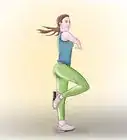
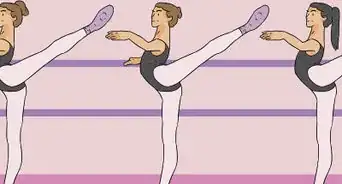
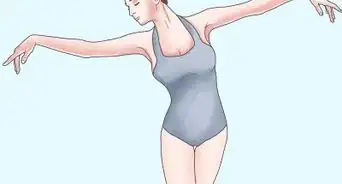
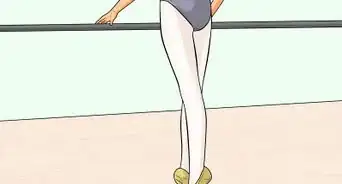
1You’ve gotten better if your legs don’t wobble while you’re balancing. When you support your weight on 1 leg, you should feel sturdy. Try standing on 1 foot and extending your other leg straight back behind you. Try to make your upper body and extended leg parallel with the floor. Notice if your leg wobbles or shakes while you’re in position. Then, switch the leg you’re supporting yourself with to test it out. If you don’t need to reposition to maintain your balance, then you’ve made improvements.[3]
- If you’re still a little unsteady, practice pliés while you’re in the position to strengthen your leg muscles.
- You can also test your balance by standing on 1 foot with your eyes closed for 30 seconds.

Method 3
Method 3 of 10:Check your flexibility during positions.
-
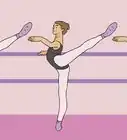
1If you can hit all your poses without feeling tight, you’re improving. Run through your positions and check how well you’re able to do extensions with your arms and legs. If your muscles still feel a bit tight or you can’t quite get into the right position, then stretch so you get more flexible. Some stretches include:[4]
- Hamstring Barre stretch: stand an arm’s length away from a ballet barre and put your foot on top of it. Lean forward to deepen your stretch.[5]
- Standing quad stretch: stand on 1 leg and bring your opposite foot up toward your bum. Hold onto your ankle and pull it up toward your body.
- Lunges: stand straight up and take a big step forward with 1 leg. Bend your knee to a 90-degree angle and lower your body to stretch your hips, glutes, and legs.

Method 4
Method 4 of 10:Look for tall, straight posture.
-
1You’re a better dancer if you aren’t slouching. As you work through poses or a dance routine, focus on how you position your back and core. Maintain good posture by standing up tall, keeping your core engaged, and straightening out your lower back. Otherwise, you won’t feel like you can support the pose as easily.[6]

Method 5
Method 5 of 10:See if the sides of your body feel balanced.
-
1Imbalances in your left and right sides mean there’s room for improvement. Run through your positions and poses on both sides of your body. If you perform them the same way for both your right and left sides, then you’ve trained them evenly. However, if one side feels weaker than the other, it’s a sign you should keep practicing.[7]

Method 6
Method 6 of 10:Check your form one part at a time.
-
1Check each part of your pose for improvements so you notice small mistakes. Rather than worrying about how you move your entire body in a pose, start with checking if you can nail your foot positions first. Compare the proper pose to how you perform it to see if you need to make any adjustments. Once you correct your feet, move your focus up to your legs, then your core, and then your arms.[8]
- Try changing what you focus on between classes. For example, you may focus on your foot positions for one class and then your legs during the next.
- You’ve made improvements if you feel coordinated enough to combine all of the pieces together rather than working on them separately.

Method 7
Method 7 of 10:Notice if you feel winded while rehearsing.
-
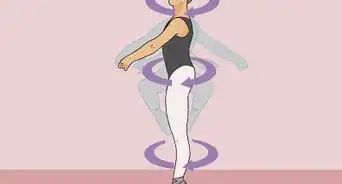
1You may need to work on your stamina if you’re out of breath. Ballet takes a lot of strength and energy, but it should feel a lot easier as you get better. At the end of your practice sessions, focus on your breath and how your body feels. It’s normal to feel a little exhausted after you’re done dancing, but if you’re having trouble catching your breath and feel weak, it’s a sign you should work on your stamina outside of practice.[9]
- Jumping rope, jumping jacks, and squats are great ways to build up your stamina.

Method 8
Method 8 of 10:Watch yourself in a mirror.
-
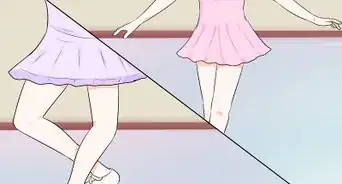
1Check your lines and poses so you can make adjustments right away. Most ballet studios already have mirrors, but you may need to find your own if you’re practicing at home. Run through your positions and poses, and check that you’re using the correct form in the mirror. If you’re making a mistake, reposition yourself until you’ve nailed it. Close your eyes and take a second to notice how your body feels so you’re able to repeat the pose without a mistake later on.[10]
- Be cautious not to rely on using a mirror to always check your poses. Since you usually focus on your legs and feet, looking in a mirror could negatively affect your head and arm positioning.

Method 9
Method 9 of 10:Film yourself dancing.
-
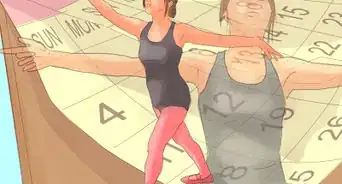
1Record past and current dances so you can compare your performances. When you first start dancing, ask someone to record you running through all of the techniques. After a few more practice sessions, film yourself again. Watch the videos side-by-side so you can point out what you’ve improved on. Just be sure to note any mistakes you made so you know what to work on for next time.[11]
- Save all of the videos you record of yourself so you can go back and check your progress. That way, you can always look back and check your progress.

Method 10
Method 10 of 10:Get feedback from your ballet teacher.
-
1Your teacher can point out anything that you can still work on. If you’re enrolled in a ballet class, reach out to your instructor and ask them if they’ve seen improvement. Since your teacher wants to see you succeed, they’ll point out a few things that you’ve excelled at and a few things you could practice even more. Write down their feedback and continue building on the techniques they mentioned until you’ve gotten better.[12]
- Check in with your teacher every week or month to show them you’ve been working on their feedback.

Community Q&A
-
QuestionHow can I monitor my ballet performance on a weekly basis?
 Geraldine Grace JohnsGeraldine Grace Johns is a Professional Ballerina and the Owner of Grace Ballet in New York and Los Angeles. Geraldine toured through New Zealand, Australia, Japan, and Korea as Jammes in Ken Hill's Original Phantom of the Opera. She has studied with the Royal Academy of Dance in London and taught for the Kudo School of Ballet in Yokohama. Geraldine also ran her own Royal Academy of Dance School in New Zealand before studying at the Neighborhood Playhouse School of the Theatre in New York City. Geraldine was a guest coach and Master Class teacher in Toronto for the Canadian Royal Academy of Dance's "Dance Challenge" in 2018, 2019, and 2020. She was also a guest coach and Master Class teacher for the USA Royal Academy of Dance Challenge in Long Beach, California in 2019 and 2020.
Professional Ballerina & Ballet InstructorTake videos of yourself performing the same exercises at least once a week and use the video as a tool for self-correction. You can also use the slow motion video feature, as this will show you areas that you might not pick up in the mirror. This is especially useful for fast footwork, jumps, and pirouettes. -
QuestionHow can I improve during ballet class?Geraldine Grace JohnsGeraldine Grace Johns is a Professional Ballerina and the Owner of Grace Ballet in New York and Los Angeles. Geraldine toured through New Zealand, Australia, Japan, and Korea as Jammes in Ken Hill's Original Phantom of the Opera. She has studied with the Royal Academy of Dance in London and taught for the Kudo School of Ballet in Yokohama. Geraldine also ran her own Royal Academy of Dance School in New Zealand before studying at the Neighborhood Playhouse School of the Theatre in New York City. Geraldine was a guest coach and Master Class teacher in Toronto for the Canadian Royal Academy of Dance's "Dance Challenge" in 2018, 2019, and 2020. She was also a guest coach and Master Class teacher for the USA Royal Academy of Dance Challenge in Long Beach, California in 2019 and 2020.
Professional Ballerina & Ballet InstructorTake a notebook to your classes and write down your corrections. Once you've mastered that correction, you can cross it out in your book! -
QuestionHow can I improve my ballet skills each day?Geraldine Grace JohnsGeraldine Grace Johns is a Professional Ballerina and the Owner of Grace Ballet in New York and Los Angeles. Geraldine toured through New Zealand, Australia, Japan, and Korea as Jammes in Ken Hill's Original Phantom of the Opera. She has studied with the Royal Academy of Dance in London and taught for the Kudo School of Ballet in Yokohama. Geraldine also ran her own Royal Academy of Dance School in New Zealand before studying at the Neighborhood Playhouse School of the Theatre in New York City. Geraldine was a guest coach and Master Class teacher in Toronto for the Canadian Royal Academy of Dance's "Dance Challenge" in 2018, 2019, and 2020. She was also a guest coach and Master Class teacher for the USA Royal Academy of Dance Challenge in Long Beach, California in 2019 and 2020.
Professional Ballerina & Ballet InstructorStretch and strengthen every day, and you will see your flexibility improve.
Warnings
- Don’t push yourself too hard if you’re in pain or straining since it could cause an injury.[14]Thanks!
References
- ↑ https://www.masterclass.com/articles/basic-ballet-exercises-to-practice-at-home#6-basic-ballet-exercises-to-practice-at-home
- ↑ https://www.londonballetclasses.com/blog/getbetterfaster
- ↑ https://www.pointemagazine.com/balancing-exercises-ballet-2640877339.html?rebelltitem=2#rebelltitem2
- ↑ https://www.pointemagazine.com/increase-flexibility-ballet-2592410106.html
- ↑ https://www.masterclass.com/articles/simple-ballet-stretches-to-improve-your-flexibility#6-ballet-stretches-to-improve-your-flexibility
- ↑ https://youtu.be/JRZYpWJkrjc?t=105
- ↑ https://www.nyfa.edu/student-resources/ballet-and-modern-dance/
- ↑ https://www.londonballetclasses.com/blog/getbetterfaster
- ↑ https://www.pointemagazine.com/improve-stamina-ballet-2646368602.html?rebelltitem=3#rebelltitem3
- ↑ https://www.pointemagazine.com/looking-in-mirror-dance-class-2412871826.html
- ↑ https://www.dancespirit.com/at-home-dance-training-2645619143.html?rebelltitem=1#rebelltitem1
- ↑ https://www.londonballetclasses.com/blog/getbetterfaster
- ↑ https://www.dancespirit.com/at-home-dance-training-2645619143.html?rebelltitem=1#rebelltitem1
- ↑ https://www.hopkinsmedicine.org/health/conditions-and-diseases/sports-injuries/common-dance-injuries-and-prevention-tips
About This Article