This article was co-authored by wikiHow Staff. Our trained team of editors and researchers validate articles for accuracy and comprehensiveness. wikiHow's Content Management Team carefully monitors the work from our editorial staff to ensure that each article is backed by trusted research and meets our high quality standards.
This article has been viewed 615,460 times.
Learn more...
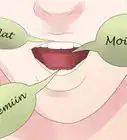
"Yes" is one of the most commonly-used and important words in any language. It can signal that you want something, like something, or your opinion. Without yes, we would be spilling out several unneeded sentences, just to reply to something that has been said to us. This is why it's important to know how to say "yes" in many different languages. This way, when you travel the world, talk to someone from another country, you will have the knowledge required to say that word -yes. Just make sure you know what you are saying yes to, and know how to say no.
Steps
-
1In English say "Yes." (Sounds like "yehss.")[1]
-
2In Spanish and Italian, say "Sí." (Sounds like "see.")[2]Advertisement
-
3If French say "Oui" (Sounds like "we.")[3]
-
4In German, Dutch, Afrikaans, Swedish and Norwegian it is "Ja." (Sounds like "Yah.")
-
5In Danish and Faroese it is "Ja." (Sounds like "yeah".)
-
6In Portuguese and Cape-Verdean Creole it is "Sim" (Sounds like "sing")
-
7In Hebrew(Yiddish) it is "Ken."[4]
-
8In Irish, it is "Sea". (Pronounced "Shah".)
-
9In Esperanto it is "Jes." (Sounds like "yes.")[5]
-
10In Japanese it is "Hai." (Sounds like "hi")
-
11In Swahili it is "Ndiyo." (Sounds like "nn-DEE-oh")
-
12In Hindi and Urdu say "Haa'n" or "Gee"
-
13In Tagalog, say "Oo." (Sounds like "AWE-awe")
-
14In Mandarin when answering an "I am" question, say "是 [Shi]" (Sounds like "Shr.")
-
15In Persian say "Baleh" or "Areh."
-
16In Arabic say "Na'am"
-
17In Armenian say a-yo
-
18In Icelandic, say "Já" (Pronounced "Yow.")
-
19In Hindi, say "Haan" (Pronounced "Haa")
-
20In Punjabi, say "Hanji"
-
21In Marathi, say "Ho"
-
22In Slovak, say "Áno"
-
23In Czech, say "Ano"
-
24In Hungarian, say "Igen"
-
25In Russian, say Да "Da"
-
26In Serbian, Croatian, Bulgarian, and Romanian say "Da"
-
27In Slovene, say "Ja" (or "Da" in highly official situations)
-
28In Turkish, say "Evet" (Sounds like "ae-wet")
-
29In Telugu, say "Avunu"
-
30In Kannada, say ಹೌದು (how-du) / ಸರಿ (suh-ri)
-
31In Greek, say "Nai" (Sounds like "n-ae")
-
32In Polish, say "tak" (Sounds like "tack")
-
33In Lithuanian, say "Taip"
-
34In Scots dialect, say "Aye" (Sounds like "eye")
-
35In Scottish Gaidhlig, say "Tha" (sounds like "ha")
-
36In Basque, say "Bai"
-
37In Welsh, say "Ydw" or "Oes" (Sounds like "Uh-do" or "Oy-s")
-
38In Gujarati, say "Haan"
-
39In Luxembourg, say "Jo" (Sounds like "Yoh")
-
40In Finnish, say "Kyllä" or "Joo"
-
41In Swedish it's "Ja" (Sounds like YA)
-
42In Indonesian and Malaysian, say "Ya" (sounds like "Yah")
-
43In Estonian, say "Jah" (sounds like "Yah")
-
44In Tamil, say "Sari" (சரி) (pronounced sa-ri) or "Aam" (ஆம்) (sounds like Ām).
-
45In Korean, say "Ne" (네)
-
46In Hausa, say "E" (éh)Advertisement


Community Q&A
-
QuestionWhat language do they speak in Belgium?
 DonaganTop AnswererIn Belgium they primarily speak Dutch (Flemish) and French. A small minority speaks German.
 -
QuestionWhat language is "da" yes in?
 Community AnswerRussian, Ukrainian, Belorusian, Romanian, Bulgarian, Serbian, Croatian and Macedonian.
 -
QuestionIn which language does the word "ochi" mean "yes"?DonaganTop AnswererNot sure. However, the word "ochi" (óxi) means "no" in Greek.
-
QuestionHow do I say "Hi" in Chinese?
 Sun DonkunCommunity AnswerYou can say 你好 (nee-khow) to greet people in Mandarin Chinese. In Cantonese, you can say "lay-hou" (younger accent) or "nay-hou" (traditional accent). For slang or talking to your close friends, just say "khow" by omitting "nee."
 -
QuestionHow o I pronounce "yes" in Lithuanian?
 Community AnswerT-ah-ee-p. (It sounds a little bit like the English word 'type,' but the Y sound sounds more like 'ai.')
 -
QuestionHow do I say yes in Bangla?Community Answerহ্যাঁ | - Hyan - the "n" is nasal, pronounced at the same time as the "a" and often accompanies the "্য" (represented by the "y"). This is unique to Bengali/Bangla, and makes it very different in comparison to other languages from India (most of which uses some variations of the Gupta script, which is traditionally used to write Sanskrit).
-
QuestionHow do I say yes in Belgium?
 Community AnswerThere are several languages spoken in Belgium. The main ones are Dutch and French, so you'd say "ja" and "oui" respectively. Some people also speak German, which is also "ja."
Warnings
- Make sure you also know how to say No.Thanks!
- Make sure you know what you are agreeing to.Thanks!
- Be careful how you say it, as it might come out inappropriate or unintelligible.Thanks!












References
About This Article