This article was co-authored by Peggy Rios, PhD and by wikiHow staff writer, Amber Crain. Dr. Peggy Rios is a Counseling Psychologist based in Florida. With over 24 years of experience, Dr. Rios works with people struggling with psychological symptoms such as anxiety and depression. She specializes in medical psychology, weaving together behavioral health programs informed by empowerment theory and trauma treatment. Dr. Rios uses integrated, evidence-based models to provide support and therapy for people with life-altering medical conditions. She holds an MS and Ph.D. in Counseling Psychology from the University of Maryland. Dr. Rios is a licensed psychologist in the state of Florida.
There are 10 references cited in this article, which can be found at the bottom of the page.
This article has been viewed 1,175 times.
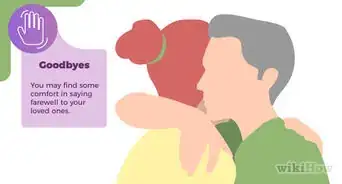
Saying goodbye to a loved one is a painful experience, but it can also be a beautiful moment that brings you healing and peace. It's not always easy to find the right words when you're faced with death, though. And if your loved one passed away before you could say goodbye, you may be looking for symbolic ways to bid them farewell and get some closure. Whatever your situation is, we're here to help.
Steps
Method 1
Method 1 of 9:Do it sooner rather than later.
-
1If you put it off, you might miss your chance. Finding something positive to focus on when your loved one is terminally ill probably feels impossible, but knowing ahead of time can be a blessing. The act of saying goodbye is really important. Don't wait, though—life is fragile and they could slip away any time. Seize this special opportunity while you still can.[1]
- If your loved one is still conscious, it’s important to give them a chance to speak to you, as well.
- Many people don’t get the opportunity to say goodbye to a loved one and dealing with that can be really hard on them.[2]
Advertisement

Method 2
Method 2 of 9:Go see them in person if you can.
-
1If that’s not possible, a video chat is the next best thing. Gathering the strength to see them in person at the end isn't easy, especially if they're in hospice or assisted living, but you can do this. Even if your loved one is unconscious, actually seeing them and saying the words can help you get closure.
- If you’re unable to travel but your loved one is still awake, you can speak to them over the phone, too. Reach out to the hospital or nursing home to arrange a video chat or phone call. They’re usually very accommodating and will even hold the phone or tablet for your loved one, if needed.[3]

Method 3
Method 3 of 9:Talk even if you aren’t sure they'll hear you.
-
1Hearing is probably the last of our senses to leave us. If your loved one is currently unconscious or unresponsive, studies do show that it’s likely they’ll still be able to hear you.[4] There’s no way to know for sure, of course, but it’s certainly a comforting thought. You can talk, read, or sing songs—whatever feels right to you in the moment.[5]
- Even if they can't hear you, saying the words out loud can be helpful for you, too.
Advertisement

Method 4
Method 4 of 9:Bring up treasured memories.
-
1Recalling special memories can bring you both some joy. Saying goodbye to a loved one is really hard, but it’s okay to smile and laugh. Bringing up the good times, telling funny stories, or even sharing a few favorite jokes can make your last moments together beautiful and lift your spirits.[6]
- For example, you could remind your loved one of a special holiday or trip you took together.[7]

Method 5
Method 5 of 9:Resolve any longstanding issues or arguments.
-
1If you need to apologize for something, go ahead and do it. Relationships aren’t perfect no matter how much you love each other. You may have an old rivalry or long-held resentment weighing on you. Maybe you had a big argument years ago and you can't stop thinking about it. Addressing it now can be healing and if you don’t, you may end up regretting it one day.[8] [9]
- If you don't see any positive value in doing this or you’re worried it might do more harm than good, it might be better to leave dark memories in the past. Every situation is different and it’s completely up to you.
- If you want to bring something up from the past, make sure it's something significant. Petty arguments and small things aren’t worth dredging up now.
- If you need or want to forgive your loved one for something they did to you, that can be very healing, too.[10]
Advertisement

Method 6
Method 6 of 9:Thank them for the role they played in your life.
-
1Your loved one will want to know about their positive impact. At the end of the day, most of us want to leave behind some kind of legacy or believe that we made the world a better place in some way. If your loved one inspired or influenced you in a profound way, tell them. Thank them for what they did for you and what they taught you. Give them the gift of validation in their final moments. [11]

Method 7
Method 7 of 9:Tell them how much you love them.
-
1Open up your heart and share your feelings. Now isn’t the time to hold back! Even if you’ve told them you love them countless times before, you won’t regret saying those three words one last time.[12] If your loved one is slipping away fast or you simply don't know what to say, “I love you” never stops being special.[13]Advertisement

Method 8
Method 8 of 9:Just be there.
-
1Sometimes simple actions speak louder than words. Summing up a lifetime of love and gratitude in a few sentences may seem impossible. If you’re struggling to put your feelings into words, don’t waste these last moments trying to be eloquent. Your presence and touch mean just as much (if not more).[14]
- Hold their hand, rub their feet, kiss them on the cheek, look into their eyes, smile at them—these are valid ways to say goodbye, too.

Method 9
Method 9 of 9:Honor their memory with a special gesture.
-
1A beautiful gesture can help you get some much-needed closure. If you weren't able to say goodbye to your loved one, that can be really hard. Honoring their memory with a gesture might not be ideal, but taking some kind of action may help you find some peace. For example, you could plan a special memorial and invite all of their loved ones.[15] Other ideas to consider:Advertisement






References
- ↑ https://www.crossroadshospice.com/hospice-palliative-care-blog/2019/february/14/how-to-say-goodbye-when-someone-you-love-is-dying/
- ↑ https://umcommunities.org/around-the-communities/how-to-say-goodbye-to-your-senior-loved-one/
- ↑ https://www.crossroadshospice.com/hospice-palliative-care-blog/2020/april/29/saying-goodbye-to-a-dying-loved-one-by-phone/
- ↑ https://www.sciencedaily.com/releases/2020/07/200708105935.htm
- ↑ https://www.crossroadshospice.com/hospice-palliative-care-blog/2019/february/14/how-to-say-goodbye-when-someone-you-love-is-dying/
- ↑ https://umcommunities.org/around-the-communities/how-to-say-goodbye-to-your-senior-loved-one/
- ↑ https://www.crossroadshospice.com/hospice-palliative-care-blog/2020/april/29/saying-goodbye-to-a-dying-loved-one-by-phone/
- ↑ Peggy Rios, PhD. Counseling Psychologist (Florida). Expert Interview. 18 December 2020.
- ↑ https://www.helpguide.org/harvard/saying-goodbye.htm#
- ↑ https://www.crossroadshospice.com/hospice-palliative-care-blog/2020/april/29/saying-goodbye-to-a-dying-loved-one-by-phone/
- ↑ https://www.crossroadshospice.com/hospice-palliative-care-blog/2020/april/29/saying-goodbye-to-a-dying-loved-one-by-phone/
- ↑ Peggy Rios, PhD. Counseling Psychologist (Florida). Expert Interview. 18 December 2020.
- ↑ https://www.crossroadshospice.com/hospice-palliative-care-blog/2020/april/29/saying-goodbye-to-a-dying-loved-one-by-phone/
- ↑ https://completecarestrategies.com/saying-good-byethe-final-gift/
- ↑ https://www.bbc.com/news/uk-52142660
- ↑ https://www.nextavenue.org/saying-goodbye-dying-loved-one/
- ↑ https://dying.lovetoknow.com/coping-grief/how-say-goodbye-someone-who-is-dying
About This Article