X
wikiHow is a “wiki,” similar to Wikipedia, which means that many of our articles are co-written by multiple authors. To create this article, volunteer authors worked to edit and improve it over time.
This article has been viewed 122,964 times.
Learn more...
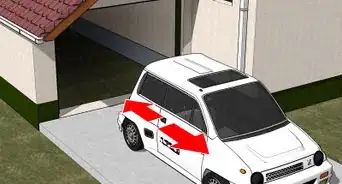
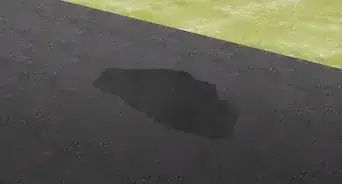
Motor oil quickly seeps into the layers of the driveway, which makes removal difficult. Attacking the stain while it is fresh will produce the best results.
Steps
Method 1
Method 1 of 2:Fresh Spills
Method 1
Purchase engine degreaser or cleaning products beforehand so that you are prepared for spills or drips before they occur.
-
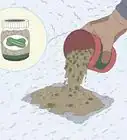
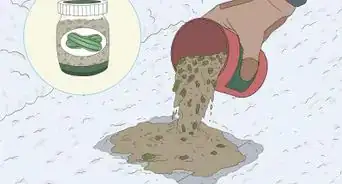
1Encircle the spill with sand, dirt, sawdust or cat litter to prevent further spreading.
-
2Soak up the spill using an absorbent towel, cloth or powder.
-
3Apply an engine degreaser or other specific cleaning product according to the manufacturer’s guidelines.[1]
-
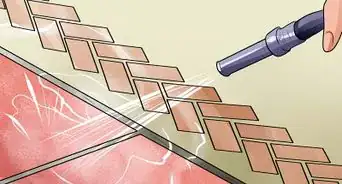
4Rinse the surface thoroughly using a garden hose.[2]


Method 2
Method 2 of 2:Old Spills
Method 2
Older spills require a solution with more cleaning power.
-
1Encircle the stain with sand, dirt, sawdust or cat litter to contain cleaning products.[3]
-
2Create a poultice of 1-part lime to 2-parts mineral turpentine in a 5 gallon (18.9 L) bucket. Use a wooden paint stirrer stick to stir the mixture.
-
3Spread a 1/4" (6 mm) layer of the poultice over the stain using a drywall finishing knife. Make sure to spread the poultice out so that there is a 2" (50 mm) margin around the stain.
-
4Cover the stain with plastic sheeting and leave for 24 hours. Set rocks, bricks or concrete blocks at each corner to secure the sheeting so that it does not blow away.
-
5Remove the sheeting and scrape off the powder using a drywall finishing knife.
-
6Mix 1/4 cup of laundry detergent and 1 gallon (3.8 L) of warm water in a clean, five gallon bucket.
-
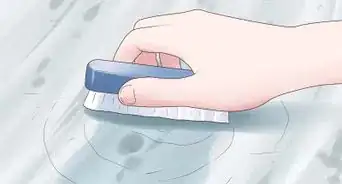
7Scrub the area with warm water and laundry detergent using a stiff nylon bristled brush.[4]
-
8Rinse with clean water using a garden hose.[5]


Community Q&A
-
QuestionHow much does it cost to have a motor oil stain removed from concrete by a professional?
 Community AnswerIt can vary from around $50 to $100. This depends on where you live and who you talk to.
Warnings
- Follow all package instructions related to engine degreaser, cleaning products, turpentine and lime.Thanks!
- Keep animals and children away from your work area to prevent poisoning.Thanks!
- Turpentine is flammable. Do not smoke or use an open flame near turpentine at any time.Thanks!
Things You'll Need
- Sand, dirt, sawdust or kitty litter
- Absorbent towels, cloth or powder
- Engine degreaser
- Working garden hose
- Lime
- Synthetic turpentine
- 2 5 gallon (18.9 L) buckets
- Wooden paint stirrer stick
- Drywall finishing knife
- Plastic sheeting
- Rocks, bricks or concrete blocks
- Laundry detergent
- Warm water
- Stiff nylon bristled brush






References
- ↑ https://www.youtube.com/watch?v=swb14AJ4baU
- ↑ https://www.youtube.com/watch?v=swb14AJ4baU
- ↑ https://www.bobvila.com/articles/how-to-remove-oil-stains-from-concrete/
- ↑ https://www.goodhousekeeping.com/home/cleaning/q-and-a/a21234/heloise-oil-driveway-apr07/
- ↑ https://www.huffpost.com/entry/how-to-clean-oil-concrete_n_1542783
- https://www.bobvila.com/articles/driveway-cleaning/