This article was co-authored by Alexander Ruiz, M.Ed. and by wikiHow staff writer, Janice Tieperman. Alexander Ruiz is an Educational Consultant and the Educational Director of Link Educational Institute, a tutoring business based in Claremont, California that provides customizable educational plans, subject and test prep tutoring, and college application consulting. With over a decade and a half of experience in the education industry, Alexander coaches students to increase their self-awareness and emotional intelligence while achieving skills and the goal of achieving skills and higher education. He holds a BA in Psychology from Florida International University and an MA in Education from Georgia Southern University.
There are 15 references cited in this article, which can be found at the bottom of the page.
wikiHow marks an article as reader-approved once it receives enough positive feedback. This article received 13 testimonials and 100% of readers who voted found it helpful, earning it our reader-approved status.
This article has been viewed 278,137 times.
The end of the semester is on the horizon, and your upcoming exam date looms closer and closer. Staying calm and relaxed before your test may seem like a tall order, but it’s not as impossible as you may think. While you can’t predict what questions will be on your exam, you can change your attitude, habits, and mindset. We’ve put together lots of tips and tricks to help you stay calm and collected before the big day arrives.
Steps
Method 1
Method 1 of 13:Picture a good outcome.
-
1Imagine yourself acing the exam and doing well. Don’t picture any worst-case scenarios. Picture yourself getting a great grade on your exam, or reaching a specific GPA by the end of the semester. Chances are, you aren’t going to flunk out of school or get a failing grade on your test. Instead, think about all the positive things that could happen![1]
- For example, you might hang up a test with high marks in your room, so you can really visualize your goal.

Method 2
Method 2 of 13:Breathe deeply.
-
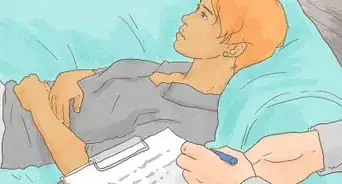
1Belly breathing is a quick, easy way to relax. Sit or lie down, placing your left hand on your stomach and your right hand over your heart. Breathe deeply through your nose, pushing your left hand forward with your stomach. Then, exhale through puckered lips, feeling your left hand sink inward with your stomach. Repeat this technique at least 3 times, and see if you feel any differently.[2]

Method 3
Method 3 of 13:Meditate mindfully.
-
1Mindfulness meditation helps you focus on the present. Find a comfortable place to just sit and breathe. As you meditate, focus on the current moment instead of worrying about your exam.[3]

Method 4
Method 4 of 13:Try progressive muscle relaxation.
-
1Tighten and relax your muscle groups one at a time.Take a deep breath, and clench your hands for up to 10 seconds. Then, relax for about 10 to 20 seconds. Repeat this process with your other muscle groups, moving to your wrists and forearms, biceps and upper arms, shoulders, forehead, eyes and nose, cheeks and jaws, mouth, back of neck, front of neck, chest, back, stomach, hips and butt, thighs, and lower legs.[4]

Method 5
Method 5 of 13:Do relaxing yoga poses.
-
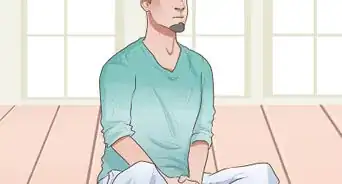
1The lotus pose is an easy, relaxing way to center yourself. Find a flat, open area where you can sit comfortably. Then, fold your legs inward, arranging your left foot on top of your right thigh and your right ankle over your left thigh. Take several deep breaths, and then switch your legs around.[5]
- Reclined eagle, eye-of-the-needle, and cow face are some other relaxing poses you can try.

Method 6
Method 6 of 13:Get some exercise.
-
1Exercise pumps you full of feel-good hormones. If you’re stressing the night before an exam, take a break and go for a walk, jog, or other type of workout. Any kind of physical activity will help boost your endorphins and also balance out your stress hormones, like cortisol and adrenaline.[6]
- You might stop by the gym, or take a brisk walk around campus.

Method 7
Method 7 of 13:Try aromatherapy.
-
1Lavender essential oil might help you feel less anxious. Use a traditional diffuser, or infuse aromatherapy necklaces, keychains, and bracelets with the oil. You can also try aromatherapy through body oil, or with an aroma stick.[7]
- Aroma sticks are also known as essential oil inhalers. You can find this and other aromatherapy accessories online, or from specialty stores.
- Lemon, bergamot, ylang ylang, clary sage, and jasmine oils are other great options for stress relief.[8]

Method 8
Method 8 of 13:Sip some chamomile tea.

Method 9
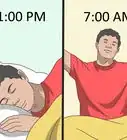
Method 9 of 13:Set multiple alarms.
-
1Don’t stress about oversleeping your exam. Instead, set multiple alarms in your phone or alarm clock, so you’re ready to face the day with plenty of time to spare.[11] You might set your alarms 15 minutes apart, or even 5 minutes apart, if you’re feeling ambitious.

Method 10
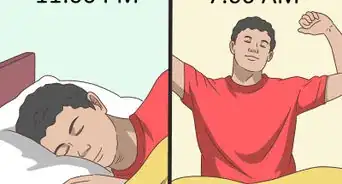
Method 10 of 13:Get lots of rest.
-
1Get at least 7 hours of sleep each night during your final exam week. Don’t pull any all-nighters to sneak in some last-minute studying; instead, aim to get around 7-9 hours of sleep each night.[12] This way, you’ll be well-rested and alert when your exam date rolls around. Plus, a good night’s sleep makes it much easier to handle and cope with any last-minute exam nerves.[13]

Method 11
Method 11 of 13:Eat breakfast.
-
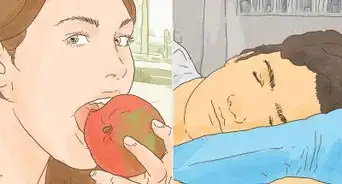
1Snack on protein-rich foods and whole grains before your test. According to health experts, foods like muesli, whole rolled porridge oats, and a slice or 2 of whole-grain bread are great breakfast options. Add some yogurt, milk, or eggs into the mix as well—these protein-rich foods will help you stay full and satisfied throughout your exam.[14]
- You might enjoy some scrambled eggs on toast, or a cup of yogurt with fruit sliced overtop.[15]
- A bowl of oatmeal with sliced fruit and nuts is a great option, as well as a smoked salmon omelette.

Method 12
Method 12 of 13:Arrive early and keep to yourself.
-
1Give yourself time to move around and find a seat. Feel free to stretch your legs and move around, but try not to chat with other test-takers. Comparing notes with other students might make you feel even more nervous before the test.[16]

Method 13
Method 13 of 13:Think positive thoughts.
-
1Pretend you’re talking to a friend when you think about the exam. You wouldn’t tell a friend that they didn’t study enough, or that they’re going to fail, right? Embrace that kind, encouraging, and empathetic tone and apply it to yourself when you feel some pre-test nerves coming on.[17]
- “I’ve done everything I can to prepare for this test” or “All I can do is try my best” are some examples of helpful, positive thoughts.

How Can I Cope With Test-Taking Anxiety?






-Step-11.webp)

References
- ↑ https://pennstatelearning.psu.edu/test-anxiety
- ↑ https://www.uofmhealth.org/health-library/uz2255
- ↑ https://www.health.harvard.edu/mind-and-mood/six-relaxation-techniques-to-reduce-stress
- ↑ https://www.uofmhealth.org/health-library/uz2225
- ↑ https://www.yogajournal.com/practice/16-yoga-poses-find-instant-calm-peace/
- ↑ https://www.health.harvard.edu/staying-healthy/exercising-to-relax
- ↑ https://www.hopkinsmedicine.org/health/wellness-and-prevention/aromatherapy-do-essential-oils-really-work
- ↑ https://www.psychologytoday.com/us/blog/urban-survival/201604/six-aromatherapy-essential-oils-stress-relief-and-sleep
- ↑ https://www.pennmedicine.org/updates/blogs/health-and-wellness/2019/december/health-benefits-of-tea
- ↑ https://www.cnn.com/2020/08/11/health/teas-for-sleep-wellness/index.html
- ↑ https://www1.wne.edu/student-involvement-and-leadership/doc/December%202016.pdf
- ↑ https://www.sleepfoundation.org/how-sleep-works/how-much-sleep-do-we-really-need
- ↑ https://www.brown.edu/campus-life/support/counseling-and-psychological-services/managing-test-anxiety
- ↑ https://www.bbc.co.uk/food/articles/food_exam_performance
- ↑ https://www.bbc.co.uk/food/collections/breakfasts_for_exam_day
- ↑ https://www.brown.edu/campus-life/support/counseling-and-psychological-services/managing-test-anxiety
- ↑ https://pennstatelearning.psu.edu/test-anxiety
About This Article

Medical Disclaimer
The content of this article is not intended to be a substitute for professional medical advice, examination, diagnosis, or treatment. You should always contact your doctor or other qualified healthcare professional before starting, changing, or stopping any kind of health treatment.
To relax before a final exam in college, try listening to some calming music or reading a book. The day before your test, make sure to eat and drink well so you don’t have trouble sleeping at night. Stay away from spicy and greasy foods as well as alcohol, which can both disrupt your sleep, and drink plenty of water. Another way you can make sure to get a good night’s rest is to stop working at least 30 minutes before going to bed. Also, avoid blue light from screens like your phone and TV at least 2 to 3 hours before sleeping. For more tips from our co-author, including how to stay in control the day of the exam, read on!