This article was co-authored by Courtney Foster. Courtney Foster is a Licensed Cosmetologist, Certified Hair Loss Practitioner, and Cosmetology Educator based out of New York City. Courtney runs Courtney Foster Beauty, LLC and her work has been featured on The Wendy Williams Show, Good Morning America, The Today Show, The Late Show with David Letterman, and in East/West Magazine. She received her Cosmetology License from the State of New York after training at the Empire Beauty School - Manhattan.
There are 15 references cited in this article, which can be found at the bottom of the page.
wikiHow marks an article as reader-approved once it receives enough positive feedback. This article received 21 testimonials and 100% of readers who voted found it helpful, earning it our reader-approved status.
This article has been viewed 1,284,635 times.
While hair loss is very common, we know that you’re looking to regrow some thicker locks. While there are many false home remedies for re-growing hair online, there are a lot of things you can do that might have an effect. Unfortunately, if your hair loss is genetic, there isn’t much that home remedies can do to help. Luckily, there are medications and minor procedures that can replace your hair, so see your doctor if home remedies don’t work for you.
Steps
Method 1
Method 1 of 19:Massage your scalp each day.
-
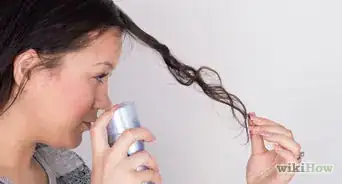
1This could stimulate your hair follicles to produce more hair. One study showed that a daily massage for 4 minutes increased hair thickness. Try rubbing your fingertips around your scalp for a few minutes each day to see if this helps.[1]
- This will probably take a while to work. The study took measurements after 24 weeks, or almost 6 months.
- You could also use a massage tool on your scalp.
Advertisement

Method 2
Method 2 of 19:Reduce stress to avoid hair loss.
-
1Stress has a definite impact and makes you lose hair faster.[2] If you’ve been especially stressed and notice that you’re losing hair, then try to control your stress as soon as possible. Making some positive changes could reduce the hair loss.[3]
- Try making time each day for some relaxation exercises like meditation, deep breathing, or yoga.
- Doing things you enjoy is also good for fighting stress, so make some time for your hobbies each day as well.
- If you have trouble reducing your stress, then talking to a professional therapist or psychiatrist can be a big help.


Method 3
Method 3 of 19:Quit or don’t start smoking.
-
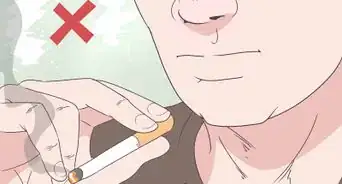
1Smoking restricts circulation to your scalp and could cause hair loss. If you do smoke, then stop as soon as possible to avoid health problems. If you don’t smoke, then it’s best not to start at all.[4]
- Secondhand smoke can cause health problems as well, so don’t let anyone smoke in your home.
Advertisement

Method 4
Method 4 of 19:Wash your hair with gentle shampoo and moisturizing conditioner.
-
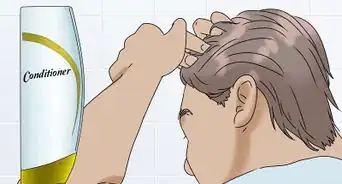
1Cleaning your hair is important, but harsh products can strip nutrients and oils.[5] Use a gentle, alcohol-free shampoo to preserve your hair’s nutrients. Then use a moisturizing conditioner every time you shampoo to keep your hair hydrated.[6]
- Use products that are free of fragrances and alcohol. Products marked “Hypoallergenic” and designed for sensitive skin tend to work best.
- Using a leave-in conditioner can also protect your hair throughout the day.

Method 5
Method 5 of 19:Comb your hair gently.
-
1Constant brushing can damage your hair and scalp. Only comb your hair enough to style it, then stop.[7]
- If you have a habit of tugging on your hair during the day, then stop this as well. Any pressure could cause further hair loss.
Advertisement

Method 6
Method 6 of 19:Stop using coloring, oiling, or chemical straightening treatments.
-
1These treatments all use harsh chemicals that can strip your hair of nutrients. It’s best to avoid these treatments, and especially so if you’ve started losing your hair.[8]

Method 7
Method 7 of 19:Keep high heat away from your hair.
-
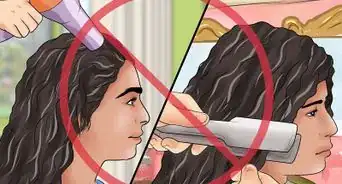
1Heat from blow dryers or curling irons damage your hair with consistent use. Avoid using these products as much as possible to avoid damaged and thinning hair.[9]
- Air-dry your hair as much as possible. If you use a blow dryer, keep it on a low heat setting.
- It’s fine to use curlers or straighteners occasionally. Just don’t do it every day.
Advertisement

Method 8
Method 8 of 19:Get tested for any nutrient deficiencies before making changes.
-
1A simple blood test can confirm whether or not you’re missing any nutrients. While nutrition can play a big role in hair growth, nutritional changes generally only work if you already have some kind of deficiency. If you’re losing your hair and don’t know why, then visit your doctor for a blood test. The results can tell you whether or not you need to make changes.[10]
- Unfortunately, dietary changes don’t make much of a difference if you don’t have any nutrient deficiencies. Some topical or medical treatments can still help.

Method 9
Method 9 of 19:Eat a healthy number of calories each day.
-
1Eating too few calories can cause hair loss, like if you’re on an extreme or crash diet. This can leave your body malnourished and unable to produce hair. Speak to your doctor to determine how many calories you need per day to stay healthy, and stick with that in your normal diet.[11]
- In general, women can eat as few as 1,200 calories per day and men can go as low as 1,500 per day without any problems. Dropping below these levels could cause nutrient deficiencies.[12]
- Be especially careful if you’re dieting. Track your calories so you don’t accidentally end up malnourished.
Advertisement

Method 10
Method 10 of 19:Replenish iron in your diet.
-
1Lack of iron is a common nutrient deficiency and can definitely lead to hair loss. If you’re iron-deficient, then redesign your diet or take supplements to get the recommended amount.[13]
- In general, men need 8 mg and women need 18 mg of iron each day.[14]
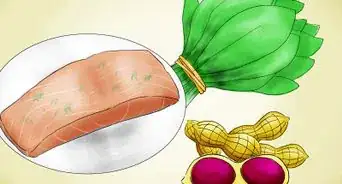
- Sources of iron include red and lean meat, fish, beans, nuts, legumes, and leafy green vegetables. You can also take an iron supplement if your doctor tells you this is safe.

Method 11
Method 11 of 19:Include more zinc in your diet.
-
1Adults need 8-11 mg of zinc each day.[15] Zinc helps your body produce enzymes that aid in hair growth, and deficiencies are associated with baldness. If you have a zinc deficiency, then you can get more from your diet or from dietary supplements.[16]
- Good zinc sources include oysters and other shellfish, red meat and poultry, beans, nuts, whole grains, and dairy products.
- Zinc deficiencies are more common if you have some kind of digestive disorder like inflammatory bowel disease. It’s also possible if you’re a vegetarian or vegan.
Advertisement

Method 12
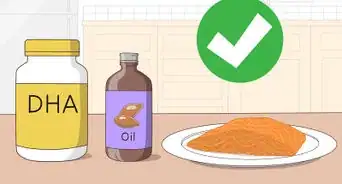
Method 12 of 19:Eat sources of omega-3s and omega-6s.

Method 13
Method 13 of 19:Have more biotin.
-
1You only need about 25-30 mcg of biotin each day. Biotin is a B vitamin that aids in hair growth. If you don’t have enough of this nutrient, then your hair could start thinning. Make sure you’re getting the right amount from your diet every day.[19]
- The best sources are organ meat, fish, eggs, seeds, nuts, and red meat.[20]
- Biotin deficiencies are pretty rare, so it’s unlikely that this is causing your hair loss.
Advertisement

Method 14
Method 14 of 19:Get selenium from food instead of supplements.
-
1Selenium is a type of protein that definitely plays a role in hair growth. This is why a lot of hair growth formulas use it. However, eating too much selenium could cause selenium toxicity, which also causes hair loss. It’s best to get selenium from your regular diet instead of supplements to avoid having too much.[21]
- Adults need about 55 mcg of selenium each day. You can get this from meat, poultry, eggs, dairy, and whole grains.[22]

Method 15
Method 15 of 19:Don’t eat too much vitamin A or E.
-
1Too much of either nutrient in your system could actually cause hair loss. Keep your intake of each vitamin within the normal levels to avoid any problems.[23]
- It’s very hard to consume too many vitamins from your regular diet. The typical cause is overuse of supplements, so make sure you take all supplements exactly as directed.
Advertisement

Method 16
Method 16 of 19:Apply hair growth medication to your scalp.
-
1The most common brand of this medication is Rogaine. It comes in a foam or shampoo that you'd apply to your scalp once or twice a day, depending on the instructions.[24] This can take up to 6 months to show results but is an effective treatment for hair loss.[25]
- Rogaine is available without a prescription.
- Be careful and don't get the medication anywhere you don't want hair to grow.

Method 17
Method 17 of 19:Stimulate your follicles with corticosteroid injections.
-
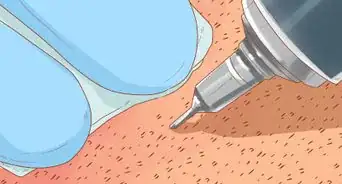
1This is a common treatment for people with a few bald patches. Steroid injections can reduce inflammation in your follicles and help them produce more hair. Your dermatologist can give you these injections every 4 to 8 weeks, so keep up with your appointments for the best results.[26]
- This treatment can show results within 12 weeks if you're consistent with your appointments.
Advertisement

Method 18
Method 18 of 19:Have a laser scalp treatment.
-
1You might need several sessions a week for a few months before you see results.[27] It's possible that laser treatments can stimulate your hair follicles into producing more hair. These treatments are done in the dermatologist's office, so discuss the treatment with them if you'd like to try it.[28]
- You can also use laser treatment alongside another treatment to stimulate hair growth like medication.

Method 19
Method 19 of 19:Try a hair transplant.
-
1Transplants work best if you still have some hair on your head. A hair transplant takes some healthy follicles from a different part of your scalp and implants them in bald sections. A surgeon or dermatologist will apply local anesthesia to your scalp and then make the transplant. You can go home after your treatment is done.[29]
- Follow all of your doctor's instructions for post-op care for the best results.
- You might need follow-up surgeries to fill in leftover bare patches.
Advertisement

Expert Q&A
Did you know you can get premium answers for this article?
Unlock premium answers by supporting wikiHow
-
QuestionHow can I regrow and thicken my hair naturally?
 Courtney FosterCourtney Foster is a Licensed Cosmetologist, Certified Hair Loss Practitioner, and Cosmetology Educator based out of New York City. Courtney runs Courtney Foster Beauty, LLC and her work has been featured on The Wendy Williams Show, Good Morning America, The Today Show, The Late Show with David Letterman, and in East/West Magazine. She received her Cosmetology License from the State of New York after training at the Empire Beauty School - Manhattan.
Licensed CosmetologistYour hair will get stronger if you adjust your diet to get nutrient-rich food. Make sure you stay hydrated by drinking a lot of water as well, or else your hair could dry out and become brittle.
Support wikiHow by unlocking this expert answer.
-
QuestionI am 27 years old, and my hair in the front on the side is gone. I think it's due to stress. I am anemic too. How can I fix this?
 Laura MartinLaura Martin is a Licensed Cosmetologist in Georgia. She has been a hair stylist since 2007 and a cosmetology teacher since 2013.
Licensed CosmetologistBoth anemia and stress can cause hair loss. Try to eat more iron rich foods, practice relaxation techniques, and see a doctor.Support wikiHow by unlocking this expert answer.
-
QuestionDoes using a wax for hair styling have an effect on hair loss?Laura MartinLaura Martin is a Licensed Cosmetologist in Georgia. She has been a hair stylist since 2007 and a cosmetology teacher since 2013.
Licensed CosmetologistIt could. If you are concerned about buildup, try a gentle clarifying shampoo and make sure the wax in the product your using is water soluble.Support wikiHow by unlocking this expert answer.
Warnings
- Sudden hair loss could be from an underlying medical issue, so see your doctor for an exam as soon as possible.Thanks!
- Niacin is a popular remedy for hair loss, but there is currently no evidence that it’s effective. Skip this one.[30]Thanks!

References
- ↑ https://www.ncbi.nlm.nih.gov/pmc/articles/PMC4740347/
- ↑ Courtney Foster. Licensed Cosmetologist. Expert Interview. 9 December 2019.
- ↑ https://www.mayoclinic.org/healthy-lifestyle/stress-management/expert-answers/stress-and-hair-loss/faq-20057820
- ↑ https://www.aad.org/public/diseases/hair-loss/treatment/tips
- ↑ Courtney Foster. Licensed Cosmetologist. Expert Interview. 9 December 2019.
- ↑ https://www.aad.org/public/diseases/hair-loss/treatment/tips
- ↑ https://www.aad.org/public/diseases/hair-loss/treatment/tips
- ↑ https://www.aad.org/public/diseases/hair-loss/treatment/tips
- ↑ https://www.aad.org/public/diseases/hair-loss/treatment/tips
- ↑ https://www.aad.org/public/diseases/hair-loss/treatment/tips
- ↑ https://www.aad.org/public/diseases/hair-loss/treatment/tips
- ↑ https://www.nhlbi.nih.gov/health/educational/lose_wt/eat/calories.htm
- ↑ https://www.ncbi.nlm.nih.gov/pmc/articles/PMC5315033/
- ↑ https://ods.od.nih.gov/factsheets/Iron-Consumer/
- ↑ https://ods.od.nih.gov/factsheets/Zinc-Consumer/
- ↑ https://www.ncbi.nlm.nih.gov/pmc/articles/PMC5315033/
- ↑ https://www.ncbi.nlm.nih.gov/pmc/articles/PMC5315033/
- ↑ https://lpi.oregonstate.edu/mic/other-nutrients/essential-fatty-acids
- ↑ https://www.ncbi.nlm.nih.gov/pmc/articles/PMC5315033/
- ↑ https://ods.od.nih.gov/factsheets/Biotin-HealthProfessional/
- ↑ https://www.ncbi.nlm.nih.gov/pmc/articles/PMC4828511/
- ↑ https://ods.od.nih.gov/factsheets/Selenium-Consumer/
- ↑ https://www.ncbi.nlm.nih.gov/pmc/articles/PMC5315033/
- ↑ Courtney Foster. Licensed Cosmetologist. Expert Interview. 9 December 2019.
- ↑ https://www.mayoclinic.org/diseases-conditions/hair-loss/diagnosis-treatment/drc-20372932
- ↑ https://www.aad.org/public/diseases/hair-loss/treatment/diagnosis-treat
- ↑ https://www.aad.org/public/diseases/hair-loss/treatment/diagnosis-treat
- ↑ https://www.mayoclinic.org/diseases-conditions/hair-loss/diagnosis-treatment/drc-20372932
- ↑ https://www.asds.net/skin-experts/skin-treatments/hair-transplants
- ↑ https://www.ncbi.nlm.nih.gov/pmc/articles/PMC5315033/
About This Article
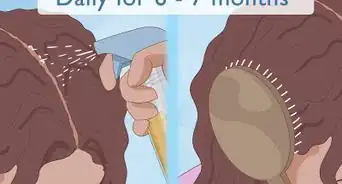
To regrow your hair naturally, avoid washing it every day, which strips away your hair's natural oils, and use sulfate-free shampoo and conditioner on the days when you do wash it. Cut down on your use of heat-styling tools as much as possible to prevent damage that disrupts healthy growth. Also, massaging your scalp for a few minutes each day can stimulate blood flow around your hair follicles and encourage growth. For tips on using essential oils to stimulate growth, read on!


-Step-12-Version-3.webp)












































Medical Disclaimer
The content of this article is not intended to be a substitute for professional medical advice, examination, diagnosis, or treatment. You should always contact your doctor or other qualified healthcare professional before starting, changing, or stopping any kind of health treatment.
Read More...