This article was co-authored by Ben Barkan and by wikiHow staff writer, Hannah Madden. Ben Barkan is a Garden and Landscape Designer and the Owner and Founder of HomeHarvest LLC, an edible landscapes and construction business based in Boston, Massachusetts. Ben has over 12 years of experience working with organic gardening and specializes in designing and building beautiful landscapes with custom construction and creative plant integration. He is a Certified Permaculture Designer, is licensed Construction Supervisor in Massachusetts, and is a Licensed Home Improvement Contractor. He holds an associates degree in Sustainable Agriculture from the University of Massachusetts Amherst.
There are 8 references cited in this article, which can be found at the bottom of the page.
When you manage a large plot of land, it can be hard to control pests without using harsh chemicals, like pesticides. However, as more research comes out about the dangers of pesticide use to human health and wildlife, you might be considering switching to other methods. Fortunately, there are a lot of different ways you can sow and reap your crops without using pesticides while still deterring and killing pests.
Steps
Method 1
Method 1 of 12:Choose plants that grow well in your area.
-
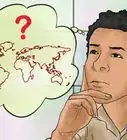
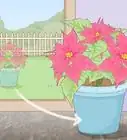
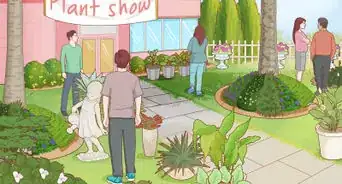
1Plants grown outside of their ideal conditions require more pesticide. These plants will struggle to grow and won't be as hardy as against pests. If you've noticed that your past crops seemed to struggle, rot, or wilt despite your best efforts, the temperature and weather conditions may be too tough for them. Research which plants thrive in your area and focus on growing those crops.[1]
- Diseased and dying plants attract a lot more pests than healthy ones do.
Advertisement

Method 2
Method 2 of 12:Pick hardy, pest-resistant plants for your farm.
-
1Maize, corn, soybeans, and cotton are resistant to most insects. These crops have been genetically modified to resist certain pests. The modification has no effect on their taste or nutritional value, and it’s even shown that these strains can improve the quality of the crops.[2]
- You can buy pest-resistant crops from any garden or farm supply store.
- Pest-resistant crops will normally label themselves with “Bt,” “GM” (genetically modified), or “pest-resistant.”

Method 3
Method 3 of 12:Buy seeds and starts from a reputable source.
-
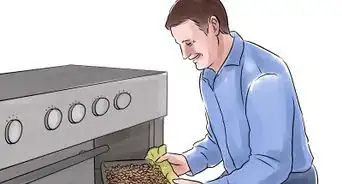
1Starting with disease-free crops greatly reduces your need for pesticides. If you need to purchase seeds or starts, always go to a reputable nursery with a history of disease-free plants. Check your seeds thoroughly, and don’t plant them if they look brown or rotten. Store your extra seeds in a cool, dry place so they don’t get wet over the winter.[3]
- Read customer reviews and check farming message boards for tips on finding the best sources.
Advertisement

Method 4
Method 4 of 12:Practice intercropping to protect plants.
-
1Try to plant 2 or more crops together on one plot of soil. More specifically, intercropping is planting rows of a second crop in between the rows of your original crop. The new plant will help mask your main crop from pests, which can greatly reduce the need for pesticides on your farm.[4]
- Intercropping also helps reduce weeds, because it takes up unused space that weeds would otherwise migrate to.
- Plus, intercropping lets you grow more crops on a smaller plot of land, leading to a larger profit.

Method 5
Method 5 of 12:Rotate your crops every year.
-
1Crop rotation helps to reduce weeds, pests, and diseases. When you replant your crops every year, rotate them around so you aren’t planting the same plants in the same spot. That way, pests in the soil will have a harder time wreaking havoc on all of your crops.[5] [6]
- Ideally, complete a full rotation every 3-4 years. That way, each crop will grow in a different spot every year and end up back in the original place after 3-4 years.
Advertisement

Method 6
Method 6 of 12:Keep your crops healthy as they grow.
-
1Weak and damaged plants attract pests more quickly. Make sure that your crops are getting the right amount of water, sunlight, and soil nutrients all year long. In particular, too much or too little water can really increase pests and the need for pesticides, so be sure your irrigation system is running correctly.[7]

Method 7
Method 7 of 12:Weed regularly to reduce pests.
-
1Weeds attract pests, and pests can hop over to your crops. Try to control weeds by hand pulling and mulching your land regularly. If you’re working with a large area, mowing can also help stop the spread of weeds and prevent new growth after they’ve been established.[8] [9]
- Weeds are also bad for your crops, because they pull nutrients out of the soil that would otherwise go to your plants.
Advertisement

Method 8
Method 8 of 12:Mulch around fruit and veggie plants.
-
1Some diseases and pests live in the soil, which can get splashed by rain. You can prevent this by laying down a layer of mulch to cover the roots of your crops. This is especially important for fruit and vegetable plants, because they’re more susceptible to these diseases.[10] [11]
- In general, you should try to mulch when the weather is dry, like in the early spring. A lot of fruits and vegetables don’t do well in wet, heavy soil.
- This is great practice if you’re growing tomatoes, squash, or strawberries.

Method 9
Method 9 of 12:Identify the specific pests you're dealing with.
-
1You won't need broad-range chemicals if you know what pests to target. If you know what you’re dealing with, you can pick control measures that are better suited for your land and plants. Broad-range pesticides are much stronger, they can harm good insects, and may seep into your crops or nearby water sources.[12]
- Look up common pests in your region and what the signs are. Then, walk your crops and inspect them.
- For instance, if you notice that your crops are only getting eaten in June for 3 to 4 weeks, you might be dealing with Japanese beetles.
- If you see small insects on the stalks of your plants feeding on the sap, you’re probably dealing with aphids.
Advertisement

Method 10
Method 10 of 12:Deter pests naturally with neem oil.
-
1Neem oil is organic and much safer for humans and wildlife. Neem oil is derived from the neem tree. Almost all pests hate because of its strong garlic odor. Pick up a bottle of neem oil from your local garden supply store and follow the dilution instructions. Then, spray your crops with neem oil to prevent pests and deter the ones that are already there.[13]
- Neem oil is mildly toxic to birds and fish. Try not avoid spraying neem oil before a heavy rainfall so it doesn't wash off into nearby waterways.

Method 11
Method 11 of 12:Set out physical traps to kill certain pests.
-
1Figure out what pests you’re dealing with and buy traps made for them. A lot of insect traps use sticky paper to trap and kill the pests before they can get to your crops. You can place these traps in and around your plants to kill the insects as they head toward your crops.[14]
- You can find insect traps at most garden supply stores.
- Consider buying traps in bulk, especially if you’re trying to cover a large area.
Advertisement

Method 12
Method 12 of 12:Apply pesticides carefully and stick to the target area.
-
1Always read the safety instructions and follow the directions before you spray. Proper pesticide application can save you from spraying too much or prevent pesticide drift. Use a low-pressure spray nozzle and only use pesticides in crop areas that absolutely need it.[15]
- Wait for clear weather before spraying pesticides, too. Wind and rain can carry the harsh chemicals to other areas of your land.
- Also, be mindful of other chemicals you're using in your garden. For instance, if you over-fertilize, nitrogen can leach into the water supply.[16]

References
- ↑ https://www.lsuagcenter.com/articles/page1464811504579
- ↑ https://www.ncbi.nlm.nih.gov/pmc/articles/PMC3081576/
- ↑ https://pesticidestewardship.org/ipm/taking-action/
- ↑ https://www.researchgate.net/publication/318461632_Reducing_pesticide_use_and_risks_-_What_action_is_needed
- ↑ Ben Barkan. Garden & Landscape Designer. Expert Interview. 14 April 2020.
- ↑ https://pesticidestewardship.org/ipm/taking-action/
- ↑ https://www.researchgate.net/publication/318461632_Reducing_pesticide_use_and_risks_-_What_action_is_needed
- ↑ Ben Barkan. Garden & Landscape Designer. Expert Interview. 14 April 2020.
- ↑ https://www.lsuagcenter.com/articles/page1464811504579
- ↑ Ben Barkan. Garden & Landscape Designer. Expert Interview. 14 April 2020.
- ↑ https://www.lsuagcenter.com/articles/page1464811504579
- ↑ https://www.epa.gov/safepestcontrol/integrated-pest-management-ipm-principles
- ↑ http://npic.orst.edu/factsheets/neemgen.html
- ↑ https://www.epa.gov/safepestcontrol/integrated-pest-management-ipm-principles
- ↑ https://www.epa.gov/safepestcontrol/tips-reducing-pesticide-impacts-wildlife
- ↑ Ben Barkan. Garden & Landscape Designer. Expert Interview. 14 April 2020.
About This Article