This article was co-authored by Kathryn Kellogg and by wikiHow staff writer, Janice Tieperman. Kathryn Kellogg is the founder of goingzerowaste.com, a lifestyle website dedicated to breaking eco-friendly living down into a simple step-by-step process with lots of positivity and love. She's the author of 101 Ways to Go Zero Waste and spokesperson for plastic-free living for National Geographic.
There are 12 references cited in this article, which can be found at the bottom of the page.
wikiHow marks an article as reader-approved once it receives enough positive feedback. In this case, 100% of readers who voted found the article helpful, earning it our reader-approved status.
This article has been viewed 904,553 times.
Are you worried about your impact on the environment? As you juggle work, family, and personal time, it can be hard to keep track of your carbon footprint, or how many greenhouse gas emissions you typically release into the environment.[1] Don’t worry. We’ve put together a list of some easy, helpful ways you can reduce these emissions, while possibly saving some money in the process.
Steps
Method 1
Method 1 of 18:Audit your home’s energy use.
-
1Ask your utility company if they can send you a “report card” of your energy usage. Then, look over your report really carefully. This audit can help you figure out what your household is doing well, and how you can improve in the future.[2]
- If you have the time and resources, you can hire a professional auditor to inspect your home and offer energy-saving advice.[3]

Method 2
Method 2 of 18:Recycle regularly.
-
1Memorize what can and can’t be recycled around your home. Paper, tin cans, and steel typically can be recycled, as can many plastics.[4] Check the bottom of your plastic containers for the triangular recycling symbol with a number in the center. Then, hop on your state or region’s website and see which numbers are recyclable in your area.[5]
- Feel free to send any broken electronics to your local electronics store. If your electronics are still in good condition, give them a new home.
- Don’t put regular waste in your recycling bin, like garden hoses, syringes, or broken glass. Instead, toss these items in the trash.
- Ask your kids to help, too! Let them know what can get tossed in the trash and what can go in the recycling bin.[6]

Method 3
Method 3 of 18:Compost your waste.
-
1Food waste can create methane when left in landfills. To stop this from happening, set up a composting system for your household instead.[7] Compost breaks these food scraps into safe, eco-friendly waste that you can reuse in your home garden.[8]

Method 4
Method 4 of 18:Shut off your lights and electronics.
-
1Turning off unneeded electricity is an easy, helpful way to lower your carbon footprint. Before you leave your home, switch off any lights and unnecessary appliances.[9] While you’re at it, turn off any other electronics, like TVs and computers.[10]
- Power strips and surge protectors are a handy way to shut off multiple electronics at once.
- You could also unplug your electronics completely when you aren’t using them.
- If you have kids at home, encourage them to unplug their video game consoles and other electronics once they’re done using them.[11]

Method 5
Method 5 of 18:Install LED lightbulbs.
-
1Traditional, incandescent lightbulbs use a lot of energy.[12] LED lights are a little pricier, but they use a lot less energy and can last over 20 times longer than a traditional bulb.[13]
- Some environmental advocates recommend switching to compact fluorescent lamp (CFL) bulbs. While CFL bulbs are better than incandescent lights, they still aren’t as energy-efficient as LED bulbs.

Method 6
Method 6 of 18:Set up solar lights.
-
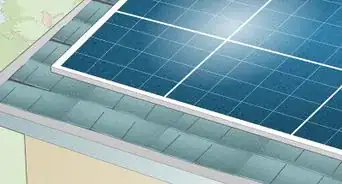
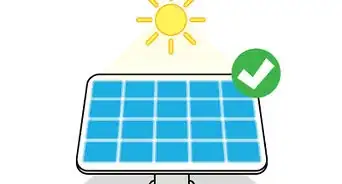
1Solar lights are powered by sunlight instead of fossil fuels.[14] Place these lights in a bright, sunny area, so your lights can stay illuminated during the night.[15]
- Solar lights operate best when their batteries can soak up 8 hours of sunlight a day, but they can still work in less sunny areas.
- You can buy solar lights at home improvement stores, or at online marketplaces.

Method 7
Method 7 of 18:Raise or lower your thermostat.
-
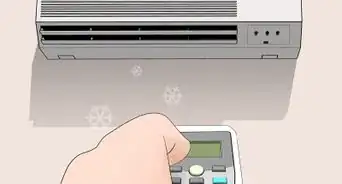
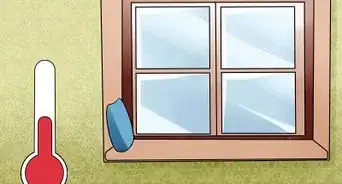
1Adjusting your thermostat during cold and warm weather can lower your emissions. When it’s really hot outside, turn your thermostat up 3 °F (−16 °C) higher than you normally would. Similarly, lower the thermostat by 3 °F (−16 °C) during the winter months. Believe it or not, these small adjustments can make a big impact on your carbon footprint.[16]

Method 8
Method 8 of 18:Lower your water heater temperature.
-
1Set your heater to 120 °F (49 °C) instead of 140 °F (60 °C). This small change can make a big difference in your carbon footprint—and chances are, you won’t even notice a change in your baths and showers. Besides just saving energy, lowering your water heater will also save you money on your bill.[17]

Method 9
Method 9 of 18:Do your laundry with cold water.
-
1Cold water creates less emissions than warm or hot water. If you do around 2 loads of wash each week on a cold water setting, you can actually reduce your annual carbon dioxide emissions by up to 500 lb (230 kg).[18]

Method 10
Method 10 of 18:Switch to a low-flow showerhead.
-
1Low-flow showerheads lower your carbon dioxide emissions.[19] Stop by your local home improvement store and see what kinds of models are available. Once you make the switch, you might save up to 350 lb (160 kg) of carbon dioxide overall.[20]
- Taking short showers is another great way to lower your carbon footprint.

Method 11
Method 11 of 18:Get less at the grocery store.
-
1Only buy what you need when you go food shopping. Plan ahead for the coming days and weeks, so you have a rough idea of how much food you’ll need. Then, check your refrigerator to see which ingredients you already have on hand, so you don’t buy something extra by mistake. Reducing your food waste is a great way to lower your carbon footprint overall—plus, you’ll save money in the process![21]
- Don’t throw out your extra ingredients if you end up buying too much. Instead, freeze them for a later meal.
- In the United States, the average household actually wastes about 40% of their food.

Method 12
Method 12 of 18:Try out a plant-based diet.
-
1Meat-based diets aren’t great for the environment. Cows, which make up the red meat industry, create a lot of methane emissions. Instead, think about making the switch to a vegetarian or pescatarian diet. If you really want to lower your carbon footprint, give the vegan diet a try.[22]
- A pescatarian diet is where you cut out meat, but still eat fish and seafood.[23]

Method 13
Method 13 of 18:Buy sustainable or recycled clothing.
-
1Believe it or not, clothing is a big source of waste. Unfortunately, a lot of clothing manufacturers don’t make high-quality, sustainable clothing. As you shop for new clothes, look for a fair trade logo on the garment, or stop by vintage or secondhand shops. If you have a lot of unwanted clothes, donate or repurpose them instead of tossing them out.[24]
- Shopping for clothes sustainably can help lower your carbon footprint overall.

Method 14
Method 14 of 18:Drive your car less.
-
1Biking, walking, and using public transit are great alternatives to driving. Unfortunately, cars are responsible for a lot of greenhouse emissions. If you can, look for ways you can travel on foot or by bike.[25] Grabbing a ride on a train or even carpooling with friends are other great ways to reduce your carbon footprint.[26]
- If you’re on the market for a new car, consider switching to a hybrid or electric vehicle. If you live in the US, look for “SmartWay” vehicles, which are endorsed by the Environmental Protection Agency (EPA).[27]

Method 15
Method 15 of 18:Maintain your car.
-
1The way you drive your car can increase or decrease your carbon footprint. When you hit the brakes or gas pedal really quickly, you end up wasting fuel and decreasing your car’s mileage. Instead, do your best to drive carefully and within the speed limit. Additionally, get your car inspected regularly—this can help boost both your mileage and fuel economy.[28]

Method 16
Method 16 of 18:Fly less often.
-
1Air travel creates a lot of greenhouse gas emissions. If you fly pretty frequently, look for nonstop flights instead of routes with a lot of layovers, as jets create more emissions when they’re taking off and touching down. While you’re at it, purchase an economy ticket instead of flying business class, which is more environmentally friendly.[29]
- A small economy seat only makes up a fraction of an airplane’s total emissions, while a first-class seat makes up a larger percentage.

Method 17
Method 17 of 18:Invest in energy-efficient appliances.
-
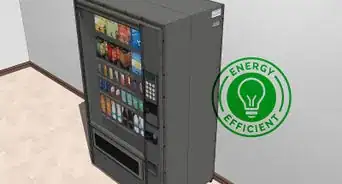
1Shop for appliances with an Energy Star label. The Energy Star label helps you identify the most energy-efficient appliances on the market. All kinds of appliances, like air conditioners, water heaters, freezers, furnaces, and refrigerators, can come with this label. While they’re a bit pricier up front, Energy Star appliances will actually save you money in the long run.[30]

Method 18
Method 18 of 18:Contact your government representative.
-
1Invite your kids to design a postcard, drawing, or letter. Explain the basics of climate change to your children, and what the government can do to help. Then, let your kids unleash their creativity through postcards, sketches, and handwritten notes, where they can ask the government to address climate change in the community. Mail everything to your local mayor or government representative. Even if you don’t hear back, remind your kiddos that they’re making a difference![31]
- You could invite your kids to draw a picture of the Earth, or sketch pictures of nature and wildlife.

Community Q&A
-
QuestionHow can I reduce my reliance on driving?
 Kathryn KelloggKathryn Kellogg is the founder of goingzerowaste.com, a lifestyle website dedicated to breaking eco-friendly living down into a simple step-by-step process with lots of positivity and love. She's the author of 101 Ways to Go Zero Waste and spokesperson for plastic-free living for National Geographic.
Sustainability SpecialistIf you live in a walkable area, implement the 30-minute rule. If it's an under 30 minute walk, walk to your destination instead of driving. Biking is another good alternative. If you must drive, try carpooling to reduce your impact. -
QuestionWhat are the effects of global warming?
 Community AnswerA rise in sea level, change in rainfall patterns, melting of ice caps and glaciers, flooding, animal extinction, spread of disease (malaria, etc.), bleaching of coral reefs, loss of plankton due to warming seas, etc.
 -
QuestionHow can greenhouse gas emissons be reduced from factories?
 Community AnswerWe can reduce the amount of CO2 emissions by reducing fossil fuel combustion and implementing energy efficiency mechanisms, energy conservation methods, carbon capture and sequestration.
 -
QuestionHow do I reduce global warming?
 AdviserCommunity AnswerBy planting more and more trees at every possible.
 -
QuestionWhat are the technologies that help to reduce greenhouse gases?
 Community AnswerFiltering in US factories reduces or completely washes out traces of CO2. Fridges are reducing use of a substance that can destroy the ozone layer. Electric cars were introduced not long ago, but help the problem.
Warnings
- Don’t set your refrigerator or freezer lower than you need to. The United States Department of Energy suggests leaving your refrigerator between 35 and 38 °F (2 and 3 °C), and your freezer around 0 °F (−18 °C).[37]Thanks!




-Step-9-Version-2.webp)

References
- ↑ https://www.nytimes.com/guides/year-of-living-better/how-to-reduce-your-carbon-footprint
- ↑ http://www.eastgwillimbury.ca/Services/Environment/Ways_to_Reduce_Greenhouse_Gases.htm?PageMode=Print
- ↑ https://njclimateresourcecenter.rutgers.edu/climate_change_101/how-to-reduce-your-greenhouse-gas-emissions/
- ↑ Kathryn Kellogg. Sustainability Specialist. Expert Interview. 28 June 2019.
- ↑ https://www.nytimes.com/guides/year-of-living-better/how-to-reduce-your-carbon-footprint
- ↑ https://climatekids.nasa.gov/how-to-help/
- ↑ Kathryn Kellogg. Sustainability Specialist. Expert Interview. 28 June 2019.
- ↑ https://njclimateresourcecenter.rutgers.edu/climate_change_101/how-to-reduce-your-greenhouse-gas-emissions/
- ↑ https://www.nytimes.com/guides/year-of-living-better/how-to-reduce-your-carbon-footprint
- ↑ https://www.nps.gov/pore/learn/nature/climatechange_action_home.htm
- ↑ https://climatekids.nasa.gov/how-to-help/
- ↑ Kathryn Kellogg. Sustainability Specialist. Expert Interview. 28 June 2019.
- ↑ https://blogs.ei.columbia.edu/2018/12/27/35-ways-reduce-carbon-footprint/
- ↑ https://www.nps.gov/pore/learn/nature/climatechange_action_home.htm
- ↑ https://www.forbes.com/sites/houzz/2014/06/02/how-to-choose-the-right-solar-lights/
- ↑ https://www.nps.gov/pore/learn/nature/climatechange_action_home.htm
- ↑ https://njclimateresourcecenter.rutgers.edu/climate_change_101/how-to-reduce-your-greenhouse-gas-emissions/
- ↑ https://blogs.ei.columbia.edu/2018/12/27/35-ways-reduce-carbon-footprint/
- ↑ Kathryn Kellogg. Sustainability Specialist. Expert Interview. 28 June 2019.
- ↑ https://blogs.ei.columbia.edu/2018/12/27/35-ways-reduce-carbon-footprint/
- ↑ https://www.nytimes.com/guides/year-of-living-better/how-to-reduce-your-carbon-footprint
- ↑ https://www.nytimes.com/guides/year-of-living-better/how-to-reduce-your-carbon-footprint
- ↑ https://www.bbcgoodfood.com/howto/guide/what-pescatarian-diet
- ↑ https://www.nytimes.com/guides/year-of-living-better/how-to-reduce-your-carbon-footprint
- ↑ Kathryn Kellogg. Sustainability Specialist. Expert Interview. 28 June 2019.
- ↑ https://www.nytimes.com/guides/year-of-living-better/how-to-reduce-your-carbon-footprint
- ↑ https://www.epa.gov/greenvehicles/find-smartway-vehicle
- ↑ https://www.c2es.org/content/reducing-your-transportation-footprint/
- ↑ https://blogs.ei.columbia.edu/2018/12/27/35-ways-reduce-carbon-footprint/
- ↑ https://www.nps.gov/pore/learn/nature/climatechange_action_home.htm
- ↑ https://kids.nationalgeographic.com/nature/save-the-earth/article/13-ways-to-save-the-earth-from-climate-change
- ↑ https://blogs.ei.columbia.edu/2018/12/27/35-ways-reduce-carbon-footprint/
- ↑ https://blogs.ei.columbia.edu/2018/12/27/35-ways-reduce-carbon-footprint/
- ↑ https://njclimateresourcecenter.rutgers.edu/climate_change_101/how-to-reduce-your-greenhouse-gas-emissions/
- ↑ https://www.nytimes.com/guides/year-of-living-better/how-to-reduce-your-carbon-footprint
- ↑ http://www.eastgwillimbury.ca/Services/Environment/Ways_to_Reduce_Greenhouse_Gases.htm?PageMode=Print
- ↑ https://www.nytimes.com/guides/year-of-living-better/how-to-reduce-your-carbon-footprint
About This Article

You can reduce your greenhouse gas emissions by making some simple lifestyle changes. Start by recycling if you're not already. Keep your recyclables, like plastic and paper, separate from your regular trash. Arrange to have your recycling picked up separately from your trash, or take it to a recycling plant near you whenever your bin fills up. To conserve energy, you can replace any incandescent light bulbs in your home with compact fluorescent bulbs, as they're more energy efficient. Next time you're shopping for a new appliance, like a fridge or dishwasher, look for one that's energy efficient to help lower your energy consumption. Keep the heat and air conditioning off as much as possible since that will save energy too. To cut back your gas emissions, try to drive less when you're on the go. Taking the bus or train or riding your bike are more efficient. Consider cutting back on how much meat you eat as well since the meat industry produces a lot of greenhouse gases. Finally, always take reusable bags whenever you go out shopping, which are much better for the environment than plastic bags. For more ways you can reduce your greenhouse gas emissions, like unplugging appliances and making food from scratch, keep reading!