wikiHow is a “wiki,” similar to Wikipedia, which means that many of our articles are co-written by multiple authors. To create this article, 9 people, some anonymous, worked to edit and improve it over time.
wikiHow marks an article as reader-approved once it receives enough positive feedback. In this case, 98% of readers who voted found the article helpful, earning it our reader-approved status.
This article has been viewed 111,457 times.
Learn more...
Drinking coffee is a daily activity for many people across the world. Whether you use an electric coffee maker, a French press, a Chemex brewer, or any other type of coffee brewing method, you may be wondering how you can avoid throwing all those spent coffee grounds into the garbage. The answer lies in composting. Ground coffee is plant-based organic matter, and therefore can be allowed to decompose in a controlled setting, yielding a rich soil amendment while diverting material from landfills. The guide below covers 3 methods to recycle coffee grounds from your coffee maker.
Steps
Method 1
Method 1 of 4:Add Coffee Grounds to Your Existing Compost Pile
-
1Gather the spent coffee grounds and coffee filter. If you have an existing compost pile, worm bin, or municipal compost service, adding your spent coffee grounds is easy.
- Begin by gathering up the spent grounds as well as the paper filter if you use one. Paper coffee filters are also compostable.
- You may want to keep a kitchen compost bucket handy for holding your coffee grounds until you take them to your compost pile. This will keep you from having to make trips to the compost pile each time you brew coffee.
-
2Place the coffee grounds onto your compost pile. Coffee grounds and filters are fully organic and can be placed directly onto a compost pile or buried in a worm bin.
-
3Adjust the level of carbon-rich material in your compost pile. Coffee grounds are rich in nitrogen, which makes them a "green" composting material. Green materials must be balanced with carbon-rich or "brown" materials. If you begin adding a lot of coffee grounds to your compost pile, make sure to add more paper, dried leaves, or other carbon-rich materials to adjust the nutrient balance.


Method 2
Method 2 of 4:Add Coffee Grounds Directly to Your Plants
-
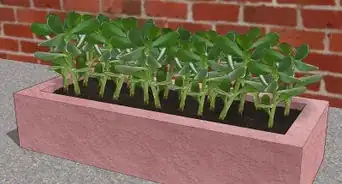
1Save the coffee grounds for fertilizing your plants. Because coffee grounds are granular, relatively pH-neutral, and rich in nitrogen, they make a great fertilizer for houseplants and garden plants. You can save coffee grounds (while discarding the filters) in a small container for use as a fertilizer.
-
2Apply the coffee grounds to your plants. When you are ready to use the coffee grounds, simply sprinkle them over your plant's soil or work them into the soil with your fingers. Adding spent coffee grounds directly to a plant's soil not only provides nitrogen to the plant, but also improves the water retention ability of the soil.


Method 3
Method 3 of 4:Spread Coffee Grounds Onto Outdoor Soil
-
1Collect coffee grounds for distributing onto the ground outdoors. If you do not have a compost pile and do not need much extra fertilizer for your plants, a third option is available for recycling coffee grounds. Begin by collecting the grounds from your coffee maker into a small container just as you would for the other 2 methods.
-
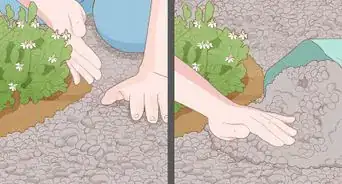
2Pour the coffee grounds over your outdoor soil. Because coffee grounds work themselves into the soil so quickly, and because plants consume their available nutrients so readily, the grounds can actually be poured directly onto the ground outside.
- This method of recycling coffee grounds is only appropriate if you own a piece of outdoor land. You should avoid dumping coffee grounds onto land that you do not own.
- When doing this, avoid dumping the grounds so that they bury existing plant growth. Instead, consider pouring the grounds around the bases of trees, which are typically self-mulched and devoid of competing plant life already.


Method 4
Method 4 of 4:Other Uses for Coffee
-
1Use it as a natural de-odorizer. Just gutted a fish, cooked spicy food, peeled 4 heads of garlic and can't get the smell out of your nails? Try rubbing some coffee grounds in your hands. The odor will be gone, and your hands will be left exfoliated and supple. Afterwards, wash your hands to get rid of the leftover grounds. Plus, you can get unpleasant scents in containers out by leaving a cup of coffee grounds in the area or even put some grounds in smelly shoes overnight.
-
2Use it to make coffee ice. Ice cubes of frozen coffee can be used to make iced coffee later or even added to a protein shake for an extra kick of energy.
-
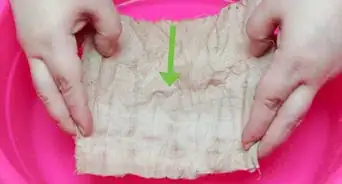
3Try making antique-looking paper. Soaking white, office paper in leftover coffee or coffee grounds mixed with water can dye it and give it just the color for an antique look. You can then go on to use it to make cards or for scrapbooking.
-
4Marinate meat with it. Acidic liquids help tenderize meat, and coffee has all the acid you need. Just add a small amount to your marinade and you'll see some great results without an odd taste of coffee in your steak.


Community Q&A
-
QuestionWhat if mold appears in my collected coffee grounds?
 Community AnswerThrow them away. You should keep your grounds in an open container or laid out on paper or a cookie sheet until completely dry before putting them in a lidded container. Dry grounds won't mold.
 -
QuestionAre coffee grounds good for potted strawberry plants?Community AnswerYes, they can be good for them.
-
QuestionWill coffee grounds keep away squash bugs?
 Community AnswerIt can, but it depends on the bugs.
 -
QuestionCan I use coffee grounds on ghost pepper plants?Community AnswerYes. Any plant should work as long as you use proper care and enough coffee grounds.
Things You'll Need
- Coffee maker
- Coffee grounds
- Coffee filters
- Small container



-Oven-Step-15.webp)