This article was co-authored by Greg Guiteras and by wikiHow staff writer, Janice Tieperman. Greg Guiteras is the CEO of Lorraine Travel, LLC, one of the largest privately-owned travel management companies in Florida founded in 1948. With over 34 years of experience, Greg's specialties are in corporate travel management, sales and marketing, contract negotiations, strategic partnerships, and luxury hotel sales. Greg holds a BS in Marketing from Florida State University. Greg has also created WhataHotel!, a website offering exclusive perks on hotel bookings, and CabinMate, an app that matches single cruise travelers with potential cabin matches "in the same boat" to avoid traveling solo on a cruise.
There are 17 references cited in this article, which can be found at the bottom of the page.
This article has been viewed 1,441 times.
Yawn! You’ve just flown back home from a really long trip, but your body’s internal clock hasn’t quite gotten the memo. Also known as jet lag, this time zone-hopping phenomenon can throw a wrench in your sleeping schedule, making it tricky to fall asleep, stay asleep throughout the night, or stay alert during the daytime.[1]
It can be especially challenging if you’ve flown from east to west, since it’s harder to adjust to an earlier bedtime.[2]
There’s no need to worry, though—jet lag is normal, and usually lasts for 1 to 1½ days per time zone you crossed to get home.[3]
We’re here to walk you through plenty of expert-verified tips, tricks, and hacks, so you can start feeling better as soon as possible.
This article is based off an interview with our travel specialist, Greg Guiteras, CEO of Lorraine Travel, LLC. Check out the full interview here.
Steps
Method 1
Method 1 of 11:Take melatonin 2 hours before bed.
-
1Melatonin is naturally found in the body and can also be taken as a supplement. If you still feel pretty wired around bedtime, take up to 10 mg of melatonin to catch some quick zzzs.[4] Melatonin comes in a variety of different forms, including gummies, tablets, capsules, sprays, liquids, and powders.
- Normally, your body starts to produce melatonin, a hormone that helps you get ready to sleep, about 2 hours before you head to bed. Unfortunately, jet lag might mess with your body’s usual cycle.[5]
- Melatonin may help you both fall asleep and stay asleep throughout the night.[6]
- Some members of the medical community aren’t a big fan of melatonin supplements since there isn’t a lot of hard, scientific and medical evidence to back them up.[7] Ultimately, use your best judgment to decide if this supplement is right for you!
Advertisement

Method 2
Method 2 of 11:Eat and sleep at normal times for your current time zone.
-
1Try not to go to sleep as soon as you start to feel tired. Instead, get ready for bed at a time that’s appropriate for your current time zone, not where you were staying before. On a similar note, try to time your breakfast, lunch, dinner, and snacks at times that line up with your current schedule.[8] [9]
- For example, if you traveled from England to the US, force yourself to stay up a little later before heading to bed.


Method 3
Method 3 of 11:Wake up earlier in the morning.
-
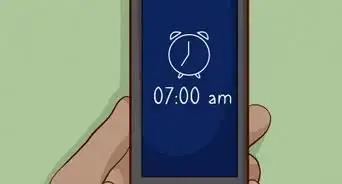
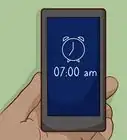
1Oversleeping in the morning definitely won’t help with your jet lag. Before heading to bed, set your alarm clock or phone to go off at a reasonable time the next morning.[10] Experts suggest that young and middle-aged adults need around 7-9 hours of sleep each night, while older adults only need about 7-8 hours.[11]Advertisement

Method 4
Method 4 of 11:Get sunlight in the morning if you flew east, or afternoon if you flew west.
-
1Sunlight exposure is key to reset your internal clock. Whenever you gain time (by flying east), it’s important to soak in plenty of morning sunlight, which helps reset your body’s natural rhythm. When you lose time (by flying west), you should stay inside during the day and only step out in the evening. These small changes may seem silly, but they’ll make a difference in the long run![12]
- Try to stay inside until the late afternoon if you’ve traveled over 8 time zones east to get home—your body’s internal clock might get the evening light mixed with early morning light. It may help to wear sunglasses, too!
- Stay inside until nighttime if you travel over 8 time zones west to get home, which might make it easier to adjust.

Method 5
Method 5 of 11:Exercise outdoors.
-
1Exercise is a great way to soak in plenty of evening or morning light.[13] If you flew east to get home, work out in the morning to help reset your internal clock. If you flew west, get some early evening exercise instead.[14]
- If you traveled over 8 time zones west, start your workout in the evening. If you went over 8 time zones east, exercise sometime in the afternoon. These adjustments may make it a little easier to adapt to really big time zone gaps!
Advertisement

Method 6
Method 6 of 11:Don’t take long naps.
-
1Naps seem great at the time, but they won’t help your sleep schedule. If you really can’t keep your eyes open, settle down for a catnap. Experts suggest capping your naps off at 2 hours so you don’t have trouble getting to sleep later on.[15]

Method 7
Method 7 of 11:Drink water frequently.
-
1Not drinking enough water can make your jet lag even worse. A lot of travelers deal with dehydration to some degree while flying. Unfortunately, dehydration tends to magnify your jet lag, which can make you feel even lousier. Do your best to drink lots of water when you get home.[16]
- If you can, bring a water bottle with you on the flight or ask a flight attendant to bring you some. This way, you can rehydrate while you’re up in the air!
Advertisement

Method 8
Method 8 of 11:Sip a caffeinated drink before the early afternoon.
-
1Caffeine can help you readjust to a normal sleeping schedule. The first day back in a new time zone can be pretty tough, especially when your sleep schedule is completely out of whack. Thankfully, caffeine can tie you over for a little while so you don’t nod off in the middle of the day. Just don’t drink it too close to your bedtime![17]
- Experts suggest ditching caffeinated drinks around 10 hours before you plan on going to bed. For instance, if you go to bed at 11 PM, you should cut yourself off at 1 PM.[18]

Method 9
Method 9 of 11:Stick to your normal diet.
-
1Don’t throw your digestive system for a loop once you get home. For the first couple days, stick with foods that you know won’t cause any issues—after all, your body has enough adjusting to do already![19] Instead of trying out that new restaurant down the street, stick with easy-to-digest foods, like:[20]
- Bananas
- Avocados
- Plain bagels
- Nut butter
Advertisement

Method 10
Method 10 of 11:Steer clear of alcohol before bed.
-
1Alcohol will only add to your sleeping issues, not improve them. Booze may act as a sedative, but that doesn’t mean it will help you sleep. Unfortunately, alcohol interferes with your body’s normal sleep cycles, which prevents you from getting a good night’s rest.[21] To be safe, steer clear of alcohol both on the flight and when you get home.[22] [23]

Method 11
Method 11 of 11:Ask your doctor for prescription sleeping pills.
-
1Sleeping pills can be a last resort if nothing else is working. Ask your doctor about some well-known prescription sleeping medications, like zolpidem (Ambien), temazepam (Restoril), midazolam (Nayzilam), and eszopiclone (Lunesta). While these pills can’t help with your daytime jet lag issues, they can help you fall asleep at night.[24]
- Keep in mind that sleeping pills come with a variety of potential side effects, such as sleepwalking, confusion, amnesia, morning drowsiness, nausea, and vomiting.
- Prescription sleeping pills may also help you stay asleep throughout the night.[25]
Advertisement









References
- ↑ https://www.uofmhealth.org/health-library/ug4997
- ↑ https://my.clevelandclinic.org/health/diseases/12781-jet-lag
- ↑ https://www.sleepfoundation.org/travel-and-sleep/jet-lag
- ↑ https://www.hopkinsmedicine.org/health/wellness-and-prevention/6-tips-for-better-sleep-when-you-travel
- ↑ https://www.hopkinsmedicine.org/health/wellness-and-prevention/6-tips-for-better-sleep-when-you-travel
- ↑ https://www.nhs.uk/medicines/melatonin/
- ↑ https://www.nhs.uk/conditions/jet-lag/
- ↑ https://www.health.harvard.edu/newsletter_article/travel-tips-ways-to-minimize-jet-lag
- ↑ Greg Guiteras. Travel Specialist. Expert Interview. 18 September 2020.
- ↑ https://www.nhs.uk/conditions/jet-lag/
- ↑ https://www.sleepfoundation.org/how-sleep-works/how-much-sleep-do-we-really-need
- ↑ https://www.mayoclinic.org/diseases-conditions/jet-lag/symptoms-causes/syc-20374027
- ↑ https://www.sleepfoundation.org/travel-and-sleep/jet-lag
- ↑ https://www.mayoclinic.org/diseases-conditions/jet-lag/symptoms-causes/syc-20374027
- ↑ https://www.aarp.org/travel/travel-tips/transportation/info-2018/jet-lag-remedies.html
- ↑ https://www.health.harvard.edu/newsletter_article/travel-tips-ways-to-minimize-jet-lag
- ↑ https://www.uofmhealth.org/health-library/ug4997
- ↑ https://my.clevelandclinic.org/health/articles/15496-caffeine-how-to-hack-it-and-how-to-quit-it
- ↑ https://my.clevelandclinic.org/health/diseases/12781-jet-lag
- ↑ https://my.clevelandclinic.org/health/articles/15637-gastrointestinal-soft-diet-overview
- ↑ https://www.sleepfoundation.org/nutrition/alcohol-and-sleep
- ↑ https://www.sleepfoundation.org/travel-and-sleep/how-to-get-over-jet-lag
- ↑ Greg Guiteras. Travel Specialist. Expert Interview. 18 September 2020.
- ↑ https://www.mayoclinic.org/diseases-conditions/jet-lag/diagnosis-treatment/drc-20374031
- ↑ https://www.mayoclinic.org/diseases-conditions/insomnia/in-depth/sleeping-pills/art-20043959
- ↑ Greg Guiteras. Travel Specialist. Expert Interview. 18 September 2020.
- ↑ https://www.health.harvard.edu/newsletter_article/travel-tips-ways-to-minimize-jet-lag
- ↑ https://www.uofmhealth.org/health-library/ug4997
- ↑ https://www.uofmhealth.org/health-library/ug4997
- ↑ https://www.nhs.uk/conditions/jet-lag/
- ↑ https://www.mayoclinic.org/diseases-conditions/jet-lag/diagnosis-treatment/drc-20374031












































Medical Disclaimer
The content of this article is not intended to be a substitute for professional medical advice, examination, diagnosis, or treatment. You should always contact your doctor or other qualified healthcare professional before starting, changing, or stopping any kind of health treatment.
Read More...