This article was co-authored by wikiHow Staff. Our trained team of editors and researchers validate articles for accuracy and comprehensiveness. wikiHow's Content Management Team carefully monitors the work from our editorial staff to ensure that each article is backed by trusted research and meets our high quality standards.
This article has been viewed 2,307 times.
Learn more...
This wikiHow shows you how to use recovery settings on your computer to retrieve backup files. Though the methods differ between PC and Mac systems, both require that the disc used to store backup files be connected to your computer when recovering data.
Steps
Method 1
Method 1 of 2:Using Time Machine on Mac
-
1Make sure your Time Machine backup disk is connected. In order for Time Machine to access your backup files, the disk/drive used to store the files has to be connected to your Mac to recover the files. Once it’s connected, a setup assistant should pop up asking how you want to transfer information onto your Mac.
- If you connect your backup disk after you’ve already booted up your Mac, you’ll need to reboot in order to pull up the menu displaying recovery options for Time Machine.
-
2Select to transfer data from a Time Machine backup disk. This will ensure the setup assistant detects your backup disk.Advertisement
-
3Click Continue.
-
4Select your Time Machine backup file. Once you’ve done this, click Continue. A menu will pop up listing information in the backup file.
-
5Choose the information you want to transfer. When you select your Time Machine backup file, there will be different options for what you’d like to transfer from the file to your Mac.
-
6Click Continue. Once you’ve done this, the transfer process will begin.
- This may take up to several hours depending on how much information you want to transfer from the backup file to your updated Mac.
-
7Restart your Mac once the transfer is finished. In order to complete the process, you’ll need to restart the system and log in to the migrated account to view its files.Advertisement


Method 2
Method 2 of 2:Using Backup and Restore on Windows
-
1Make sure your backup disk is connected. It’s important that you have the disk containing your backup files connected to your PC before going to the Backup and Recovery menu.
-
2
-
3Select Control Panel. Simply type “control panel” into the search function to find the app in the Start menu.
- Some PCs with Windows 10 pre-installed (as opposed to updated from Windows 7/ 8/ 8.1) won’t display Control Panel in the Start menu. Instead, you’ll need to select Settings (gear icon) in order to access the System and Security and Backup and Restore options.
-
4Click System and Security. This will direct you to a menu listing different programs related to your PC’s system.
-
5Select Backup and Restore. If your backup disk is connected, it’ll show up under the Restore heading.
-
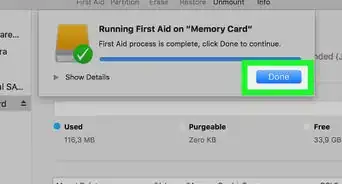
6Click Restore my files. This will open the wizard for restoring your files from a backup disk. This may take up to several hours depending on the amount of information in the backup file you select.
-
7Restart your PC after your files have been restored. In order to complete the recovery process, you’ll need to restart your system and log in to access the recovered files.Advertisement









-Step-6.webp)
About This Article

1. Make your backup disk is connected.
2. Click the Start button.
3. Select Control Panel.
4. Click on System and Security.
5. Select Backup and Restore.
6. Click Restore my files.
7. Restart your computer.