This article was co-authored by Erik Kramer, DO, MPH. Dr. Erik Kramer is a Primary Care Physician at the University of Colorado, specializing in internal medicine, diabetes, and weight management. He received his Doctorate in Osteopathic Medicine (D.O.) from the Touro University Nevada College of Osteopathic Medicine in 2012. Dr. Kramer is a Diplomate of the American Board of Obesity Medicine and is board certified.
There are 7 references cited in this article, which can be found at the bottom of the page.
This article has been viewed 4,416 times.
Orthorexia is an under-recognized disorder that is defined as an obsession with eating healthy foods. While this may not sound like a bad thing, orthorexia can be a debilitating disease that impacts people’s lives in very real ways. This is because it can hurt your budget, your health, and your social interactions. Some consider it an eating disorder, similar in some ways to anorexia nervosa or bulimia. By recognizing orthorexia, you can take steps to get yourself or a loved one psychological help. In the end, orthorexia is a treatable condition that many people recover from.
Steps
Method 1
Method 1 of 3:Self-Observation
-
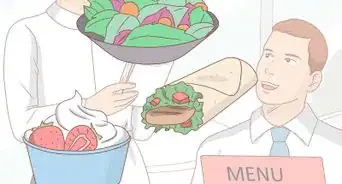
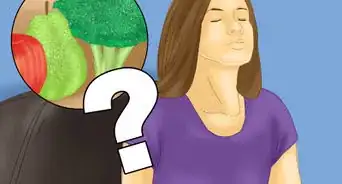
1Watch for obsessive label reading. People with orthorexia are obsessive about reading the labels of their food. While reading labels can provide valuable information about the ingredients of the food you consume, it can also develop into a compulsive behavior that impacts other aspects of your life.[1] Be concerned if:
- You have to re-read labels several times because you're worried that you missed an ingredient.
- You develop anxiety or panic attacks if you are unable to read labels.
- You develop a distrust of labels entirely.
-
2Notice if food worries affect your travel plans. Many people’s communities may not offer alternatives for people with special dietary needs. As a result, vegans, people who require kosher or halal meat, or even gluten or lactose intolerant people may need to travel to a nearby city for certain products. While this is understandable and quite normal, people with orthorexia might take it to the next level. Or, on the other side of the coin, they might be afraid to travel for fear that they won’t have access to their regular food sources.[2]
- Think about how much food you don't buy in your own town or city.
- Consider whether it is actually necessary to travel outside of your community. Are you doing it because you need to, or because of your compulsion?
- Think about whether your traveling for food—or being unwilling to travel because of diet-related concerns—is taking time away from family, work, or your social life. If it is, you may have orthorexia.
Advertisement -
3Watch out for putting major limitations on your food. While limiting foods can be beneficial to improving health, many people with orthorexia take this to an extreme level. If you cut out the vast majority of foods that people eat, you may have a problem.[3] Consider whether you cut out all or some of the following:
- All sugar or carbs
- Gluten
- Dairy
- Natural flavors
- Additives and preservatives
- Non-organic foods
- Meats with antibiotics
- Genetically modified fruits or vegetables
- All foods in which you cannot verify ingredients[4]
Advertisement


Method 2
Method 2 of 3:Health Concerns
-
1Watch your weight. People with orthorexia are at risk of severe weight loss. This is because they’ve potentially eliminated so many food options from their diet that they may have trouble maintaining their weight.[5]
- If your weight has dropped substantially and can be connected to food limitations, you may have orthorexia.
- Try to determine if your weight loss is healthy weight loss or if it is a result of obsessive exercise and food choices. Losing 5 or 10 pounds (2.3 or 4.5 kg) over the course of a month may be healthy, while losing 20 or 30 pounds (9.1 or 13.6 kg) may be severe.
- Think about whether you actually want to or need to lose weight. If the answer is no, and your food choices result in weight loss, you may need to seek help for your orthorexia.
-
2Think about your exercise habits. Some people with orthorexia will also have obsessive exercise habits. This could lead to health and other related problems. Spend a little time reflecting on your exercise routine.[6]
- You may have orthorexia if you have problematic food choices and your exercise routine interferes with other aspects of your life, like your work, family, or social life.
- Consider whether you become anxious or have panics attacks if you are unable to complete your exercise routine.[7]
-
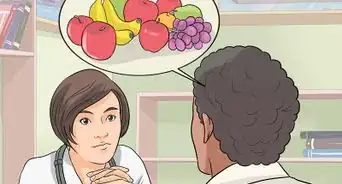
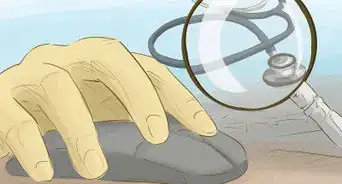
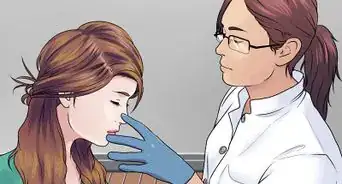
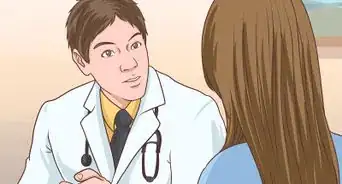
3Consult a physician about your general nutritional needs. People who suffer from orthorexia may also suffer other health problems that can be traced to their food choices. As a result, you should consult a physician in order to monitor your nutrition and other vital statistics.[8] Some things a physician may check include:
- Vitamin deficiency
- Iron levels
- General blood work to get a sense of your overall health
-
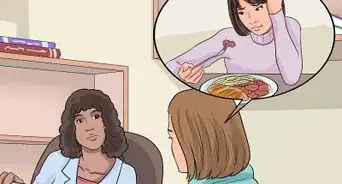
4Contact a mental health professional. One of the best ways to determine whether you have orthorexia is to consult a mental health specialist. They will evaluate your habits, lifestyle, and other factors and provide you with a proper diagnosis of your psychological state. They can also help sort out whether or not you have orthorexia or some other condition, such as anorexia nervosa. Some people with the eating disorder anorexia have an obsession with eating only the "correct" foods, making it difficult sometimes to distinguish between orthorexia and anorexia.[9]
- Seek out a mental health specialist who focuses on body image, nutrition, or dietary habits.
- Don't hold anything back from the mental health professional.
- You can also consider licensed or unlicensed counselors or life coaches who have experience with nutrition and health problems.
Advertisement


Method 3
Method 3 of 3:Symptoms in Others
-
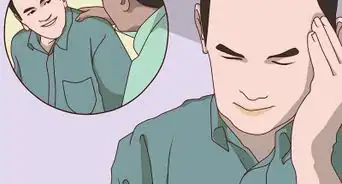
1Observe to see if the person suffers from depression or anxiety. Perhaps the biggest factor to consider is if the person in question suffers from depression or anxiety related to their orthorexia.[10]
- Does the person have increased anxiety or panic attacks if they can’t get the food they need or want?
- Does the person talk about food in a nervous and constant manner?
- Does the person become depressed or despondent if they can’t get the food they want or need?
- Does the person lose control mentally if they lose control of their diet?
- Do they constantly worry about what they’re eating even if they have no special dietary restrictions due to medical issues?
-
2Watch for problems in their relationships. Orthorexia has the potential to severely damage people’s relationships. This is because people with orthorexia may be overly zealous about their diet and may want to recruit other people to their way of life.[11]
- People with orthorexia may tend to argue with people who don’t have dietary habits like their own.
- People with orthorexia will often denigrate other people’s eating habits.
- In some cases children might be harmed by a parent insisting that the child eat a very restricted "healthy" diet.[12]
- Orthorexia will often lead people to avoid dining with longtime friends because the friends don’t share their food choices. A way to tell if someone has orthorexia as opposed to just being picky, vegan, or having other food requirements, is to suggest restaurants that offer options that are friendly toward their dietary needs. If the person still declines, they might have orthorexia.[13]
-
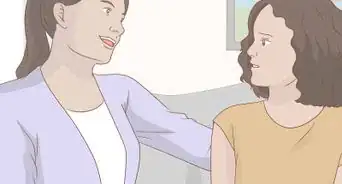
3Consider how the person’s food tastes impact family life and holidays. Another indicator of orthorexia is if a person’s food choices negatively impact other people in their life—especially during holidays.[14]
- Does the person require or demand other people prepare dishes made with specific ingredients?
- Does the person avoid family gatherings and meals because they disagree with other people’s food choices?
- Does the person insult or act otherwise rude to family members because of the food they prepare for a family gathering?
Advertisement




References
- ↑ https://www.nationaleatingdisorders.org/learn/by-eating-disorder/other/orthorexia
- ↑ http://nymag.com/thecut/2014/07/10-ways-to-spot-an-orthorexic.html
- ↑ https://www.helpguide.org/articles/eating-disorders/orthorexia-nervosa.htm
- ↑ http://www.independent.co.uk/life-style/health-and-families/health-news/orthorexia-an-obsession-with-healthy-eating-not-yet-recognised-by-psychiatry-a6722426.html
- ↑ https://www.helpguide.org/articles/eating-disorders/orthorexia-nervosa.htm
- ↑ https://www.helpguide.org/articles/eating-disorders/orthorexia-nervosa.htm
- ↑ http://nymag.com/thecut/2014/07/10-ways-to-spot-an-orthorexic.html
- ↑ https://www.nimh.nih.gov/health/publications/eating-disorders/
- ↑ https://www.ncbi.nlm.nih.gov/pubmed/27778196
- ↑ https://www.helpguide.org/articles/eating-disorders/orthorexia-nervosa.htm
- ↑ https://www.helpguide.org/articles/eating-disorders/orthorexia-nervosa.htm
- ↑ http://link.springer.com/article/10.1007%2Fs40519-016-0310-8
- ↑ http://nymag.com/thecut/2014/07/10-ways-to-spot-an-orthorexic.html
- ↑ https://www.helpguide.org/articles/eating-disorders/orthorexia-nervosa.htm














































Medical Disclaimer
The content of this article is not intended to be a substitute for professional medical advice, examination, diagnosis, or treatment. You should always contact your doctor or other qualified healthcare professional before starting, changing, or stopping any kind of health treatment.
Read More...