This article was co-authored by wikiHow Staff. Our trained team of editors and researchers validate articles for accuracy and comprehensiveness. wikiHow's Content Management Team carefully monitors the work from our editorial staff to ensure that each article is backed by trusted research and meets our high quality standards.
There are 8 references cited in this article, which can be found at the bottom of the page.
This article has been viewed 1,206 times.
Learn more...
Reading like a writer is all about putting yourself in the author’s shoes. In addition to refining your own writing sensibilities, thinking like the author can help you master valuable critical reading skills. Take notes, assess the text’s structure, and analyze its point of view. As you read, try to understand the author’s purpose and choices, and look for areas where you’d do things differently. You could even try your hand at rewriting the story in your own style!
Steps
Method 1
Method 1 of 3:Mastering Critical Reading Skills
-
1Choose a text that you can reread without losing interest. Reading like a writer involves analyzing a text closely, and you may have to read your selection many times. It’ll be easier to hone your reading skills if you choose a text that holds your attention.[1]
- If your goal is to improve your writing, go with a text in your preferred genre. For example, if you write fiction, pick a short story or novel, such as Flannery O'Connor's “A Good Man is Hard to Find” or Ernest Hemingway's A Moveable Feast. If nonfiction essays are your specialty, read a selection by your favorite essayist, such as Calypso by David Sedaris.
Tip: Classic works are also good choices. Authors of stories, novels, poems, and essays that have been handed down for generations typically employ strong literary devices.
-
2Ask yourself who the author and audience are before you read. Before you tackle the text, establish a few key background elements. Run a quick internet search, find out who the author is, and get a rough idea of their biography. In addition, decide who their intended audience is and why they’re reaching out to that audience.[2]
- Learning about the author can help you think like them as you read. Information about their background and the intended audience can help you decipher the choices involved in the writing process.
- For instance, an author of a novel might aim to entertain a broad audience. Their literary choices mainly involve descriptive language, plot, and character development.
- On the other hand, an article that argues for required high school financial literacy classes has a more narrow audience. It’ll also present a logical argument and lean on persuasive devices.
Advertisement -
3Write in the margins as you read the text. Any time you do a close reading, underline, or highlight main ideas and respond to questions the text raises. Keep a pencil handy and, thinking like the author, mark anything that strikes you as crucial to the text’s structure. When something in the text surprises you, confuses you, or raises a question, respond with a quick note in the margins.[3]
- For instance, underline an essay or article’s thesis and note “Thesis” in the margin. If you’re reading a short story, mark where the protagonist (the main character) first appears and key passages that develop their character.
- Annotating, or taking notes as you read, helps you pay close attention to the text. Additionally, when you reread the selection, your notes will help you continue the dialogue you’ve begun with the author.
-
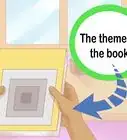
4Identify the author’s argument or purpose. One of your key tasks is to figure out what the author has at stake; what’s their point and why are they making it? For a persuasive piece, that may be a clearly defined thesis on a topic the author has studied at length. A work of fiction may not make an argument, but it still centers on one or more themes.[4]
- A thesis is a concise, defensible statement, such as “Financial literacy should be a required component of high school curricula.” In a narrative, the theme is what the story is about and what it has to say about that topic.
- Thesis and theme are literary terms that zoom in on why an author created a text. With the thesis or theme in mind, examine how the author makes their case.
- While the author may reveal their purpose early on, be aware that they may hold out until the end of the text. That’s one reason why rereading is crucial if you want to really understand an author’s choices!
-
5Evaluate the author’s literary and persuasive devices. Examine how the author organizes their ideas, constructs their story, or argues their point. Along the way, ask yourself what choices you’d make if you were in the author’s shoes.[5]
- An author of a persuasive piece employs devices such as logos (appeal to logic), ethos (appeal to ethical authority), or pathos (appeal to emotion). Evaluate how well the author uses these devices to persuade their audience.
- Ask yourself, for instance, if the sources an author cites are credible, or if the impassioned language in a speech is an effective way to get the audience’s attention.
- For a narrative, assess how an author makes use of devices like metaphor and simile, imagery, and foreshadowing. For example, the meaning of a character’s name may hint at their fate, or vivid, detailed descriptions may draw readers into a scene.
Advertisement


Method 2
Method 2 of 3:Examining a Text’s Structure
-
1Make a rough outline of the text’s organization. You can either write down notes on the text’s structure in the margins or sketch out an outline on a separate piece of paper. For an article or essay, map out the introduction, thesis or main idea, the body paragraphs that develop the idea or provide evidence, and the conclusion.[6]
- For a narrative work, outline how the story unfolds. Write down key plot elements and determine if the author presents it chronologically or in a fragmented manner.
-
2Identify the text’s climax or pivotal moment. In a narrative, the story builds up tension until it reaches the climax, or the height of the action. Take note of this key moment and evaluate how the author frames the plot around it.[7]
- For instance, in a murder mystery, the climax might be when the killer was revealed. Keep in mind there might be twists and turns. If the killer escapes and goes on the run, their capture would be the actual climax.
Keep in Mind: In a persuasive or informative piece, there may not be a climax like that of a work of fiction or memoir. However, there may still be a key “A-ha” moment. The author, for example, may build up evidence and reveal their thesis or key message at the end.
-
3Notice where the author develops ideas with greater detail. The author doesn’t have time or space to delve into every minute detail for every idea or scene. That said, take note of where they do take the time to elaborate. The more time they spend on a description or idea, the more important that concept is to the text at large.[8]
- For instance, a page-long description of a room tells you that place is significant to the plot. If the author of a scholarly article devotes a paragraph parsing a definition, you know that term and particular definition are key to their argument.
-
4Look for repeated themes or language. Repetition and patterns help develop characters, create metaphors, and reinforce themes. Underline and note in the margins whenever you notice a repeated word or phrase. Keep in mind it doesn’t have to be repeated word-for-word to be significant.[9]
- For example, an author may reference a sound or smell whenever a character appears.
- An author may also use repetition as an element of their argument. For instance, they may restate their thesis or sum up their ideas now and then to drive their point home.
-
5Ask yourself how you might organize the text differently. The foundation of reading like a writer is to analyze the author’s choices and decide what you’d do if you were in their shoes. Consider how well the author lays out information or the plot. Reflect on your own sensibilities as a writer, and think about how you would present the text differently.[10]
- Ask yourself if there are confusing moments or areas that feel disorganized. Was it intentional, or do you think it was oversight?
- If, for instance, the plot seemed scattered, was it an effective way to disorient the audience or make a statement about the fragmented nature of life? Perhaps you think the device was overused and would have told the story in a more linear fashion.
Advertisement


Method 3
Method 3 of 3:Analyzing Characters and Points of View
-
1Identify the text’s narrator and key figures. Determine who’s telling the story and how that point of view affects how the plot unfolds. Take note of the main characters and what part they play in the text.[11]
- Additionally, figure out whether or not the text’s narrator is reliable. Determine if the narrator is omniscient, or knows everything about the plot and character, or if they can only offer one perspective on the plot.[12]
-
2Note how the author establishes characters or a point of view. Look for dialogue between characters, passages that describe their thoughts, and other places where the author creates characters. Evaluate how effective they are at drawing readers into characters’ lives. Consider whether you’d make different choices to make these characters believable and relatable.[13]
Variation: For a persuasive or informative piece, the author tells the “story,” but you should still assess their point of view affects the text. For instance, a speech or book by a politician might relate their perspective on policy and current events in an effort to garner votes.
-
3Ask yourself how a story’s characters have changed. If you’re reading a narrative, review your notes on the main characters from the beginning, middle, and end. Think about major plot elements that affected the characters and how decisions they made drove the story.[14]
- Ask yourself if their arcs make sense and were meaningful. In weaker stories, for instance, the plot often drives the characters’ decisions. It forces them to change or do things just to advance the plot without providing a rationale for their actions.
- If you find the characters’ actions suspect, think about how you could develop them better so their actions and arcs feel less arbitrary.
-
4Practice writing a story in your own style. Try adapting the plot of a story and writing it from another character's perspective. For instance, you could try writing scenes in The Great Gatsby from the point of view of Tom or Daisy instead of Nick. You could also rewrite scenes from the book using your own language and style or reimagine the action happening in another place or time.[15]
- Alternatively, you could imitate an author's style by writing a scene that was mentioned in the text but wasn't included in the story itself. Try, for example, imitating F. Scott Fitzgerald's style to get a feel for how another author works.
Advertisement


References
- ↑ https://www.writersdigest.com/editor-blogs/guide-to-literary-agents/6-tips-reading-like-writer
- ↑ https://wac.colostate.edu/docs/books/writingspaces2/bunn--how-to-read.pdf
- ↑ https://writingcenter.fas.harvard.edu/pages/how-do-close-reading
- ↑ https://wac.colostate.edu/docs/books/writingspaces2/bunn--how-to-read.pdf
- ↑ https://www.cnbc.com/2019/03/27/neuroscience-explains--how-successful-people-read-books.html
- ↑ https://students.dartmouth.edu/academic-skills/learning-resources/learning-strategies/reading-techniques
- ↑ https://www.writersdigest.com/editor-blogs/guide-to-literary-agents/6-tips-reading-like-writer
- ↑ https://wac.colostate.edu/books/informedwriter/chapter7.pdf
- ↑ https://writingcenter.fas.harvard.edu/pages/how-do-close-reading
- ↑ https://wac.colostate.edu/docs/books/writingspaces2/bunn--how-to-read.pdf
- ↑ https://www.bucks.edu/media/bcccmedialibrary/tutoring/documents/writingareahandoutrevision/literature/Close-Reading.pdf
- ↑ https://www.bucks.edu/media/bcccmedialibrary/tutoring/documents/writingareahandoutrevision/literature/Close-Reading.pdf
- ↑ https://wac.colostate.edu/docs/books/writingspaces2/bunn--how-to-read.pdf
- ↑ https://www.writersdigest.com/editor-blogs/guide-to-literary-agents/6-tips-reading-like-writer
- ↑ https://www.writersdigest.com/editor-blogs/there-are-no-rules/craft-technique/writing-exercise-3-reasons-to-write-imitations-of-your-favorite-authors
About This Article