This article was co-authored by Shun Pittman. Shun Pittman is a Master Cosmetologist, Author, Owner, and Founder of Corps d’Elite Salon and Corps d’Elite Beauty. With over 25 years of international experience, she is dedicated to and specializes in providing luxury salon services to all hair types and textures and every skin tone and shade. Her services include hair conditioning treatments, cutting, coloring, styling, extensions, and makeup application. Shun has experience working with, coaching, training, and mentoring beauty professionals from multiple companies including L'Oréal, Wella, Matrix, Paul Mitchell, Redken, Big Sexy Hair, and Toni & Guy. She is also a host for national and local media outlets and her work has been featured in The Washingtonian, The Cheddar Network, and WJLA Good Morning Washington's Beauty and Fashion Police segments. Shun is the author of “50 Things Your Hairdresser Wants YOU to Know (and a few things we don’t...)".
There are 8 references cited in this article, which can be found at the bottom of the page.
This article has been viewed 196,101 times.
Many people love the look of locks but fear that their hair is too short to wear them. Fortunately, you can easily add extensions to your locks to make them as long as you’d like. First, purchase synthetic or natural single-ended lock extensions. Next, sew the extension onto your lock and blend it in. Repeat the process until all of your locks are attached to extensions.
Steps
Part 1
Part 1 of 3:Purchasing Lock Extensions
-
1Buy synthetic locks. Many people prefer to buy synthetic lock extensions because they’re relatively inexpensive. Synthetic hair is also great for locks because it tangles easily, creating locks more quickly. However, you can’t use heat products on synthetic extensions or they will melt. Additionally, you can’t dye or perm synthetic hair extensions.
- Synthetic locks and extensions can be bought online or at specialty beauty supply stores.
-
2Buy natural locks. If you like using heat products or dyeing your hair, purchase natural extensions. These extensions can be treated like your natural hair. However, keep in mind that these extensions will be much more expensive than synthetic extensions.
- Natural locks and extensions can be found online and at many beauty supply stores.
Advertisement -
3Avoid buying double-ended lock extensions. These extensions look like long locks with an un-twisted section in the middle. Double-ended lock extensions are an excellent choice for people who want more volume in their locks. However, if they’re installed too tightly, the weight of the extensions will pull on your scalp and lead to hair loss.
- If you want these extensions, have them installed professionally.
- Instead of choosing double-ended extensions, purchase single-ended extensions or regular extensions that you can twist yourself.
Advertisement


Part 2
Part 2 of 3:Installing Your Extensions
-
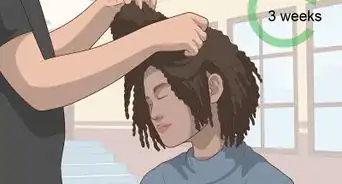
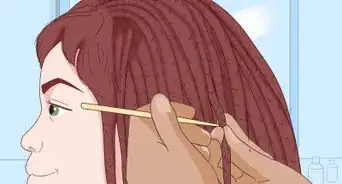
1Do the “needle test.” If your locks are too tight, you may not be able to add extensions on your own. Do the needle test by pushing a needle through a thick section of a lock. If the needle slides though, you can install your own extensions. If it doesn’t, you need to have your extensions professionally installed using lock adhesives.[1]
- Do an online search to find salons that service locks in your area.
-
2Twist any undone extensions. If you purchased regular clip-in extensions, you will need to coil them yourself. First, ask a friend to hold the clip end of the extension. Hold the tail end of the extension tightly in one hand. Next, use a fine-toothed comb to brush the hair against the grain, starting at the clip and working in small sections. This will create small knots in the hair, creating the locks.
- After you’ve combed the entire extension, pull it down with your hand to smooth it out and repeat the process.
- Continue combing and smoothing the extension until it’s tightly locked.[2]
-
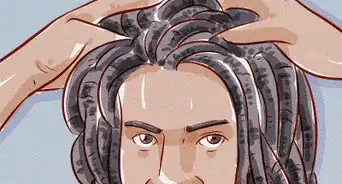
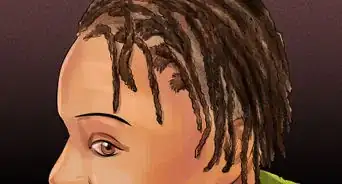
3Prepare your locks. Your hair should already be locked before you put in any extensions. If you have blunted ends on your locks, cut off the tips and brush them out. You should have one to two inches (2.5-5 centimeters) of loose hair at the ends of your locks.[3]
- Use a fine-toothed comb or small brush to loosen the ends of your locks.
- You can loosen all of the ends at once or do it as you apply the extensions.
-
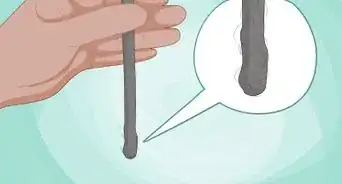
4Rough up the end of your extension. If your extension came with a clip on the end, cut this section off. Next, brush out the end so that there are two to three inches (5-7.5 centimeters) of loose hair at the top.
- Cut and loosen each extension as you need it. Otherwise, you may unravel unused extensions.
-
5Secure the thread into the extension. Thread a sewing needle with about 12-14 inches (30-35 centimeters) of thread. Next, sew a few small stitches into the base of the loose section of the lock, close to the knotted section. Make sure these stitches are as tight as you can make them.
- Leave two to three inches (5-7.5 centimeters) of loose thread at the beginning of the stitches so that you can tie them off later.
- Purchase sturdy thread that closely matches your hair color.
-
6Sew the extension onto your lock. Place the loose, stitched part of your extension against the loose end of your natural lock. Center the extension so that an inch of your loose hair is against the tight section of the extension. Sew the center of the extension against the center of your lock using small, tight stitches.[4]
-
7Wrap your hair around the extension. Press the extension into your lock, wrapping the sides around the extension like a tube. Add a few tight stitches to secure these hairs into place. Keep adjusting the lock until the top of the extension is completely covered by your natural hair.
- Wrapping will help blend the extension into your hair. The better the top of the extension is covered, the better it will blend.
-
8Tie off the thread. Find the loose end of the thread inside the extension. Tie both ends of the thread tightly together, knotting it several times. Use sharp sewing scissors to cut off the tails of the knot, leaving about an inch (2.5 centimeters).
- Tuck the ends of the thread into the center of your lock to hide them.
-
9Blend the two pieces together. Insert a .5 mm crochet hook through the center of your lock. Gather some loose hair into the hook and gently pull it back through the extension. Repeat this process until all of the loose hair has been incorporated into the lock, including the loose hair of the extension.
- Once the loose hair is incorporated, rub the lock between your palms to rough up the extension connection.
- Avoid using larger crochet hooks as they can damage your hair.[5] A small .5 mm crochet hook can be found online or at sewing supply stores.
Advertisement


Part 3
Part 3 of 3:Taking Care of Your Extensions
-
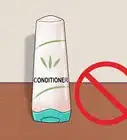
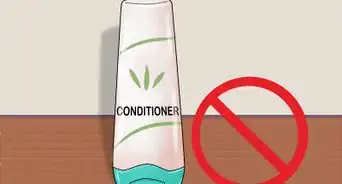
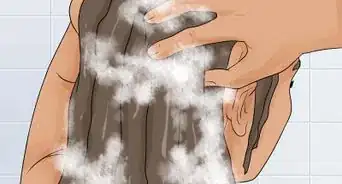
1Wash your hair 2-3 times a week. If you wash your hair too often, your locks will become loose and frizzy. However, if you don’t wash them enough, they’ll start to smell bad. While washing, focus on massaging your scalp and gently massaging the base of your locks. Avoid using conditioner or any detanglers.
-
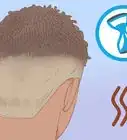
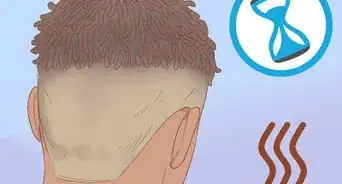
2Dry your hair completely. If your locks stay wet for too long, mildew will grow on the inside. After showering, squeeze as much water as you can out of your locks and into the shower. Next, wrap your hair in a fluffy towel for 10-20 minutes. Last, allow your hair to air dry before putting it up or wearing a hat. [8]
- If your locks still haven’t air-dried within an hour, use a hair dryer to speed up the process.
- Be careful not to melt any synthetic extensions with the hairdryer.
-
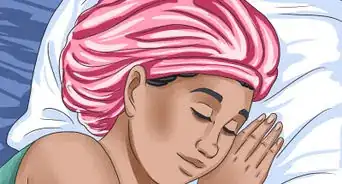
3Protect your extensions while you sleep. When you sleep with locks, the friction of your head against the pillow can loosen or tangle your extensions. Avoid this problem by wearing a silk hair covering while you sleep. Alternatively, you can use a silk pillow or braid your hair to keep it all in one place.
- Never sleep with wet locks as they won’t dry properly.
Advertisement


Community Q&A
-
QuestionCan I get this done by a professional?
 Shun PittmanShun Pittman is a Master Cosmetologist, Author, Owner, and Founder of Corps d’Elite Salon and Corps d’Elite Beauty. With over 25 years of international experience, she is dedicated to and specializes in providing luxury salon services to all hair types and textures and every skin tone and shade. Her services include hair conditioning treatments, cutting, coloring, styling, extensions, and makeup application. Shun has experience working with, coaching, training, and mentoring beauty professionals from multiple companies including L'Oréal, Wella, Matrix, Paul Mitchell, Redken, Big Sexy Hair, and Toni & Guy. She is also a host for national and local media outlets and her work has been featured in The Washingtonian, The Cheddar Network, and WJLA Good Morning Washington's Beauty and Fashion Police segments. Shun is the author of “50 Things Your Hairdresser Wants YOU to Know (and a few things we don’t...)".
Master Cosmetologist, Global Salon Educator & AuthorYes, most braiders are skilled at “fauxlocking” or “fauxlocks”. Do your due diligence. Schedule a consultation prior to securing an appointment with a braider. Ask for pictures of their work. Ask for a rough estimate of how long the service will take. Other questions like the cost and maintenance will be beneficial for you to know as well. -
QuestionHow can I download a video about putting in dreadlocks?
 Community AnswerYou can just go on YouTube to find videos about putting in dreadlocks. You can then bookmark them to come back to later on.
 -
QuestionHow do I tie the to fix the synthetic hair on my natural dread?
 Cj the girlCommunity AnswerGet a long piece of the synthetic hair and hold it with one hand in the middle. Put your other hand's index finger in the direct middle of the hair and put the thumb of that same hand under the hair and pinch the hair again with the other hand. Next, put the hair you are pinching around the root of your dread and simply wrap it around your natural hair.
 -
QuestionHow long can you keep the synthetic extensions in for?
 Aldostar ⭐Community AnswerYou can keep extensions in your hair for 10-12 weeks. If your hair is natural, it could stay for 10-12 weeks. But if your hair has chemicals, like relaxer, this has some chemicals that may not be good for your hair, so the extensions may not work perfectly in the hair. However, if you trim your hair 1 month after you use the relaxer, it may not affect the hair, because people have different types of texture and the extensions might be fine for longer then.
Things You’ll Need
- Synthetic or natural extensions
- A fine-toothed comb
- Sewing scissors
- A .5 mm crochet needle
- A needle and thread


References
- ↑ http://ragingrootsstudio.com/ext-general-info/
- ↑ https://www.youtube.com/watch?v=Hnfinze-_co&feature=youtu.be&t=523
- ↑ https://www.youtube.com/watch?v=N-iwiEUxcl8&feature=youtu.be&t=219
- ↑ https://www.youtube.com/watch?v=rSZbrY9ad9U&feature=youtu.be&t=87
- ↑ https://www.youtube.com/watch?v=Hnfinze-_co&feature=youtu.be&t=393
- ↑ http://www.dreadheadhq.com/pages/washing-dreadlocks-is-more-important-than-you-think
- ↑ http://www.purplefinchaccessories.com/dreadcare#installation
- ↑ http://www.dreadheadhq.com/pages/how-do-you-get-your-dreadlocks-dry
About This Article

Before you put extensions in your dreads, you'll need to make sure they're not too tight. To test how tight your dreads are, push a needle through the thick section of one of your dreadlocks. If it slides through, your dreads are loose enough for extensions. Prepare the extensions by cutting off the clip at the end of each one and then brushing it out so there are 2 to 3 inches of loose hair at the top. Hold the loose part of the hair extension up to the loose part of your dreadlock and begin sewing them together in small, tight stitches. Wrap your hair around the extension where the stitches are to help blend them. Tie off the thread next and then use a crochet hook to further blend your dreadlock and the extension. For more information on putting extensions in your dreads, like how to take care of the extensions, read on!