This article was co-authored by wikiHow Staff. Our trained team of editors and researchers validate articles for accuracy and comprehensiveness. wikiHow's Content Management Team carefully monitors the work from our editorial staff to ensure that each article is backed by trusted research and meets our high quality standards.
There are 11 references cited in this article, which can be found at the bottom of the page.
This article has been viewed 5,206 times.
Learn more...
When it comes to helping the environment, small individual actions can make a really big difference! One of the best ways to go green and do your part is by recycling. You may be wondering what you can do to put away all of that recyclable material until it’s time for collection day or you get a chance to take it to a recycling facility. Not to fear. There are plenty of things you can do, and we’ve put together a handy list of options to help you do it.
Steps
Method 1
Method 1 of 14:Label your bins clearly to make sorting easy.
-
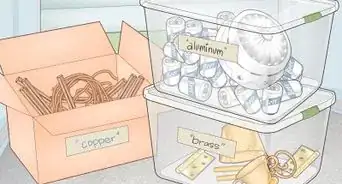
1Use a permanent marker so the labels don’t fade over time. Whether you’re using recycling bins you received from your recycling company, or you’re using your own plastic bins or clear bags, it’s vital that you clearly label them so they can be properly sorted and recycled. Use dark markers and write the type of materials inside of the container.[1]
- For instance you could write “Paper” on one container that’s full of paper products and “Plastic” on a container full of recyclable plastic.
- In some locations, you can actually get a ticket for not recycling correctly, so make sure you sort your items into the right containers!

Method 2
Method 2 of 14:Use stackable bins to take up less space.
-
1You can use recycling bins or your own plastic bins. Some recycling companies provide bins that are sturdy and stackable, but if you don’t have them, you can simply use your own plastic bins—just make sure you label them! Sort your recycling and store them in the properly labeled container and then stack the containers on top of each other so they aren’t taking up a ton of space in your home.[2]
- You may be able to request or purchase extra bins, carts, or boxes from your recycling company or service.[3]

Method 3
Method 3 of 14:Hang a recycling bag from a pair of hooks.
-
1It’ll make it easier to recycle cans and bottles. Drill 2 hooks into your wall so they’re lined up even. If you don’t want to drill holes your wall, put up a sheet of particle board and attach hooks into the slots. Hang a large bag, such as a garbage bag or a reusable recycling bag. Use it to hold your sorted bottles and cans until you’re ready to put them out at the curb or take them to a recycling center.[4]
- You can pick up easy-to-install wall hooks at your local department or hardware store. Use 2 hooks to give your bag greater stability.
- Be sure to sort your plastic bottles and aluminum cans if it’s required in your area. You can use 2 bags if it helps.

Method 4
Method 4 of 14:Stack paper recycling in cabinet drawers.
-
1Collect your paper items until you’re ready to recycle them. Flat, recyclable paper products don’t take up a ton of space. If you’ve got an empty drawer or cabinet, stick your papers in there until you’re ready to recycle them. You could even keep some string or twine with the paper so you can tie it into a bundle to keep it all together when you do recycle it.[5]
- For instance, old newspapers, junk mail, and cardboard can be stashed in a drawer so they’re out of the way and kept together.

Method 5
Method 5 of 14:Place plastic bins inside of handled tote bags.
-
1It’ll make them more attractive and easier to take out. Pick up some stylish-looking tote bags or reusable grocery store bags. Place them somewhere like your kitchen or laundry room and place your plastic recycling bins inside of them. They’ll conceal the bins and when it’s time to take them out to the curb or to a recycling facility, you’ve got handles to make it even easier.[6]
- Make sure the tote bags are large enough to hold your containers!

Method 6
Method 6 of 14:Use a wicker laundry basket to conceal your recycling.
-
1Place your recycling containers inside so they’re less noticeable. Pick up an large wicker laundry basket from your local department store or even check out your local thrift store to see if you can find an affordable one. Place your recycling bin inside of it so it’s concealed. Whenever it’s time to take out the recycling, simply pull out the bin.[7]

Method 7
Method 7 of 14:Store a recycling bin in an old file cabinet.
-
1It’s a simple and cheap way to create a recycling station. You can probably find a cheap old filing cabinet at a local thrift store. You may even have one lying around that isn’t being used. Take out any papers and remove the top drawer so you’re left with an empty cabinet. Place a bin inside of it and use it to hold your recycling until it’s time to take it out. No one will even notice it![8]

Method 8
Method 8 of 14:Collect your recycling under your sink.
-
1It’ll be out of sight and easy to access. If you’re looking for a really simple way to put away your recycling so it’s less visible, place your bins under your kitchen sink. Add your recycling to the bins until it’s time to take it out.[9]

Method 9
Method 9 of 14:Keep your recycling in a garage or utility room.
-
1Sort your recycling in a single location to keep it all together. Collecting all of your recycling in one place can make it easier to manage. Choose a spot in a room such as a garage, mudroom, spare closet, or utility room to keep your recycling bins. Sort your recycling into the bins and keep it all in the same place until it’s time to take it out.[10]
- Ideally, you want to choose a room that isn’t used as much as a room such as your kitchen. That way, people are less likely to see or notice your recycling.

Method 10
Method 10 of 14:Place your containers at the curb the evening before pickup.
-
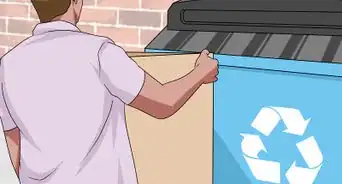
1If you have curbside pickup, bring your recycling out when it’s time. Most waste management companies that provide curbside recycling pickup have designated days and times for collection. The evening before, bring out all of your recycling to the curb and space the bins about 1.5 feet (0.46 m) apart and away from obstructions such as vehicles or mailboxes. That way, your recycling won’t be visible for any longer than necessary.[11]
- For instance, if your collection day is Monday at 6 a.m., then you can put your recycling out to the curb Sunday evening.
- Some cities and homeowner’s associations may have rules about how long you put out your recycling in advance of collection day.

Method 11
Method 11 of 14:Avoid keeping your bins at the curb between collection days.
-
1Store them in your home or in your yard. Once your recycling has been picked up, pick up your bins from the curb. Place them either in your yard, on the side of your home, or inside wherever you keep them to store your recycling until the next pickup day.[12]

Method 12
Method 12 of 14:Clean any items that came into contact with food.
-
1Make sure it’s clean enough to use again. If you’re recycling a plastic or glass food container, it’s really important that you throw out any remaining food and rinse off any grease or oil that may be left on the container. Food waste can contaminate other recyclable material, making them useless and destined for a landfill.[13]
- Cleaning any recyclable food containers will also help prevent smells and won’t attract insects or rodents.

Method 13
Method 13 of 14:Keep your glass recycling out of reach of children.
-
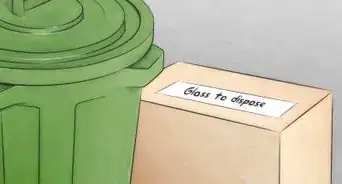
1It’ll help prevent cuts and possible poisoning. If your glass recycling falls over and breaks, it could easily cut a child, so be sure to put it either somewhere up out of reach or inside of something that kids can’t access. Additionally, if there’s anything left in the glass containers, it could make a child sick of the ingest it. Keep your glass recycling hidden until it’s time to take it out to the curb or to a recycling facility.[14]
- If you have a recycling bin, make sure the lid is securely fastened so kids can’t get into it.
- Don’t forget about pets! Your furry friends can accidentally cut themselves on broken glass or get sick of they eat or drink anything left over in the container.

Method 14
Method 14 of 14:Store hazardous household products in a safe location.
-
1Chemicals and household products don’t belong in your recycling bin. If you have some old chemicals, cleaners, paint, pesticides, or any other household products, they can contain hazardous ingredients that need to be properly disposed of. Keep them stored in a separate container in a safe location such as a closet until your community holds a hazardous household waste collection day or until you can bring them to a collection facility.[15]
- Look online for collection facilities that accept your hazardous household products.

Warnings
- Never put plastic bags, wraps, and packing materials such as styrofoam in your recycling bins. They can get tangled in the machines at the recycling plants and cause damage and potential worker injuries.[16]Thanks!

References
- ↑ https://portal.311.nyc.gov/article/?kanumber=KA-02013
- ↑ https://www.diyncrafts.com/29250/repurpose/20-diy-home-recycling-bins-that-help-you-organize-your-recyclables
- ↑ https://www.wm.com/location/california/ventura-county/_documents/RecyclingTipsResidential.pdf
- ↑ https://www.bhg.com/decorating/storage/projects/organize-your-recycling/?slide=slide_45af4c02-56f7-49ee-87d2-a65bb3e1bd48#slide_45af4c02-56f7-49ee-87d2-a65bb3e1bd48
- ↑ https://www.bhg.com/decorating/storage/projects/organize-your-recycling/?slide=slide_b139aec9-a265-4a0c-bec7-4a508165f249#slide_b139aec9-a265-4a0c-bec7-4a508165f249
- ↑ https://www.apartmenttherapy.com/clever-diy-ideas-to-organize-your-recycling-231851
- ↑ https://www.bhg.com/decorating/storage/projects/organize-your-recycling/?slide=slide_7d68eeea-3877-452d-972c-84f13151566d#slide_7d68eeea-3877-452d-972c-84f13151566d
- ↑ https://www.diyncrafts.com/29250/repurpose/20-diy-home-recycling-bins-that-help-you-organize-your-recyclables
- ↑ https://www.apartmenttherapy.com/clever-diy-ideas-to-organize-your-recycling-231851
- ↑ https://www.bhg.com/decorating/storage/projects/organize-your-recycling/
- ↑ https://www.wm.com/location/california/ventura-county/_documents/RecyclingTipsResidential.pdf
- ↑ https://www.wm.com/location/california/ventura-county/_documents/RecyclingTipsResidential.pdf
- ↑ https://www.earthday.org/youre-doing-it-wrong-7-tips-to-recycle-better/
- ↑ https://kidshealth.org/en/parents/safety-cuts.html
- ↑ https://www.mass.gov/info-details/how-where-to-recycle
- ↑ https://www.mass.gov/info-details/how-where-to-recycle
About This Article