This article was co-authored by wikiHow staff writer, Hannah Madden. Hannah Madden is a writer, editor, and artist currently living in Portland, Oregon. In 2018, she graduated from Portland State University with a B.S. in Environmental Studies. Hannah enjoys writing articles about conservation, sustainability, and eco-friendly products. When she isn’t writing, you can find Hannah working on hand embroidery projects and listening to music.
This article has been viewed 2,220 times.
Learn more...
While you might appreciate birds as they chirp in the morning, watching them eat your hard-earned vegetables is a different story. Fortunately, there are a few methods you can try out to protect your garden all season long (without hurting any birds in the process). Try using a few of these tips in conjunction with each other to get a bountiful harvest from your garden.
Steps
Method 1
Method 1 of 10:Cover seeds with a plastic bottle.
-
1Tiny seeds are perfect snacks for small birds. If you have a few small seedlings you’d like to protect, take a clean, clear soda bottle and cut the bottom off with a box cutter. Take the cap off and put the bottle over an individual seed so it can still get light and water.[1]
- When the seedling gets too big for the bottle, simply take it off.
- If you don’t have any plastic bottles, use berry baskets instead. Simply flip them upside down and cover your seedlings with a basket each.

Method 2
Method 2 of 10:Put a screen over the soil.
-
1This aluminum screen can cover seeds and sprouts. Buy a trough screen (it’s usually made to cover eaves troughs, or a gutter underneath a roof), and bend it into a U-shape. Slide the screen over a row of seeds, then push sticks or wire into the bottom to anchor it into the soil.[2]
- If you’re dealing with small birds, place a few small sticks at both ends of the screen so they can’t walk underneath it.
- When your plants get too big, simply take the screen off and save it for next season.

Method 3
Method 3 of 10:Use hardware screening.
-
1It’s usually made to cover windows and doors. Purchase a roll of hardware screen and cut it into thin strips, then bend it into a loop. Cover each sprout with the screen, then secure the base into the soil with sticks or wire.[3]
- You can find hardware screening for around $10 per roll at most hardware stores.

Method 4
Method 4 of 10:Stretch fishing wire in a grid over the garden.
-
1Birds don’t like shiny objects. Put up a few tall stakes around your garden (at least as tall as you are, if not a little more) and attach rows of fishing wire to it in a grid pattern. The birds will spot the wire from above and be too confused to land in your garden.[4]
- If you choose this method, let everyone know about it! Walking face-first into a line of fishing wire can be seriously painful.

Method 5
Method 5 of 10:Cover seedlings with fabric row covers.
-
1These popup covers are perfect for keeping birds out. Purchase a fabric row cover with a metal frame, then place it over a row of crops. You can buy multiple fabric row covers to cover your entire garden while still letting water and sunlight in.[5]
- Fabric row covers are also reusable. When your plants get too tall, simply fold them up and put them away for next year.

Method 6
Method 6 of 10:Protect corn with a bag or a cup.
-
1Birds love nibbling on ripe ears of corn. Once the silk on the corn has turned brown, use a paper bag or a paper cup to cover each ear of corn and keep it away from pesky birds. Your crop will still be able to grow, and you can simply remove the covering when it’s time to harvest.[6]

Method 7
Method 7 of 10:Set up fake owls in your yard.
-
1Small birds are usually scared of owls. Try setting up a few plastic owls in your trees and around your garden to spook small birds. You can even get fake owls that light up or make a noise to really scare birds away.[7]
- This method works well for small birds, but it’s not very effective against crows or birds of prey.

Method 8
Method 8 of 10:Put up rod deterrents.
-
1These shiny rods confuse and distract birds flying by. Purchase a few metal or glass rods from your local hardware store and hang them up in a tree around your garden. When the sun shines, the light will reflect off the rods, leaving the birds confused.[8]
- You can also make your own rod deterrents by finding shiny objects in your home, like CDs. Then, hang them up in trees around your garden to scare birds away.

Method 9
Method 9 of 10:Set up spikes to keep birds from landing.
-
1Birds often like to hang out and roost on your roof or gutters. If you notice there’s an area in your yard that birds love to land, consider putting up a row of bird spikes to keep them away. The birds will see the spikes and avoid the area so they aren’t harmed.[9]
- This method is slightly controversial in the gardening world, since many people are worried about the safety of the birds. However, the spikes are made to deter birds, not hurt them.

Method 10
Method 10 of 10:Put away any bird feeders or bird baths.
-
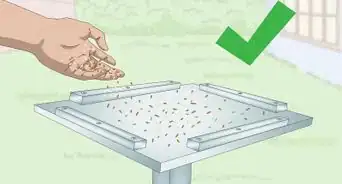
1These will only attract birds to your yard and garden. In the spring, pack up your bird feeder and bird bath and put them away until you’ve harvested your crops. Birds have plenty of things to eat once the spring comes, so you don’t need to worry about them going hungry.[10]
- Bird feeders and bird baths also attract other garden pests, like raccoons and rabbits.

References
- ↑ https://www.hortmag.com/weekly-tips/protect-vegetable-seedlings-from-birds
- ↑ https://www.canr.msu.edu/news/protecting_early_spring_vegetables_in_your_garden
- ↑ https://www.canr.msu.edu/news/protecting_early_spring_vegetables_in_your_garden
- ↑ https://www.humanesociety.org/resources/what-do-about-crows
- ↑ https://www.humanesociety.org/resources/what-do-about-crows
- ↑ https://www.humanesociety.org/resources/what-do-about-crows
- ↑ https://www.hortmag.com/weekly-tips/protect-vegetable-seedlings-from-birds
- ↑ https://www.humanesociety.org/resources/what-do-about-crows
- ↑ https://www.bobvila.com/articles/best-bird-deterrent/
About This Article