This article was co-authored by wikiHow staff writer, Amy Bobinger. Amy Bobinger has been a writer and editor at wikiHow since 2017. She especially enjoys writing articles that help people overcome interpersonal hurdles but frequently covers a variety of subjects, including health and wellness, spirituality, gardening, and more. Amy graduated with a B.A. in English Lit from Mississippi College in 2011 and now lives in her hometown with her husband and two young sons.
There are 13 references cited in this article, which can be found at the bottom of the page.
This article has been viewed 1,444 times.
Learn more...
Rain rot is also known as rain scald or mud fever, and it's a frustrating concern for many horse owners. This infection is caused by the bacteria Dermatophilosis congolensis, which spreads most easily in warm, damp weather. Luckily, there are steps you can take to help keep your horses from getting rain rot in the first place. If you do have a horse with rain rot, you can usually treat it yourself, although you may to call a vet for severe cases. Regardless, you'll need to take steps to keep it from spreading to other horses.
Steps
Question 1
Question 1 of 10:How do you prevent rain rot on horses?
-
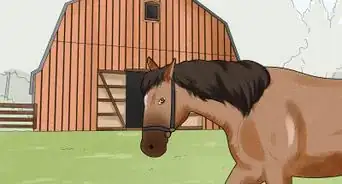
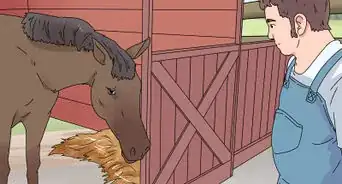
1Keep your horse dry. If your horse is damp for a long time, its skin will start to crack, giving the rain rot a place to take hold. To prevent this, give your horse a dry shelter where they can get out of the rain, even if you keep them turned out all the time.[1] In hot, humid weather, give the horse a shady spot where it can get out of the sun so it won't sweat. You might even set up a fan so the horse can stay cool and dry.[2]
- After you untack your horse, don't put a blanket on it until its coat is completely dry.
- Don't put heavy blankets on horses in hot weather—this will cause them to sweat.
-
2Groom your horse frequently. You can help prevent rain rot by brushing your horse at least twice a week. If your horse's coat is dirty, it's more likely to be carrying the bacteria that causes rain rot.[3] Just be sure to always use clean brushes when you groom your horse so you don't spread rain rot if another horse has it.[4]
- Protect your horse from biting insects, as well—broken skin can provide a place for rain rot to take hold. For instance, you might spray your horse with a pyrethoid-based insecticide or fit your horse with a fly sheet.[5]
Advertisement

Question 2
Question 2 of 10:What does rain rot look like in horses?
-
1Rain rot shows up as flat scabs on a horse's back or legs. In mild cases, it might just look like small bumps on your horse's skin. However, if it worsens, the horse will develop scabs containing matted hair, and the skin under the scab will be raw.[6]
- The scabs will be very tight to the skin at first, but they'll eventually loosen. Usually when the scabs fall off, some hair will come off as well.
- Rain rot usually appears on a horse's back, but it can also affect its legs or face.

Question 3
Question 3 of 10:How do you keep rain rot from spreading?
-
1Don't share equipment between horses if you think one is infected. Rain rot is easily spread from horse to horse, so disinfect any brushes, tack, or blankets that you use on one horse before you use it on another. In fact, it's better to have separate equipment for the infected horse altogether to lessen the chance the rain rot will spread.[7]
- If you're using clippers on your horses, disinfect the blades between horses so you don't spread rain rot or other infections.[8]
- You may also want to keep the infected horse isolated from your other horses.
Advertisement

Question 4
Question 4 of 10:How do horses get rain rot?
-
1Rain rot is caused by a bacteria called Dermatophilus congolensis. D. congolensis needs a moist environment to spread. It enters the horse's bloodstream through small cracks or wounds in its skin, then spreads across the horse's back and hind end.[9]
- The bacteria can be spread if the horse comes directly into contact with an infected surface (including scabs dropped by infected horses). Insects can also spread the bacteria from horse to horse.[10]

Question 5
Question 5 of 10:Is rain rot in horses painful?
-
1Yes, if you touch the affected area. The actual scabs may not be especially painful to your horse. However, if anything touches the horse on the affected area, or if the scabs get picked off, your horse will probably feel some pain.[11]
- Removing the scabs during a gentle cleaning can help your horse feel a little less uncomfortable, and it may also speed up the healing time.
Advertisement

Question 6
Question 6 of 10:Can humans catch rain rot from horses?
-
1Yes, so protect your skin when you touch an infected horse. The D. congolensis bacteria can be transmitted from horses to people, especially if you have any cuts on your skin. If you get rain rot, it will usually show up as scabs on your hands and arms.[12]
- Always wear gloves when you're grooming a horse with rain rot, and wash your hands thoroughly when you're finished.[13]
- Rain rot can sometimes appear similar to ringworm, which is also contagious to humans.

Question 7
Question 7 of 10:Should you blanket a horse with rain rot?
-
1Leave the area exposed if you can. Moisture can get trapped under a blanket, slowing your horse's healing time. If you're able, it's better to leave the horse uncovered so air can reach the scabs, helping dry them out faster.[14]
- If you do cover your horse, be sure to remove the blanket or sheet as soon as possible if it gets wet. Let your horse's coat dry out completely before you put on a new blanket.[15]
Advertisement

Question 8
Question 8 of 10:Can you ride a horse with rain rot?
-
1It's better to wait if the saddle area is affected. It can be really painful for your horse if you put pressure on the area that's affected by rain rot. If the infection is on the horse's back, wait until the scabs are mostly healed before you try to ride it again.[16]
- If the infection is affecting your horse's legs, it may be okay to ride. However, in some cases, rain rot can cause your horse's legs to swell. If that happens, it might be painful for your horse to carry a rider.[17]

Question 9
Question 9 of 10:What is the best treatment for rain rot on horses?
-
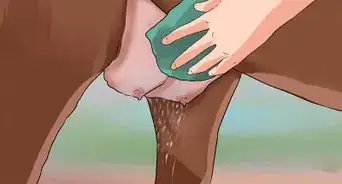
1Treat mild cases by washing the horse with a disinfectant shampoo. Wearing gloves, apply a medicated shampoo, like one containing chlorhexidine, to the affected area on your horse.[18] Gently lather the shampoo, then let it sit for 10 minutes or so to soften the scabs. Use your hands to gently rub away any scabs that come off easily, then rinse your horse thoroughly and let its coat dry completely. Do this once a day for several days, until all of the scabs are gone.[19]
- Topical disinfectants may help clear up the infection, as well.
- Some horse owners have also found that applying Listerine to the scabs will help them fall off easily.[20]
-
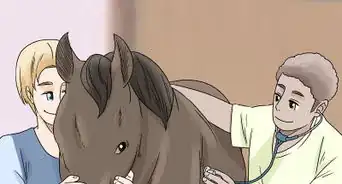
2Call your vet for an antibiotic for more severe cases. Rain rot can sometimes lead to a secondary skin infection. If your horse's skin looks red or irritated, or if it doesn't seem to be healing, call your vet and ask them whether they recommend antibiotic injections.[21]Advertisement

Question 10
Question 10 of 10:How long does it take for rain rot to heal?
-
1Anywhere from one to four weeks. If your horse has a mild case of rain rot, it might clear up on its own in about a week, even without any treatment. However, if the case is more severe, it could take four weeks or more for the infection to clear up, especially if you don't treat it right away.[22]
- If the rain rot is really bad, your horse might develop a secondary infection that needs to be treated with antibiotics.





References
- ↑ https://foundationequinenj.com/storage/app/media/RAIN_ROT_FE.pdf
- ↑ https://horse-canada.com/magazine/health/understanding-rain-rot/
- ↑ https://equusmagazine.com/horse-care/all-about-rain-rot-on-horses-8235
- ↑ https://brandonequine.com/wp-content/uploads/2020/05/want-not-rain-rot.pdf
- ↑ https://www.thoroughbreddailynews.com/april-showers-bring-may-flowers-and-rain-rot-dew-poisoning-and-abscesses/
- ↑ https://foundationequinenj.com/storage/app/media/RAIN_ROT_FE.pdf
- ↑ https://www.uaex.edu/farm-ranch/animals-forages/horses/rain_rot.pdf
- ↑ https://brandonequine.com/wp-content/uploads/2020/05/want-not-rain-rot.pdf
- ↑ https://foundationequinenj.com/storage/app/media/RAIN_ROT_FE.pdf
- ↑ https://www.uaex.edu/farm-ranch/animals-forages/horses/rain_rot.pdf
- ↑ https://www.uaex.edu/farm-ranch/animals-forages/horses/rain_rot.pdf
- ↑ https://ceh.vetmed.ucdavis.edu/diseases-horse-human-transmission
- ↑ https://horse-canada.com/magazine/health/understanding-rain-rot/
- ↑ https://www.thoroughbreddailynews.com/april-showers-bring-may-flowers-and-rain-rot-dew-poisoning-and-abscesses/
- ↑ https://horse-canada.com/magazine/health/understanding-rain-rot/
- ↑ https://www.uaex.edu/farm-ranch/animals-forages/horses/rain_rot.pdf
- ↑ https://foundationequinenj.com/storage/app/media/RAIN_ROT_FE.pdf
- ↑ https://www.thoroughbreddailynews.com/april-showers-bring-may-flowers-and-rain-rot-dew-poisoning-and-abscesses/
- ↑ https://foundationequinenj.com/storage/app/media/RAIN_ROT_FE.pdf
- ↑ https://www.uaex.edu/farm-ranch/animals-forages/horses/rain_rot.pdf
- ↑ https://www.thoroughbreddailynews.com/april-showers-bring-may-flowers-and-rain-rot-dew-poisoning-and-abscesses/
- ↑ https://equusmagazine.com/horse-care/all-about-rain-rot-on-horses-8235
About This Article