This article was co-authored by Joshua Bloom and by wikiHow staff writer, Hannah Madden. Joshua Bloom is a Pest Control Specialist and the Vice President of Operations of Standard Pest Management, a pest control company based in New York City. He has over 20 years of experience in the pest control industry and specializes in commercial and large facility pest control management. Standard Pest Control also specializes in ant, bed bug, cockroach, fly, and rodent control. Joshua is licensed by the NYSDEC (New York State Department of Environmental Conservation) for termite control.
There are 9 references cited in this article, which can be found at the bottom of the page.
If you live in an area where drywood termites are present, you’re probably concerned about keeping these insects out of your home. While these bugs might be small, they can cause a lot of structural damage in a short amount of time. We’ve compiled some ways you can prevent drywood termites from entering your home or structure to keep your building safe.
Steps
Method 1
Method 1 of 12:Use non-wood building materials.
-
1Since drywood termites eat wood, try to avoid using it. If you’re building a structure and you have the choice to pick your materials, use metal or plastic instead of wood. If you can’t use those materials fully throughout your structure, you can at least put metal or plastic siding on to keep termites from entering.[1]Advertisement

Method 2
Method 2 of 12:Use pressure-treated wood in your home.
-
1Studies show that termites have a harder time getting through treated wood. If you can, try to build your structure or your home out of pressure-treated wood to keep drywood termites out. Keep in mind, though, that they may still be able to get through the wood, especially if it has holes drilled in it during construction.[2]
- Pressure treated wood is lumber that has gone through high pressure to force a mixture of water and preservatives deep into the wood. You can find it at most hardware stores.

Method 3
Method 3 of 12:Paint or seal exposed wood.
-
1Unsealed wood is much easier for termites to chew through. If you’re leaving a structure outside with exposed wood in it, either paint it or use a wood sealer spray to make it slightly tougher. If the termites have a hard time getting through the wood, they may give up and go look elsewhere for a place to build their nest.[3]
- You can find wood sealers at most hardware stores. The type of paint or sealer you use doesn’t matter as long as it covers the wood completely.
Advertisement

Method 4
Method 4 of 12:Treat wood with silica or boron compounds.
-
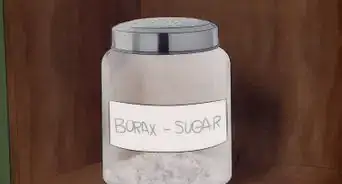
1This method is best for wood that will be used indoors. If you’re planning to build a structure or your home with wood, try treating it with silica aerogel dust or compounds that contain boron. You can find products like these at most hardware stores, or you can get a professional to do it for you. Studies show that as long as you use a lot of the product, termites will have a hard time getting through the wood afterwards.[4]
- You can use these products on new wood or an existing structure.
- Water can negatively impact the effectiveness of silica and boron products, which is why this method is better for indoor use.

Method 5
Method 5 of 12:Spray wood with essential oils.
-
1This is an easy method you can do before or after construction. For an extra barrier between your wood and termites, mix 2 cups (470 mL) of water with 2 or 3 drops of dish soap. Then, add either 10 drops of orange oil or 10 drops of neem oil and pour the mixture into a spray bottle. Saturate your wood well to deter termites and kill any that come into contact with the oil.[5]Advertisement

Method 6
Method 6 of 12:Cover attic and crawl space vents with screens.
-
1Mesh screens can prevent termites from entering your home. Since termites prefer dark, quiet places, they’ll often come in through your attic or your crawl space. You can keep them out by installing mesh screens over any openings in your structure. Just make sure you check the screens annually, as termites can sometimes chew through them to create holes large enough for themselves.[8]
- You may have to replace your screens every couple of years to ensure they keep termites out.

Method 7
Method 7 of 12:Caulk and seal any gaps in your walls.
-
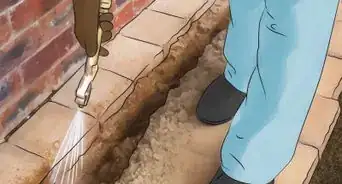
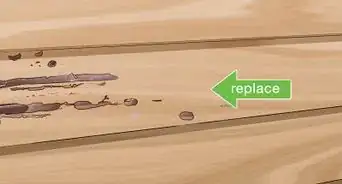
1Termites can crawl into your home through any small hole. Walk the perimeter of your home or building and keep an eye out for any breaches in the wood. If you spot any, grab some [Caulk|[caulk]] and apply it to the hole. Once it dries, it will seal the hole, trapping any termites on the outside.[9]
- Try to do this about once a year. New holes and cracks can appear in your structure at any time.
- You can even install termite bait stations or use a liquid barrier treatment.[10]
Advertisement

Method 8
Method 8 of 12:Stack firewood away from your home.
-
1If there’s one thing termites love, it’s firewood. If you regularly chop up logs to burn in your fireplace, try to stack them at least 2 ft (0.61 m) away from any buildings, and make sure the stacks don’t touch the side of your home. This can also keep out other unwanted pests, like spiders.[11]
- If you chop a lot of firewood, consider creating a small, covered structure to keep it dry during the winter.

Method 9
Method 9 of 12:Trim trees and bushes around your home.
-
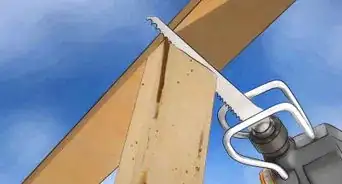
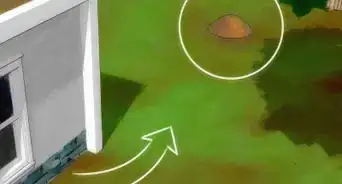
1If you have any vegetation near your home, remove it as soon as you can. Drywood termites love to live in old, dried out trees and bushes, and they can easily hop from vegetation to your home. Cut the vegetation back as much as you can with loppers, then use a chainsaw or a handsaw to cut it down to the ground.[12]
- If you have any stumps near your home, dig them out or remove them with a stump grinder.
Advertisement

Method 10
Method 10 of 12:Keep mulch several inches away from your foundation.
-
1Mulch might be good for plants, but it also attracts termites. Termites love to tunnel and feed in the warm mulch, so they’re more likely to enter your home. If you plan to mulch your yard, keep the mulch at least 1 to 2 inches (2.5 to 5.1 cm) away from your home, and don’t let it cover any window sills or siding.[13]
- If you have mulch near your home, keep an eye on it, and watch for signs of termites. It’s important to catch and eradicate them quickly before they can do damage to your home.

Method 11
Method 11 of 12:Remove and destroy infested furniture.
-
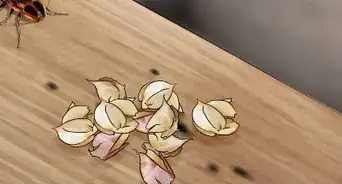
1Drywood termites often lurk inside of old furniture. If you notice that there are termites in a piece of furniture but they haven’t quite gotten into your walls yet, you can take the furniture outside and either throw it away or burn it. Alternatively, you can leave the furniture outside in the sunlight for 1 week or put small wooden decor in the freezer for 2 weeks to kill termites without destroying it.[14]
- Always inspect old pieces of furniture for signs of termites, like weak wood and small holes.
Advertisement

Method 12
Method 12 of 12:Get regular inspections from a professional.
-
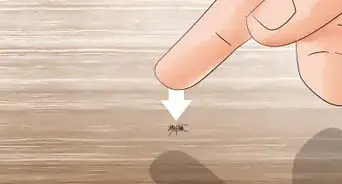
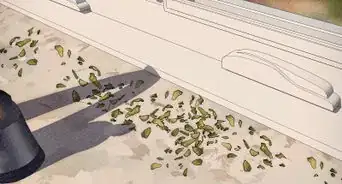
1If you live in an area where drywood termites are, this is a good idea. You can call a professional pest control company for inspections every year or so.[15] They’ll look for small holes, depressions in the wood, and termite droppings. They’ll also check the areas that termites like to hang out, like your attic or your crawl space.[16]
- Expert pest controllers know exactly where to look for termites and how to identify them. It might sound easy to do on your own, but without the skills and experience, you could miss crucial evidence that points toward a termite infestation.

Community Q&A
-
QuestionUsually, where do termites live?
 Joshua BloomJoshua Bloom is a Pest Control Specialist and the Vice President of Operations of Standard Pest Management, a pest control company based in New York City. He has over 20 years of experience in the pest control industry and specializes in commercial and large facility pest control management. Standard Pest Control also specializes in ant, bed bug, cockroach, fly, and rodent control. Joshua is licensed by the NYSDEC (New York State Department of Environmental Conservation) for termite control.
Pest Control SpecialistTermites like moist places. They live in wooden furniture, beams, moldings, basements, and window sills. -
QuestionHow can I remove termites from my house?Joshua BloomJoshua Bloom is a Pest Control Specialist and the Vice President of Operations of Standard Pest Management, a pest control company based in New York City. He has over 20 years of experience in the pest control industry and specializes in commercial and large facility pest control management. Standard Pest Control also specializes in ant, bed bug, cockroach, fly, and rodent control. Joshua is licensed by the NYSDEC (New York State Department of Environmental Conservation) for termite control.
Pest Control SpecialistYou can call a professional to get rid of the termites. Or you can install termite bait stations and use a liquid barrier treatment.
Warnings
- If you think you have drywood termites in your home or structure, call a professional pest control company right away. Termites can cause a lot of damage very quickly, so it’s important to take care of them fast.[17]Thanks!


References
- ↑ https://extensionentomology.tamu.edu/publications/drywood-termites/
- ↑ https://extensionentomology.tamu.edu/publications/drywood-termites/
- ↑ https://extensionentomology.tamu.edu/publications/drywood-termites/
- ↑ https://extensionentomology.tamu.edu/publications/drywood-termites/
- ↑ http://ipm.ucanr.edu/PMG/PESTNOTES/pn7440.html
- ↑ http://npic.orst.edu/factsheets/neemgen.html#children
- ↑ https://www.nwmissouri.edu/naturalsciences/sds/o/Orange%20oil.pdf
- ↑ http://ipm.ucanr.edu/PMG/PESTNOTES/pn7440.html
- ↑ https://edis.ifas.ufl.edu/publication/IG098
- ↑ Joshua Bloom. Pest Control Specialist. Expert Interview. 22 April 2020.
- ↑ https://extension.arizona.edu/sites/extension.arizona.edu/files/pubs/az1232.pdf
- ↑ https://extension.arizona.edu/sites/extension.arizona.edu/files/pubs/az1232.pdf
- ↑ https://hortnews.extension.iastate.edu/2001/5-4-2001/mulch.html
- ↑ https://www.fdacs.gov/content/download/3145/file/06-Consumer_Info_Drywood_Termites_01742_rev06-2020.pdf
- ↑ Joshua Bloom. Pest Control Specialist. Expert Interview. 22 April 2020.
- ↑ https://extension.arizona.edu/sites/extension.arizona.edu/files/pubs/az1232.pdf
- ↑ https://www.nwmissouri.edu/naturalsciences/sds/o/Orange%20oil.pdf
About This Article