This article was co-authored by wikiHow Staff. Our trained team of editors and researchers validate articles for accuracy and comprehensiveness. wikiHow's Content Management Team carefully monitors the work from our editorial staff to ensure that each article is backed by trusted research and meets our high quality standards.
There are 15 references cited in this article, which can be found at the bottom of the page.
The wikiHow Culinary Team also followed the article's instructions and verified that they work.
Learn more...
Getting access to fruits and vegetables throughout the winter is worth the effort, especially for home gardeners who don't want their autumn harvest to go to waste. Freezing, canning, drying, and simple cool storage are all options, as long as you know which one to use for your situation. Armed with a little knowledge and some simple equipment, you'll know how to keep yourself supplied with soups and smoothies well into the frosty months.
Steps
Question 1
Question 1 of 5:What is the best way to preserve fruits and vegetables?
-
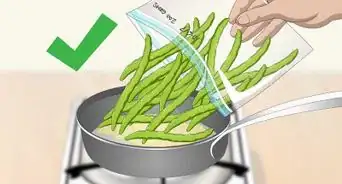
1Freeze most vegetables, plus fruits you plan to cook with. This is the quickest and easiest way to preserve flavor for most veggies. Dark leafy greens, broccoli, peas, carrots, string beans, lima beans, and corn all freeze quite well.[1] [2] Some hold up in texture better than others, so for best results plan on using the frozen veggies as ingredients, not stand-alone side dishes. Finally, freezing is a great way to preserve small fruits like berries, or any fruit that you intend to chop finely and put into baked goods or smoothies.[3]
- Most vegetables, especially greens, benefit from blanching for two or three minutes before freezing. Pat dry with paper towels and separate into convenient portions before freezing.
- Careful: high-moisture veggies will become limp and mushy in the freezer. Don't use this method for cabbage, cucumber, radishes, lettuce, or celery.[4]
-
2Canning is best for most fruits, plus tomatoes. Pears, stone fruits, melons, and most other fruits besides berries turn out better when canned instead of frozen. Canning in water keeps the sugar content lowest, while canning in a sugar syrup will preserve the maximum color, shape, and flavor.[5] Tomatoes also turn out much better canned than frozen.
- It is very important to follow canning instructions exactly, using either a pressure cooker or a high-acidity recipe in a boiling-water canner. Unsafely canned foods can cause botulism, a potentially lethal illness.
- Canning is also an option for other vegetables, but you must add significant amounts of acid for safety, changing their flavor.
-
3Air drying is ideal for onions, peppers, and herbs. While you can freeze these foods, that can make their flavor bitter or over-strong.[6] For best results, hang them in braids to dry somewhere they can get sun and air flow (for instance, a south-facing window if you're in the Northern Hemisphere).[7]


Question 2
Question 2 of 5:What fruits and vegetables can I store in a cold room?
-
1Raw root vegetables can over-winter in a cool, dark location. Vegetables that are naturally available in late fall or winter can potentially last for two or three months in perfect conditions, and even if you don't have the perfect system you may be able to preserve their quality for a few weeks. Farmers should ask a local university extension or other expert for specific advice on their crop, but home cooks can get by with these rules of thumb:[8]
- Winter squash and pumpkins store especially well as long as their skin is undamaged. Keep them in a cool, dry place above freezing.
- Store beets, rutabagas, turnips, leeks, cauliflower, cabbage, or carrots as close to freezing as you can get in a humid, well-ventilated room. Some varieties are not meant for storage, so try this at your own risk if you don't know which variety you have.[9]
-
2"Cure" potatoes for the longest shelf life. Potatoes store best if you keep them unwashed, then "cure" them by drying them in a cool, high air-flow room for two to three weeks. Store them afterward in a cool place, and cover lightly with sawdust or newspaper to help trap humidity.[10]
- Some potato varieties last much longer in storage than others. White- or yellow-skinned potatoes, thick-skinned potatoes such as russets, and potatoes that mature late in the season tend to store best.[11] A local university extension may be able to give you specific advice for the potatoes that grow in your area.
-
3Store apples wrapped in newspaper and away from other produce. The ideal storage condition for apples is just above freezing, humid, and well-ventilated. Wrap them in newspaper, place them slightly apart, and keep them away from other produce.[12]
- Like potatoes, some apple varieties are more suited to storage than others. Late-season apple varieties with thick skins and a firm texture can last for months under ideal conditions.

Question 3
Question 3 of 5:How do I select fruits and vegetables for canning?
-
1Choose ripe, firm, unbruised produce. For best flavor, wait until your produce is ripe before preserving it. Avoid canning bruised, moldy, or overripe fruits for safety reasons.[13] The ideal vegetable for canning is fully grown but as fresh as possible, and has no signs of disease such as blemished skin or discoloration.[14]
- You can speed up the ripening of stone fruits, pears, and apples by keeping them in a closed paper bag with (other) apples at room temperature.
-
2Can small or medium-sized fibrous vegetables. Certain veggies can end up with an unpleasant texture if you try to preserve the largest individuals (even if you cut them first). If possible, follow this guide for these vegetables:[15]
- Asparagus: no longer than 6 inches (15 cm), with tight tips
- Beets: no thicker than 3 in. (7.5 cm) in diameter
- Carrots: no thicker than 1.25 in. (3 cm)
- Mushrooms: small to medium-sized, with short stems and tight, unopened caps
- Potatoes: small to medium-sized, avoiding fibrous varieties; if canning whole, no thicker than 2 in. (5 cm)
- Pumpkins: small size, ideally from a "sugar pumpkin" variety
-
3Select high-acid foods for boiling-water canners. Home canning is potentially dangerous, because improperly canned food can contain the potentially fatal botulinum bacteria. While a pressure canner (when used properly) can safely process almost any fruit or vegetable, a traditional canning method that only reaches boiling water temperatures (212ºF / 100ºC) is only safe for preserving high acid foods:[16]
- Most fruits or products made from 100% fruit are safe, including citrus, tree fruits, berries, and pure fruit juice.
- Jams, jellies, and anything that's been pickled is safe, unless it is pickled with pickling lime (which is not acidic).
- Tomatoes and figs are right at the danger line, with some varieties not acidic enough to be safe. It's best to follow a canning recipe that adds additional acid like lemon juice or vinegar.
- For almost all vegetables, or for fruits and fruit products not listed above, follow a recipe specific to that product published by a canning company, food safety agency, or university extension source.

Question 4
Question 4 of 5:How do I dry fruits and vegetables?
-
1You can dry small pieces of produce in an oven. If your oven has an extra-low temperature setting, roughly 145ºF or 63ºC, you can dehydrate almost any produce. Place thin slices of the food spaced out on a parchment-lined baking sheet, crack open the oven door, and place a fan nearby to help with air flow. It takes 6–12 hours for most vegetables to become dry and brittle, but this will vary based on your oven, humidity, and choice of food. Check often and look up a guide to your specific food for best results.[17]
- Dehydrated food often changes color. If you want to prevent this, you can blanch the vegetables first, or soak the fruit or vegetable in a citric acid bath.
-
2A commercial dehydrator or convection oven will give best results. This equipment keeps air moving constantly over the drying fruit or vegetables, lowering the drying time significantly. It often comes with an instructions book with estimated times for specific fruits and vegetables.
Question 5
Question 5 of 5:How long do preserved fruit and vegetables last?
-
1Eat frozen fruits and vegetables within 8-12 months. Frozen food will never become dangerous, but most produce becomes noticeably worse after this point, losing flavor, color, and nutrients. If the vegetables were not blanched before freezing, they might decline a bit sooner.[18]
- For best results, keep the frozen food in air-tight packaging and avoid overfilling your freezer.
-
2Try to eat home-canned foods within a year. Properly canned produce is technically safe indefinitely, as long as it's been stored unopened in cool, dry, clean place. But the quality will tend to decline eventually, especially around warmth or sunlight.[19] One year is a good rule of thumb for flavor reasons, as well as for safety reasons; it pays to be extra cautious with home-canned food.[20]
- Never eat from a jar that is leaking, bulging, or cracked, or one that spurts out liquid or smells bad when opened.
-
3Raw produce storage can be unpredictable, so check often. Unless you have farm-grade storage areas and a bit of experience, it can be hard to guarantee that your raw potatoes or apples will last the whole winter. Check your storage area at least every week. If you notice bad smells, mold, or mushiness, throw away the affected vegetables and consider freezing or canning the rest of the produce.
-
4Dehydrated produce typically lasts a few months. Dried vegetables last about two to six months, while dried fruit can last up to a year. But to reach that upper end, the dehydrated food must be stored in airtight containers with no moisture at all, and stored below room temperature. In less than ideal conditions, this food can get moldy much sooner.[21]







References
- ↑ https://www.motherearthnews.com/real-food/best-ways-preserve-vegetables-fruits-zmaz99aszsto
- ↑ https://www.washingtonpost.com/news/voraciously/wp/2020/03/22/how-to-freeze-fresh-vegetables-while-preserving-their-best-qualities/
- ↑ https://pepin.extension.wisc.edu/files/2010/10/CanningFruistSafely.pdf
- ↑ https://nchfp.uga.edu/how/freeze/dont_freeze_foods.html
- ↑ https://pepin.extension.wisc.edu/files/2010/10/CanningFruistSafely.pdf
- ↑ https://nchfp.uga.edu/how/freeze/dont_freeze_foods.html
- ↑ https://www.motherearthnews.com/real-food/best-ways-preserve-vegetables-fruits-zmaz99aszsto
- ↑ http://www.uvm.edu/~pass/grubinger/factsheets/WinterVegetableStorage.pdf
- ↑ https://www.gardeningchannel.com/vegetables-long-term-storage/
- ↑ http://www.uvm.edu/~pass/grubinger/factsheets/WinterVegetableStorage.pdf
- ↑ https://extension.oregonstate.edu/news/tips-keeping-harvested-potatoes-fresh
- ↑ https://www.epicgardening.com/best-way-to-store-apples/
- ↑ https://pepin.extension.wisc.edu/files/2010/10/CanningFruistSafely.pdf
- ↑ https://extension.colostate.edu/topic-areas/nutrition-food-safety-health/canning-vegetables-9-348/
- ↑ https://nchfp.uga.edu/publications/publications_usda.html
- ↑ https://nchfp.uga.edu/publications/publications_usda.html
- ↑ https://www.ag.ndsu.edu/publications/food-nutrition/drying-vegetables
- ↑ https://nchfp.uga.edu/how/freeze/freezer_shelf_life.html
- ↑ https://nchfp.uga.edu/questions/FAQ_canning.html
- ↑ https://ask.usda.gov/s/article/How-long-can-you-keep-canned-goods
- ↑ https://nchfp.uga.edu/how/dry/pack_store.html
About This Article