This article was co-authored by Lauren Kurtz. Lauren Kurtz is a Naturalist and Horticultural Specialist. Lauren has worked for Aurora, Colorado managing the Water-Wise Garden at Aurora Municipal Center for the Water Conservation Department. She earned a BA in Environmental and Sustainability Studies from Western Michigan University in 2014.
There are 11 references cited in this article, which can be found at the bottom of the page.
This article has been viewed 23,722 times.
Night blooming jasmine (Cestrum nocturnum) is a tropical, evergreen shrub that is famous for its sweet smell. The look of the plant is unpretentious. It has clusters of tubular flowers and pointy, dark green leaves. But if you walk by the plant during the evening hours, you will get a whiff of a sultry, sweet scent that is distinctive to this shrub. Plant it outdoors in warm climates or plant it in a container if you live in a cooler climate.[1]
Steps
Part 1
Part 1 of 3:Seeding Night Blooming Jasmine
-
1Soak the seeds. Soak the seeds for twelve hours in a small bowl of water. Put some moistened sand, sphagnum moss or peat moss in a container with a removable lid, such as a yogurt container.[2]
- You can purchase night blooming jasmine from online seed retailers. You may be able to find them at your local garden center.
-
2Press the seeds down into the container. Cover the seeds with 1 1/16’’ (26.9 mm) of soil. Put the container in your fridge for between one and two months. After this preparation period, which is called stratification, the seeds will be ready for planting.[3]
- The seeds should be kept at a temperature of between 30 and 40 degrees Fahrenheit (between -1 and -4 Celsius).
- Every week, check the container to make sure the soil is slightly damp but not too moist. If the soil is dry, you should spray a bit of water into the container.
- You can put one packet of seeds into the container. At the stratification stage, the seeding density is not a major concern, as long as all of the seeds are exposed to a cold and damp environment.
Advertisement -
3Plant the seeds in potting soil. Use small, four inch (10 centimeter) pots with potting soil or peat pots. Mist the pots with a plant sprayer. Place two seeds down into each of the small pots. Gently press them down, and then mist the pots with a sprayer.[4]
-
4Germinate the seeds in a tray. Place your small pots in a germination tray or a shallow container. You can place a plastic bag over the tray but remember to leave one side open for ventilation. Keep the tray at a temperature of between 60 and 70 degrees Fahrenheit (16 and 21 Celsius) to allow for germination. You should see the seedlings begin to emerge after two or three weeks, at which point you can remove the plastic bag.[5]
-
5Give the seedlings 10-12 hours of sunlight per day. Place your tray of seedlings in a warm spot in the house, such as in front of a south facing window. If you have a grow light, you can use it for this purpose. Try to make sure the seedlings get 10 to 12 hours of sunlight per day. When they reach a height of between three and four inches (7 and 10 centimeters), you can go ahead and transplant the seedlings.[6]
- Remember to make sure you are past the last frost date in your region.
- You can find out the last frost date by visiting either a gardening or a weather website and searching by zip code. Alternately, you can call the weather service of your local environment agency.
- Slowly acclimate your seedling to outdoor conditions by a process called hardening off. Using this method, you will place your seedling outside for a short period each day, slowly increasing its time outdoors until it's ready for transplanting. Place your seedling out of direct sunlight and wind in a protected spot for a few increasing hours each day.
Advertisement


Part 2
Part 2 of 3:Finding a Good Location
-
1Plant them outside when they reach an adequate height. When they reach 3-4 inches (7 and 10 centimeters) in height, you can plant your seedlings outside. Find a nice place to plant your seedlings in the garden, along a pathway or in a container. If you plant the seedlings in your garden, remember that they will need a sunny spot and a bit of room to grow. You should space them between 4 and 6 feet (1.2 and 1.8 meters) apart from one another.[7]
-
2Make sure the last frost has passed. The night blooming jasmine is native to tropical America and the West Indies. It will not tolerate harsh, cold climates. If you live in a warmer climate, you can go ahead and plant it outdoors.[10]
-
3Choose a sunny spot. The night blooming jasmine enjoys full sun to partial shade. It will bloom very well when exposed to full sun, but can also tolerate some shade.[13]
- It requires at least four hours of sunlight.
-
4Plant jasmine in rich, well-draining soil. The night blooming jasmine will do fine in a range of soil types. However, the soil should be rich in nutrients and drain well, since you don’t want the roots to become waterlogged.[14]
- The soil should be a neutral pH of between 6.6 and 7.5.[15]
- Use a soil pH test kit from your home garden center. Dig a four inch (10 centimeter) hole. Pour some distilled water in the hole. Insert the test probe, which is included in your kit, into the hole. After one minute, you will get a pH reading.[16]
- If the soil pH is not amenable to planting night blooming jasmine, you should plant it in a different part of your garden or someplace with a better soil pH.
- It will do well in a sandy soil.[17]
-
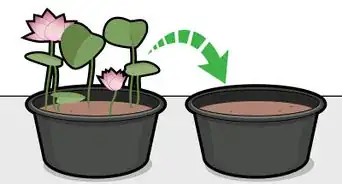
5Transplant the night blooming jasmine. Dig a hole in your garden, which should be large enough to contain the night blooming jasmine seedling. Holding the night blooming jasmine by the root ball, gently place it in the hole. Cover the planting with soil.[18]
- Place night blooming jasmine at least three feet away from walkways and buildings.
Advertisement


Part 3
Part 3 of 3:Maintaining Your Jasmine
-
1Water night blooming jasmine until the soil is saturated. When the top of the soil looks dry, give the plants a good watering.[19] During the first year of the plant’s life, water thoroughly and regularly.[20]
- Water the night blooming jasmine when the soil looks dry.
- The frequency of watering will depend on your local climate.
- You should water more frequently during the spring and summer months.
- If you are watering the jasmine in a pot, you should stop watering when you see the water draining from the bottom.[21]
-
2Fertilize night blooming jasmine between late spring and late fall. Dissolve a half teaspoon of 15-15-15 fertilizer in a gallon of water. Pour the mixture over the base of the plant.[22]
- If the plant is suffering, you can also feed it with a fish emulsion fertilizer during the winter months. Use a half teaspoon (2.46 milliliters) of fish emulsion with a quart of water. Use one cup (236 millilitres) for each foot of the plant.
- 15-15-15 fertilizer contains a balanced mix of nitrogen, phosphorous and potassium.[23]
- Follow all of the directions on the fertilizer.
-
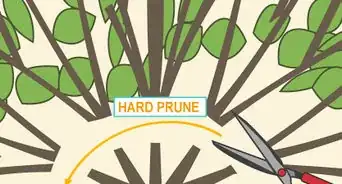
3Prune night blooming jasmine in the fall or spring. To encourage new growth and contain their growth, prune night blooming jasmine in the late fall or early spring. Trim the plants back to around three feet (91 centimeters) in height.[24]
- In order to avoid spreading any disease, it is wise to clean your pruning tools in a bleach solution. You can use a mix of one-part bleach to nine parts water.
-
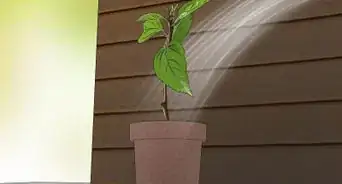
4Put them near a sunny window for the winter months. In the fall, you should bring the pot of night blooming jasmine onto your porch. As soon as you see the temperatures begin to drop anywhere close to 0 Celsius (32 Fahrenheit), you may want to bring the night blooming jasmine indoors. As long as you place it near a sunny window and keep the temperature between 70 and 80 Fahrenheit (21–26 Celsius), it should continue to bloom.[25]Advertisement


Community Q&A
-
QuestionWhat type of soil does night blooming jasmine like?
 Lauren KurtzLauren Kurtz is a Naturalist and Horticultural Specialist. Lauren has worked for Aurora, Colorado managing the Water-Wise Garden at Aurora Municipal Center for the Water Conservation Department. She earned a BA in Environmental and Sustainability Studies from Western Michigan University in 2014.
Professional GardenerNight blooming jasmine will grow in many soil types. They prefer a light well draining soil.







References
- ↑ http://www.south-florida-plant-guide.com/night-blooming-jasmine.html
- ↑ http://www.gardenguides.com/85865-plant-night-blooming-jasmine-seeds.html
- ↑ http://www.gardenguides.com/85865-plant-night-blooming-jasmine-seeds.html
- ↑ http://www.mykitchengarden.info/2016/08/queen-night-blooming-jasmine-plant.html
- ↑ http://www.gardenguides.com/85865-plant-night-blooming-jasmine-seeds.html
- ↑ http://www.gardenguides.com/85865-plant-night-blooming-jasmine-seeds.html
- ↑ http://davesgarden.com/guides/pf/go/2128/
- ↑ http://www.mykitchengarden.info/2016/08/queen-night-blooming-jasmine-plant.html
- ↑ https://www.hunker.com/12202701/night-blooming-jasmine-plant-care
- ↑ http://www.floridata.com/Plants/Solanaceae/Cestrum%20nocturnum/28
- ↑ https://www.easytogrowbulbs.com/products/cestrum-nocturnum-night-blooming-jasmine?variant=31581092620
- ↑ http://davesgarden.com/guides/pf/go/2128/
- ↑ http://www.floridata.com/Plants/Solanaceae/Cestrum%20nocturnum/28
- ↑ http://www.emeraldgoddessgardens.com/index.php?main_page=product_info&products_id=59
- ↑ http://davesgarden.com/guides/pf/go/2128/
- ↑ https://www.bobvila.com/articles/how-to-test-soil-ph/#.WvrAgdPyveQ
- ↑ http://www.floridata.com/Plants/Solanaceae/Cestrum%20nocturnum/28
- ↑ http://www.south-florida-plant-guide.com/night-blooming-jasmine.html
- ↑ https://www.hunker.com/12202701/night-blooming-jasmine-plant-care
- ↑ http://www.monrovia.com/plant-catalog/plants/728/night-blooming-jessamine/
- ↑ https://www.hunker.com/12202701/night-blooming-jasmine-plant-care
- ↑ https://www.hunker.com/12202701/night-blooming-jasmine-plant-care
- ↑ http://www.growingagreenerworld.com/the-numbers-on-fertilizer-labels-what-they-mean/
- ↑ https://www.hunker.com/12202701/night-blooming-jasmine-plant-care
- ↑ https://www.easytogrowbulbs.com/products/cestrum-nocturnum-night-blooming-jasmine?variant=31581092620
About This Article