This article was co-authored by Chai Saechao. Chai Saechao is the Founder and Owner of Plant Therapy, an indoor-plant store founded in 2018 based in San Francisco, California. As a self-described plant doctor, he believes in the therapeutic power of plants, hoping to keep sharing his love of plants with anyone willing to listen and learn.
This article has been viewed 11,613 times.
Planting bulbs in pots is a great way to enjoy the beauty of springtime flowers even if you don't have much garden space. Make sure you get a big enough pot to accommodate your bulbs and a high-quality potting mix. Start with a layer of soil before you plant your bulbs. You can plant more than 1 type in 1 pot, just make sure you layer the bulbs. Once you're done planting, water the pots regularly and make sure the pot gets sunlight.
Steps
Part 1
Part 1 of 3:Choosing Pots and Soil
-
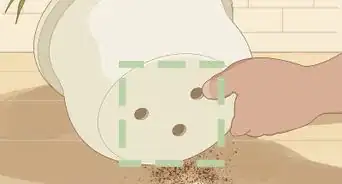
1Choose a pot with drainage holes. Drainage holes are necessary to let any excess water out of the pot. If you water the bulbs and the excess water doesn't have anywhere to go, your plants could drown.[1]
-
2Make sure the pot is big enough to insulate the bulbs. If you're planning on leaving your pot outside during the winter, you'll need to add enough soil to keep the bulbs warm. Look for a pot that's at least 24 in (61 cm) in diameter.[2]
- This is true whether you're using indoor or outdoor bulbs.
-
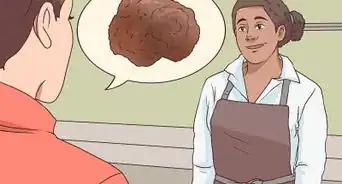
3Select a high-quality potting mix. Regular gardening soil won't have the nutrients your bulbs need to thrive. Look for houseplant potting mix. If you like, you can also add fertilizer to the soil and mix it in to the soil.[3]
- A granular 5-10-10 or 9-9-6 bulb formulation fertilizer is the best to use with your bulbs.
-
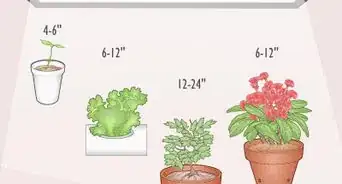
4Pick a pot tall and wide enough to accommodate your bulb type. Different types of bulb require different depths of planting. Give them at least 2 in (5.1 cm) of soil below them, and about 2 in (5.1 cm) of space above the top of the soil.[4]
- For example, tulips and daffodils should be planted about 6 in (15 cm) deep. So your pot should be at least 10 in (25 cm) tall.


Part 2
Part 2 of 3:Potting Your Bulbs
-
1Plant your bulbs about 6 weeks before spring. Depending on where you live, you'll have to pot your bulbs at a different time. You want your potted bulbs to begin to bloom around the same time as bulbs planted outdoors, usually in early spring. Planting your bulbs 6 weeks before their blooming time gives them enough time to grow.
- You may need to alter your schedule based on your growing region, as cold weather could damage or kill the plant. If the temperature drops, you may need to bring your plant back inside to protect it from the cold.
-
2Fill your pot with potting mix. Pour the potting mix directly from the bag into the pot. Fill the pot with at least 2 in (5.1 cm) of soil. If you're planting bulbs that require a shallower planting depth, fill the pot with about 4 in (10 cm).[5]
- Tulips and daffodils should be planted in deeper soil. Bearded irises should be planted in shallow soil.
-
3Secure your bulbs in the soil. Place your bulbs in the soil and give them a quarter turn so they take hold in the soil. Plant them about 0.5 in (1.3 cm) apart in the soil. Then pour more potting soil around the bulbs, allowing just the tip of the bulb to show through.[6]
- Plants like tulips and daffodils should be planted at least 6 in (15 cm) deep. Smaller plants, like crocus, should be planted about 4 in (10 cm) deep.
- If you like, you can plant just 1 bulb in the pot.
- Make sure you plant your bulbs at least 0.5 in (1.3 cm) from the edge of the pot.
-
4Layer different types of bulbs. If you want to plant more than 1 type of bulb in 1 pot, plant them in layers by height. The bulbs that need to be planted deepest should go in first. Plant that bulb as you normally would, cover it over with soil, and then plant the shallower bulbs next. Make sure you stagger the bulbs in the second layer so they aren't growing directly on top of the deepest bulbs.[7]
-
5Water the potted bulbs. Once you've covered your bulbs with soil, use a watering can or garden hose to water the soil. Keep watering until water runs out of the drainage holes at the bottom of the pot. You can use room temperature or cool water, either from a hose or your tap.


Part 3
Part 3 of 3:Caring for Your Bulbs
-
1Keep bulbs planted in small containers in a cold, protected space. If you don't have a large enough pot to leave your bulbs outside during the winter, you can stash them in an enclosed space. A shed or garage that will stay cold but provide protection from snow and extreme cold are perfect.[8]
- You can leave larger, well-insulated pots outside. The cold air actually helps the bulbs bloom later in the spring. As long as your bulbs are well-insulated, the outside air temperature won't matter much.
-
2Check the moisture of the soil regularly. Every few days, stick your finger into the potting soil around the bulbs. If the soil feels dry down to 1 in (2.5 cm), water the soil until water runs out of the drainage holes.[9]
-
3Move the pot outside after you see new growth. After about 6 to 8 weeks in a chilly environment, you should see some green growth from your bulbs. If you're keeping your pot inside a garage or shed, you can move it outside once you see this growth.[10]
-
4Make sure the bulbs get some light. Too much sunlight can cause the bulb growth to wilt. An area with light shade gets about 60% shade and 40% sunlight and is the perfect place for your potted bulbs.[11]
-
5Check the water level daily after the bulbs bloom. Once your bulbs bloom, they'll need more water than they did when they were growing. Stick your finger into the soil to a depth of 1 in (2.5 cm) and check if the soil is dry. If it is, water the soil until water runs out of the drainage holes.[12]
-
6Protect your plants from pests and disease. Squirrels are likely to try to dig into your pots and get at the bulbs. You can cover the top of the pot with mesh wiring to protect the bulbs from squirrels and other critters. Bugs shouldn't be a problem during the winter, but if you start to notice some buzzing around, you can use a general insect repellent.[13]


Community Q&A
-
QuestionWhat are some good houseplants for a beginner?
 Chai SaechaoChai Saechao is the Founder and Owner of Plant Therapy, an indoor-plant store founded in 2018 based in San Francisco, California. As a self-described plant doctor, he believes in the therapeutic power of plants, hoping to keep sharing his love of plants with anyone willing to listen and learn.
Plant SpecialistI'd recommend a type of snake plant that is commonly called mother-in-law's tongue. These are air-purifying plants, but they're also really hardy. You only need to water them every 2-5 weeks depending on where you put your plant. The ZZ plant is also a good option since it's adaptable to basically any kind of condition. -
QuestionWhich way should you plant a bulb?
 Maggie MoranMaggie Moran is a Professional Gardener in Pennsylvania.
Home & Garden SpecialistMost bulbs have a flat bottom, which indicates you should plant them with the pointy side up. -
QuestionDo you water bulbs after planting in the fall?Maggie MoranMaggie Moran is a Professional Gardener in Pennsylvania.
Home & Garden SpecialistYou should water the bulbs right after planting. Although, the bulbs should only need future watering if it is a particularly dry season. -
QuestionCan you plant bulbs indoors?Maggie MoranMaggie Moran is a Professional Gardener in Pennsylvania.
Home & Garden SpecialistYes, they can be planted indoors in a pot with soils. They will bloom about 4 weeks after planting. -
QuestionHow deep do you need to plant bulbs?Maggie MoranMaggie Moran is a Professional Gardener in Pennsylvania.
Home & Garden SpecialistThis depends on the type of bulbs. The common rule is to plant the bulb 2 or 3 times deeper than the bulb's height.






References
- ↑ https://www.bhg.com/gardening/flowers/bulbs/how-to-grow-bulbs-in-containers/
- ↑ https://www.bhg.com/gardening/flowers/bulbs/how-to-grow-bulbs-in-containers/
- ↑ https://garden.org/learn/articles/view/1324/
- ↑ https://garden.org/learn/articles/view/1324/
- ↑ https://www.bhg.com/gardening/flowers/bulbs/how-to-grow-bulbs-in-containers/
- ↑ https://www.bhg.com/gardening/flowers/bulbs/how-to-grow-bulbs-in-containers/
- ↑ http://www.finegardening.com/article/planting-spring-bulbs-in-containers
- ↑ https://www.bhg.com/gardening/flowers/bulbs/how-to-grow-bulbs-in-containers/
- ↑ https://garden.org/learn/articles/view/1324/
About This Article