This article was co-authored by wikiHow staff writer, Hannah Madden. Hannah Madden is a writer, editor, and artist currently living in Portland, Oregon. In 2018, she graduated from Portland State University with a B.S. in Environmental Studies. Hannah enjoys writing articles about conservation, sustainability, and eco-friendly products. When she isn’t writing, you can find Hannah working on hand embroidery projects and listening to music.
There are 12 references cited in this article, which can be found at the bottom of the page.
This article has been viewed 2,960 times.
Learn more...
Anemone flowers are colorful, vibrant plants that bloom in the spring and die off in the winter. Planting them from corms, or bulbs, is the easiest way to introduce them into your yard or garden, since they’re tiny and compact until they start growing. By planting your corms at the right depth and giving them enough water, you can encourage your flowers to grow year after year with minimal effort.
Steps
Part 1
Part 1 of 3:Choosing a Spot
-
1Pick a spot with well-draining, loamy soil. If you’re planting your anemones in the ground, look for a spot in your yard or garden where the water drains relatively quickly. As a quick test, monitor the ground after a rainfall and keep track of any puddles that form. If there are still puddles on the ground 5 to 6 hours after a heavy rainfall, look somewhere else.[1]
- If you’re planting your corms in a pot, buy potting soil made with sand, loam, or chalk.
-
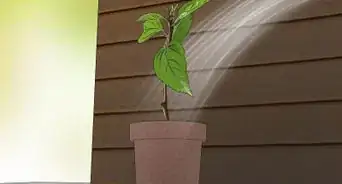
2Find an area with full to partial sunlight. Anemones do best when they get a full 8 hours of sunlight or mostly sunlight with a little bit of shade. Keep an eye on your yard throughout the day to see which area gets the most sunlight.[2]
- Without enough sunlight, your flowers won’t be able to fully bloom and they may not achieve their bright colors.
-
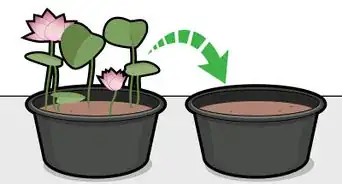
3Use a clay or terracotta pot with a drainage hole if you’re container planting. If you’d like to leave your flowers in a pot to grow, grab a large pot with a hole in the bottom for water drainage. Fill the pot up fully with potting soil that’s made mostly of sand, loam, or chalk; the rest can be peat moss, bark, or perlite.[3]
- You can find large pots like this at most garden supply stores.
- Planting in pots is nice since you can move the pots around to follow the sunlight if you need to.


Part 2
Part 2 of 3:Planting Corms
-
1Plant the corms in late summer or early fall. Anemone flowers bloom in the springtime, meaning they need a dormant period in the winter before they bloom. Try to plant your anemone corms before the first threat of frost to give them plenty of time to die off in the winter.[4]
- If you’ve waited too long, you can plant your anemones in the spring for a summer bloom instead.
-
2Soak your corms in water for 3 to 4 hours. Pour all of your corms into a large bowl and cover them with water. Leave the bowl at room temperature for 3 to 4 hours to swell the corms up and prepare them for planting.[5]
- Since corms usually come dried, it’s important to “wake them up,” or prepare them for planting, by soaking them.
-
3Dig a hole 2 to 3 times the depth of the corm. Grab a small gardening spade and dig down into the soil, going down about 2 to 3 times deeper than the corm is long. This will give the corm enough room to root when it comes time.[6]
- Your hole can be approximate, so there’s no need to actually take a measurement. Just use your best judgement.
-
4Nestle the corm into the hole, making sure the top points upward. Grab one corm and look for the pointed end, then angle that end upwards. Push the corm down into the hole, making sure it’s secure at the bottom.[7]
- If you aren’t sure which way is up, just put the corm sideways. Once it roots, it will turn itself the right way to start growing.
-
5Cover the corm with soil and press down hard to remove air pockets. Use your hands to scoop soil on top of the corm, covering it up all the way until the ground is level again. Press down a little bit on top of the corm to push out any air pockets and avoid soaking it in water.[8]
- You might want to wear gardening gloves to protect your hands!
-
6Plant the next corm 2 corm widths away. Anemones look great when they grow clustered together, but they do need a little bit of space. Try to plant the rest of your corms about 2 corm widths away from each other so they all get enough resources to survive and thrive.[9]
- To go for a more natural, randomized look, throw your corms down from hip height and see where they land. Then, try to plant them in that same pattern.
- If you’re planting in a pot and you have a lot of corms, you may need multiple large pots to fit them all.
- If you want to add more plants near your anemones, go for Maiden grass or Tall Verbena to give your flowers some shade without getting too tall.[10]
-
7Water the anemone corms well. Once all your corms are planted, give them a long soak to cement them in place. Not only will it secure the corms in the soil, but it will wake them up and get them to start growing.[11]
- Even if you’ve soaked your corms in water, you still need to water them once they’re in the ground.


Part 3
Part 3 of 3:Caring for Anemone Flowers
-
1Keep the soil moist but not soaking. If you’re having a dry winter and not getting a lot of rain, make sure you water your anemone corms every day to keep the soil moist. Try not to let the water puddle up on top of the corms, or you could drown them out.[12]
- This is why it’s important to use well-draining soil!
-
2Wait about 3 months for the anemones to sprout. After you plant your corms, you’ll have to wait a few months to see your flowers bloom. Usually, your corms will start sprouting after the coldest part of winter is over, and they’ll be in bloom for about 6 weeks until they die back again.[13]
- Anemones take about 2 to 5 years to reach their full height, so you won’t have to worry about them getting too tall until they’ve been around for a few years.
- Most anemone flowers get between 0.1 m (0.33 ft) and 0.5 m (1.6 ft) tall.
-
3Use bamboo skewers to support taller flowers. Anemones usually don’t need much help in the growing department, but they do get pretty tall in the spring. If you notice your anemone stalks bending or breaking, put a bamboo skewer in the ground next to them, then tie the stalk to the wood with twine or a zip tie.[14]
- You can find bamboo skewers at most garden supply stores.
-
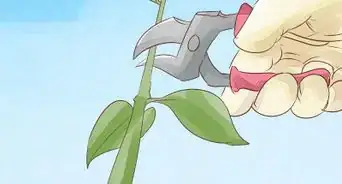
4Avoid pruning anemones. Anemones are very self-sufficient flowers, so they don’t need any pruning during the spring or summer. When the flowers die in the winter, you can remove the dead foliage if you want to, but you don’t have to.[15]
- When the flowers bloom in the spring, you can cut a few to make a bouquet if you’d like to. It won’t damage the plant.
-
5Put a bird feeder in your yard to get rid of slugs. Anemones don’t have many natural enemies, but the garden slug can seriously chomp through them. If you notice that your flowers are getting eaten, try to encourage birds to come into your yard by keeping your animals indoors at night or putting a bird feeder near your plants.[16]
- Slugs can be hard to control in your garden. The best way to remove them without pesticides is to search for them by torchlight and move them away by hand.[17]
-
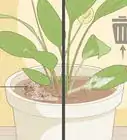
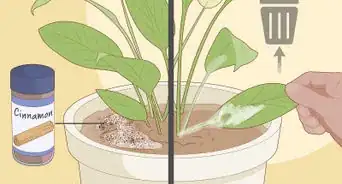
6Throw any leaves with powdery mildew on them in the trash. Anemone flowers are susceptible to powdery mildew when the soil gets too wet. If you notice any leaves on your flowers that look white and powdery, pluck them off by hand and then throw them in the trash, not your compost or yard debris bin.[18]
- The best way to avoid powdery mildew is to make sure your plants are getting enough sunlight and avoid overwatering.[19]
- If your plants consistently get powdery mildew on them, you may need to look into chemical preventions.


Things You’ll Need
Choosing a Spot
- Clay or terracotta pot (for container planting)
Planting Corms
- Spade
- Gardening gloves
- Water hose
Caring for Anemone Flowers
- Water hose
- Bamboo skewers (optional)







References
- ↑ https://www.rhs.org.uk/Plants/1214/i-Anemone-apennina-i/Details
- ↑ https://www.rhs.org.uk/Plants/1214/i-Anemone-apennina-i/Details
- ↑ http://www.bbc.co.uk/gardening/basics/techniques/plant_bulbs1.shtml
- ↑ https://extension.colostate.edu/topic-areas/yard-garden/herbaceous-perennials-7-405/
- ↑ https://www.youtube.com/watch?v=cN1_QRuyvio&feature=youtu.be&t=60
- ↑ http://www.bbc.co.uk/gardening/basics/techniques/plant_bulbs1.shtml
- ↑ https://www.youtube.com/watch?v=cN1_QRuyvio&feature=youtu.be&t=110
- ↑ https://www.youtube.com/watch?v=OFcred-IFmg&feature=youtu.be&t=193
- ↑ http://www.bbc.co.uk/gardening/basics/techniques/plant_bulbs1.shtml
- ↑ https://www.gardenia.net/garden/a-glowing-fall-border-with-asters-anemones-and-grasses
- ↑ https://www.youtube.com/watch?v=OFcred-IFmg&feature=youtu.be&t=215
- ↑ https://www.rhs.org.uk/Plants/1214/i-Anemone-apennina-i/Details
- ↑ https://education.teamflower.org/learn/growing/ssl/anemone-growing-tips
- ↑ http://www.missouribotanicalgarden.org/PlantFinder/PlantFinderDetails.aspx?kempercode=b330%20
- ↑ https://www.rhs.org.uk/Plants/1214/i-Anemone-apennina-i/Details
- ↑ https://www.rhs.org.uk/Plants/1214/i-Anemone-apennina-i/Details
- ↑ https://www.rhs.org.uk/advice/profile?pid=228
- ↑ https://www.rhs.org.uk/Plants/1214/i-Anemone-apennina-i/Details
- ↑ https://www.rhs.org.uk/advice/profile?pid=253
About This Article