X
wikiHow is a “wiki,” similar to Wikipedia, which means that many of our articles are co-written by multiple authors. To create this article, 16 people, some anonymous, worked to edit and improve it over time.
wikiHow marks an article as reader-approved once it receives enough positive feedback. In this case, 90% of readers who voted found the article helpful, earning it our reader-approved status.
This article has been viewed 65,258 times.
Learn more...
Do you find it difficult to revise for exams when you have so many subjects and things to remember? If the answer is yes, then you're not alone! These tips should help.
Steps
-
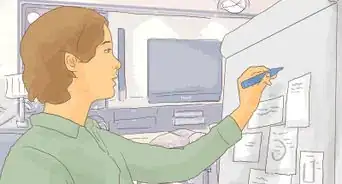
1Find out the exact dates of your exams. You will know how much time you have left before each exam. It might help to draw up a table which includes all your subjects and all the weeks you have until the last exam, and then fill in the exam dates.
-
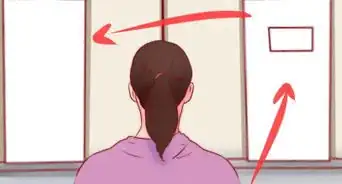
2Prioritise your subjects. If you think you have most to do in science or that is your weakest subject then this will be top priority. Put all your subjects in an order from most to least important.
-
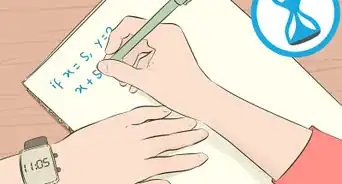
3Decide on a revision plan which will work for you. How many hours do you need to do of a night? Do you have other commitments you can't get out of? Leave some time for breaks,meals and free time but ensure you have a good time slot each night for revision.
-
4Fill in your revision timetable in with your subjects, and use your priority list to give the most important ones more revision time.
-
5Stick to this timetable! speaking from experience, if you decide to focus solely on one or two subjects because you think you know the others, you will get a nasty shock. Don't ignore any of the subjects, but ensure you have a balance where your priority subjects have the lead.
-
6Begin by revising all the material which you don't know as well. There is no point in beginning to revise the digestive system in science if you are pretty confident in it. You may find that also prioritising each individual subjects modules or topics helps you. Therefore if you run out of time you will know that you have definitely revised the hardest stuff!
-
7Actually attempt to remember the material. It sounds stupid but most of the time people are tempted to spend all their revision time just reading or writing and assume that they know it all. Never assume; 'it makes an ASS out of U and ME' and its true. If you assume you know it without actually testing yourself on it then you might get a shock in the exam...
-
8Read the facts a few times so you are familiar with what they mean. If there's anything you don't understand do everything you can to find out. Ask the teacher, research other books and on the Internet. You will be learning as you do it!
-
9After you are more familiar with them, make your own notes so that it's shorter, but ensure that they make sense so you won't need to refer back to the test book when revising.
-
10Don't do too much at once. Take a page and test yourself by covering it up and writing down everything you remember. Then, check it and do it again and again until you have everything! This way you are testing and revising as you re-read it over again!


Community Q&A
-
QuestionWhy is it important to do a timetable?
 Community AnswerIt is important so you can get in to a habit of studying. If you do the same subjects often, you'll remember things better.
 -
QuestionHow can I avoid copying the same text as is in the book?
 Community AnswerRead through the text in the book, in small amounts, and try to get the general idea of what that section is trying to say. Then, write down what you remember it to say, and change it if it's wrong, or add new bits in to make it clearer.
 -
QuestionHow can I make a revision times table?
 Community AnswerPrint out a time table template that you can easily find online. At the top, place the days of the week and on the side, place the time and organize your time using that.
 -
QuestionWhat do I do If I am finding it hard to memorize stuff and there is not much time left till my exams?
 PenguinpencilCommunity AnswerKeep at it. Memory is like a muscle, the more you use it, the stronger it becomes.
 -
QuestionCan I remember a lot after studying for one hour?
 Community AnswerIt depends. An hour of studying per day should be a sufficient amount in order for you to remember the majority of the information you're reading. However, some people might need more time.
Warnings
- Never compare yourself to your friends. They are not you. we are all different. Just do your best and be happy with that.Thanks!
- You may not achieve the grade you expected. Know in yourself what you are capable of achieving so you don't set your targets too high. Don't settle for lower grades than your ability either though, just know your ability and do your best.Thanks!
- Revision isn't fun - receiving your pass grades is.Thanks!