This article was co-authored by Marty Stevens-Heebner, SMM-C, CPO®. Marty Stevens-Heebner is a Certified Professional Organizer (CPO) and Founder of Clear Home Solutions, a home organizing and senior moving management company based in southern California. Marty is the first Certified Senior Move Manager (SMM-C) in the United States and is a Certified Aging in Place Specialist (CAPS) through the National Association of Home Builders. She is the President-Elect and is on the board of directors of the National Association for Senior Move Managers, a member of the National Association of Professional Organizers, and has been acknowledged as a Hoarding Specialist and ADHD Specialist through the Institute for Challenging Disorganization.
There are 11 references cited in this article, which can be found at the bottom of the page.
Moving to a new place can be exciting, but the packing is definitely the worst part. And when it comes to dishes, you want to make sure they all arrive at your new place in one piece. With a little care and patience, you can rest assured they'll be safe and sound. Here, we've gathered some of the best tips for packing dishes from the box to the truck. Happy moving!
Steps
Method 1
Method 1 of 13:Buy bubble wrap or packing paper to wrap dishes in.
-
1Hardware stores and moving companies typically sell packing materials. It can get costly to buy new packing materials for a move, but with bubble wrap and industrial-strength packing paper, you know your dishes will be safe. Plan on at least 2-3 sheets of packing paper for every dish you want to pack.[1] [2]
- If you have newspapers lying around, they can serve as a less expensive alternative. Just keep in mind the newsprint might transfer ink to your dishes, meaning you'd have to wash them after you unpacked them.
- For a simple alternative, you can also buy paper or styrofoam disposable plates that are the same size as your dishes (or slightly larger). They'll cushion your plates against each other. You'll still need some packing paper to stuff the box and wrap the outsides of your dishes, but you won't need as much.

Method 2
Method 2 of 13:Try towels or clothing as a less wasteful packing alternative.
-
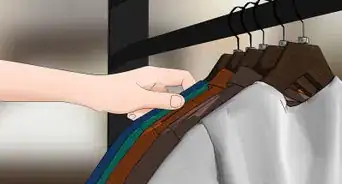
1Towels, sheets, blankets, and shirts can do double-duty as packing materials. When you use things you already need to pack as padding materials for breakable items, you save time and money. On top of that, you'll have a lot less to throw away when you start unpacking.[3] [4]
- Thin fabric items such as sheets and T-shirts do not provide as much cushioning as towels or sweatshirts—you'll need several layers per dish to get the same protection as you would with packing paper or bubble wrap.

Method 3
Method 3 of 13:Use strong, small boxes that won't get too heavy.
-
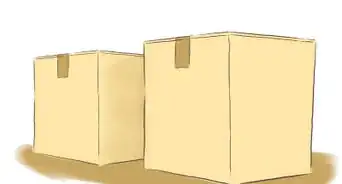
1Small or medium-sized boxes work best for dishes. Choose a box that's a little taller than your largest dish when you stand it up vertically. That gives you room for packing materials but not enough room for your dishes to move around a lot.[5]
- It might seem more efficient to get all of your dishes in one box, but if you have 12 or more place settings, that box might be too heavy to carry easily. All of your careful packing will be pointless if you drop the box on the way to the truck!
- When you put the box together, tape the bottom securely so your dishes won't fall through. You might want to use more than one piece of tape to make sure it can hold the weight.

Method 4
Method 4 of 13:Buy specialty boxes for more fragile dishes.
-
1These packing kits are more expensive but can give you peace of mind. If you're moving with your family's china or your grandmother's cherished Blue Willow dishes, go ahead and spend a little more to make sure they're safe. Because these materials have been tested, you can rest assured they'll protect your dishes in transit.[6] [7]

Method 5
Method 5 of 13:Pad all sides of the box.
-
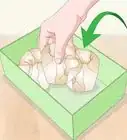
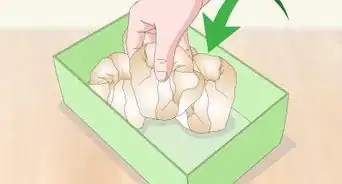
1Put crumpled paper or clothing in the bottom of the box. If you have puffy winter coats, they'll do a great job of cushioning your dishes. Otherwise, you might try folded towels or sheets, blankets, or even rolled T-shirts.[10] [11]
- Leave out some paper, towels, or other material to pad the top of the box after you put your dishes inside it.

Method 6
Method 6 of 13:Wrap each plate individually in packing material.
-
1Lay a plate in the center and fold the corners up over the dish. If you're using packing paper, go with at least 2-3 sheets per dish for adequate cushioning. But don't be afraid to use more, especially for more fragile plates! Once you've covered the dish, flip it over and fold the sides over again. Keep going until you have a neat package.[12]
- If you're using disposable plates, alternate them between your dishes to make a stack. Then wrap the stack in paper or cloth to keep them from moving.
- Ideally, your dishes should feel like padded blobs. Wrap more packing paper around each item if you can feel the edges.[13]

Method 7
Method 7 of 13:Bundle 4 or 5 sturdy dishes together for greater stability.
-
1This works well with dishes of the same size. Lay the first dish in the center of your packing material, fold one side over, then add another dish on top. Fold the other side over the second dish, then stack a third dish on top of that. Keep going until you've got a completely wrapped stack.[14]
- Use packing tape to make the bundle even sturdier. Run a strip across the top, down the side of the stack, across the bottom, then up the other side back to the top. Repeat with another strip lengthwise across the first strip and around the whole stack.

Method 8
Method 8 of 13:Pack plates vertically like books on a shelf.
-
1Standing the plates on their sides makes them less vulnerable to breaking. Allow the dishes to rest in the packing material you've placed in the bottom of the box. If the dishes are heavy enough to squash down your padding, you might want to add a little more to be safe.[15]
- If you have extra pieces of cardboard, slide them in as dividers after every 4 or 5 dishes for additional padding.

Method 9
Method 9 of 13:Add fillers to keep your dishes from moving around.
-
1If your dishes can't move around in the box, they're less likely to break. Ball up any extra packing paper or stuff T-shirts and towels into all the crevices and corners around your dishes. Shake the box gently to make sure the dishes can't move very much.[16] [17]
- If you have lighter items, such as saucers, you might wrap them carefully and place them on top of the plates if you have room. Always put lighter items on the top and heavier items on the bottom—and be careful not to make the box too heavy overall.
- Add more padding on the top of the box after you've got it filled in. The easiest way to do this is to fold a towel and lay it on top.

Method 10
Method 10 of 13:Seal up the box with strong tape.
-
1Use packing tape to tape down the flaps. You might consider running tape along the edges as well just to reinforce the seal. But if you have to run a double-layer of packing tape to close the box, stop and take some dishes out or use a bigger box. Don't overload a box of dishes.[18]
- Lift the box and gently shake it a little to make sure the dishes are secure inside. If you feel or hear a lot of movement, you might want to open it back up and add some more filler.

Method 11
Method 11 of 13:Label your boxes clearly.
-
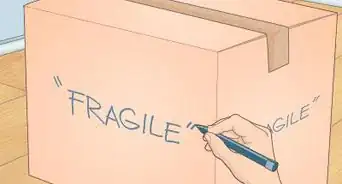
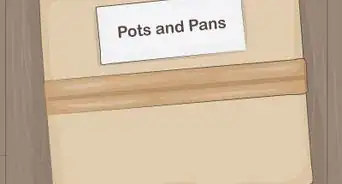
1Write the contents on all sides of the box. Label your boxes so that anyone can see from anywhere exactly what's in the box, where it should go, and how it should be handled. Use a permanent marker to list the name of the room, a brief description of the contents, and the word "FRAGILE."[19] [20]
- Label your boxes this way even if you're handling the move all by yourself. It takes some stress off if you don't have to worry about remembering what's in each box.
- You might also label which side is the top and bottom (if the box isn't already pre-labeled) or include "this end up" with arrows on the sides.

Method 12
Method 12 of 13:Place your dishes in the peak of your moving truck.
-
1The peak or "mom's attic" over the cab is best for fragile items. Packing your dishes here keeps them separate from your furniture and heavier items that can crush them if things shift once you get going. Use straps to close off the area and keep the boxes from flying out.[21]
- If you're using a van or smaller truck that doesn't have a peak, your dishes will be safest in the cab or in your car, rather than in the back of the truck with everything else.[22]

Method 13
Method 13 of 13:Hire professional movers to pack your dishes if you want.
-
1Professional packing ensures less risk of breakage. When a professional moving company packs your stuff for you, they're responsible for any breakage—which means they'll be extra careful. And if something does manage to break during the move, they'll reimburse you, so you don't have to worry.[23]
- Keep in mind that hiring full-service professional movers who also pack your stuff is the most expensive option available in terms of moving. But if you're short on time or moving a long distance, it might be worth it.
- Let the movers know if you have any china or heirloom dishes that deserve more special care. They'll make sure grandma's beloved china tea set makes it to your new home with no problems!

Community Q&A
-
QuestionWhat does a dish pack box look like?
 Marty Stevens-Heebner, SMM-C, CPO®Marty Stevens-Heebner is a Certified Professional Organizer (CPO) and Founder of Clear Home Solutions, a home organizing and senior moving management company based in southern California. Marty is the first Certified Senior Move Manager (SMM-C) in the United States and is a Certified Aging in Place Specialist (CAPS) through the National Association of Home Builders. She is the President-Elect and is on the board of directors of the National Association for Senior Move Managers, a member of the National Association of Professional Organizers, and has been acknowledged as a Hoarding Specialist and ADHD Specialist through the Institute for Challenging Disorganization.
Certified Professional Organizer & Senior Move ManagerCertified Professional Organizer & Senior Move ManagerExpert AnswerDish pack boxes have cardboard structures inside that make it easy to separate and store your dishes. They usually come with foam envelopes that provide extra padding. -
QuestionHow do I wrap my glasses for packing?Marty Stevens-Heebner, SMM-C, CPO®Marty Stevens-Heebner is a Certified Professional Organizer (CPO) and Founder of Clear Home Solutions, a home organizing and senior moving management company based in southern California. Marty is the first Certified Senior Move Manager (SMM-C) in the United States and is a Certified Aging in Place Specialist (CAPS) through the National Association of Home Builders. She is the President-Elect and is on the board of directors of the National Association for Senior Move Managers, a member of the National Association of Professional Organizers, and has been acknowledged as a Hoarding Specialist and ADHD Specialist through the Institute for Challenging Disorganization.
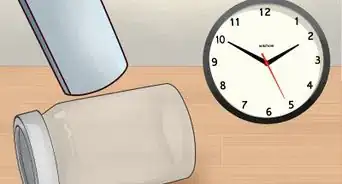
Certified Professional Organizer & Senior Move ManagerCertified Professional Organizer & Senior Move ManagerExpert AnswerPut plenty of packing paper inside the glass and all around the outside. For mugs, stick packing paper inside of the handle.



References
- ↑ https://www.move.org/pack-a-kitchen/
- ↑ Marty Stevens-Heebner, SMM-C, CPO®. Certified Professional Organizer & Senior Move Manager. Expert Interview. 14 January 2020.
- ↑ https://www.eater.com/22559834/how-to-pack-your-kitchen-and-pantry-moving-tips-breakable
- ↑ Marty Stevens-Heebner, SMM-C, CPO®. Certified Professional Organizer & Senior Move Manager. Expert Interview. 14 January 2020.
- ↑ https://youtu.be/uOUbxbAGDyA?t=40
- ↑ https://www.move.org/pack-a-kitchen/
- ↑ Marty Stevens-Heebner, SMM-C, CPO®. Certified Professional Organizer & Senior Move Manager. Expert Interview. 14 January 2020.
- ↑ https://www.uhaul.com/MovingSupplies/Packing-Supplies/Dish-Saver-Kit/?id=2577
- ↑ Marty Stevens-Heebner, SMM-C, CPO®. Certified Professional Organizer & Senior Move Manager. Expert Interview. 14 January 2020.
- ↑ https://www.eater.com/22559834/how-to-pack-your-kitchen-and-pantry-moving-tips-breakable
- ↑ Marty Stevens-Heebner, SMM-C, CPO®. Certified Professional Organizer & Senior Move Manager. Expert Interview. 14 January 2020.
- ↑ https://youtu.be/uOUbxbAGDyA?t=61
- ↑ Marty Stevens-Heebner, SMM-C, CPO®. Certified Professional Organizer & Senior Move Manager. Expert Interview. 14 January 2020.
- ↑ https://www.move.org/pack-a-kitchen/
- ↑ https://youtu.be/uOUbxbAGDyA?t=92
- ↑ https://www.eater.com/22559834/how-to-pack-your-kitchen-and-pantry-moving-tips-breakable
- ↑ Marty Stevens-Heebner, SMM-C, CPO®. Certified Professional Organizer & Senior Move Manager. Expert Interview. 14 January 2020.
- ↑ https://youtu.be/yvTqRTYRorY?t=97
- ↑ https://youtu.be/yvTqRTYRorY?t=97
- ↑ Marty Stevens-Heebner, SMM-C, CPO®. Certified Professional Organizer & Senior Move Manager. Expert Interview. 14 January 2020.
- ↑ https://www.movebuddha.com/blog/how-to-pack-a-moving-truck/
- ↑ https://www.chicagotribune.com/consumer-reviews/sns-bestreviews-home-how-to-pack-moving-truck-20210228-5zwgeaii4fb5dltmd4amogfuji-story.html
- ↑ https://moversville.com/blog/tips-for-hiring-movers
About This Article