This article was medically reviewed by Luba Lee, FNP-BC, MS. Luba Lee, FNP-BC is a board certified Family Nurse Practitioner (FNP) and educator in Tennessee with over a decade of clinical experience. Luba has certifications in Pediatric Advanced Life Support (PALS), Emergency Medicine, Advanced Cardiac Life Support (ACLS), Team Building, and Critical Care Nursing. She received her Master of Science in Nursing (MSN) from the University of Tennessee in 2006.
There are 25 references cited in this article, which can be found at the bottom of the page.
This article has been viewed 190,951 times.
Clowns. Spiders. Heights. Needles. Dentists. Flying. What do these things all have in common? They're some of the most common phobias. A phobia is actually a type of anxiety disorder characterized by an excessive or unreasonable fear of a certain situation or object. Not to worry—we’re here to help you face and conquer your phobias with careful planning, handy techniques, lifestyle changes, and other strategies.
Steps
Method 1
Method 1 of 22:Identify your fear.
-
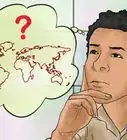
1Your fear might not be what you think it is. For example, while you may hate going to the dentist, it might be the use of needles that you're truly afraid of. In this case, you'd want to focus on your fear of needles, not the dentist.[1]
- If you're having trouble pinpointing your phobia, write down a list of the things that scare you. You may be able to isolate the true fear.

Method 2
Method 2 of 22:Write down your goals.
-
1Aim to make these goals tangible and achievable. It will also be helpful during treatment to consider the benefits that come from these goals.[2] Write down a variety of goals at different levels. Having small achievements will help you work towards tougher aims.
- The act of writing down your goals can actually help you succeed. You're more likely to write down detailed, achievable goals, rather than vague ones. You'll also be more committed to sticking with them.[3]

Method 3
Method 3 of 22:Make a coping strategy.
-
1It's naive to assume that you won't encounter any obstacles. Instead, imagine how you want to react to what frightens you. You could visualize something else, face the fear head-on for a set amount of time, or you could distract yourself by doing an activity.
- Realize that your coping strategy should change as you encounter and achieve goals. While you might initially cope by distracting yourself, you may eventually be able to face your phobia for small periods of time.[4]

Method 4
Method 4 of 22:Know that being afraid is perfectly normal.
-
1Fear has helped humans survive in many situations. On the other hand, fears may easily turn into phobias, also prevent someone from accomplishing certain things. For example:[5]
- It is normal to feel anxious if you look down from a skyscraper. On the other hand, turning down a dream job just because it happens to be at the top of a skyscraper, is not helping you achieve your goals/dreams.
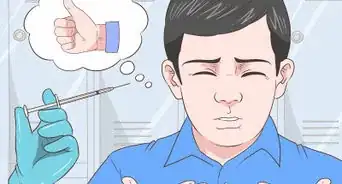
- Many people feel anxious about getting shots or having blood drawn. Shots can be painful. It is when someone starts to avoid medical examinations and treatments just because he or she might get a shot, that the fear becomes problematic.

Method 5
Method 5 of 22:Conquer your phobia with a desensitizing technique.
-
1This technique helps you face your fear in gradual steps. Start by writing down situations where you encounter your phobia. Be as detailed as possible and include all types of experiences, from the mildly anxious to the terrifying. This will help you tackle your fear at a variety of levels.[6] Then, rank your situations in order of how scary they are, and imagine the first (least scary) item on your list.[7] Gradually work your way through your list, letting yourself think about each scenario. Then, try seeking out these situations in real life. As you continue to face your fears, reward yourself for a job well done.[8]
- Try to work on a relaxation technique that can be done anywhere at anytime. This way, when you encounter your phobia, you can overcome your fear.
- Don't be afraid to ask someone for help if you find yourself stuck, or unable to work through an item on your list. They may be able to help you work through your fear.

Method 6
Method 6 of 22:Identify the negative thoughts you’re struggling with.
-
1Phobias usually come with three different types of negativity. These are fortune-telling, overgeneralization, and catastrophizing. Bad fortune-telling and catastrophizing both involve assuming the worst, over-generalizing involves associating everything with one bad experience. Here are a few examples.[9]
- Bad fortune-telling: Telling yourself that the bridge will collapse when you cross it, the elevator will fall when you get on it, or that you will stutter and freak out when making your speech.
- Over-generalizing: Worrying that every dog will try to bite you because a certain poodle did that once to you when you were a kid.
- Catastrophizing: Taking simple events, such as someone coughing, and imagining the worst possible scenario—such as the person having the swine flu, and you contracting it.[10]

Method 7
Method 7 of 22:Try to find something that contradicts your negative thought.
-
1Contradicting your negative thoughts makes them less credible. For example, if you are afraid of dogs, try to remember a time when you encountered a dog, and things did not go badly. Think of all your friends who have dogs, and the nice experiences they've had. You might also try to tell yourself:
- That dog has a leash, and the owner is holding tightly onto the leash.
- The dog is very small. I can easily outrun it if it does try to chase me.
- The dog is playing with people and other dogs. He is unlikely to be aggressive.

Method 8
Method 8 of 22:Think about what you’d do if your phobia actually comes true.
-
1Having a sort of escape plan might help you when facing your phobia. For example, if you are afraid of elevators, you might be afraid of the dangers associated with them, such as the doors not opening, or the elevator getting stuck mid-level. Fortunately, there are ways out in these sorts of situations, such as pressing the alarm button, or pressing the call button and asking for help.

Method 9
Method 9 of 22:Rationalize your thoughts.
-
1Rationalization helps you view your thoughts in a more realistic light. Ask yourself, is the elevator really going to break down? Does it appear to shake and rattle? Does the dog really appear aggressive? Is it growling, or wagging its tail? Ask yourself if you are fortunetelling, over-generalizing, or catastrophizing.
- This does not mean that you should abandon a rational fear. If that bridge really does not look safe (it is rotting and molding, there are planks missing, and the ropes or fraying), then yes, it would probably be wise to avoid that bridge.

Method 10
Method 10 of 22:Put yourself in a fearful friend's situation.
-
1This is a great way to approach your fear practically and realistically. For instance, if you are afraid of flying, try talking to yourself as you would to a friend who is afraid of flying. What would you say to reassure your friend? You might say any of the following things:
- The ratio between successful plane flights and plane accidents is very high.
- That plane has a very high safety record. There have been no accidents recorded on that type of plane.
- The pilot and co-pilot are very experienced.
- Everyone was checked thoroughly before boarding the plane. There is no way someone could have brought on a weapon or a dangerous substance.
- I've heard of many survivor stories from plane crashes.

Method 11
Method 11 of 22:Get enough sleep.
-
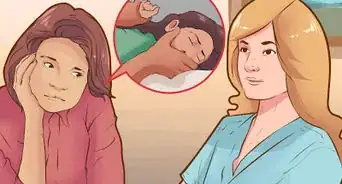
1Sleep may be related to heightened anxiety, so make sure you’re getting enough.[11] Teens need between eight and ten hours each night for optimal function, while adults should clock in about seven to nine hours.[12]
- Remember, it’s not just sleep quantity that’s important, but sleep quality, too. Make sure you stick to a regular sleeping schedule, avoid caffeine, alcohol, and sugary foods right before bed, and keep your bedroom quiet and dark.

Method 12
Method 12 of 22:Exercise regularly.
-
1Exercise has been shown to help with anxiety and anxiety disorders. It produces immediate anti-anxiety benefits, and when done regularly, may lead to long lasting reductions in anxiety.[13]
- Try to get 2.5 hours of moderate intensity activity, like brisk walking, or 1.25 hours of vigorous intensity activity, like jogging, each week. You can also go for a combination of the two!
- To get the most out of your exercise, do little each day, rather than cramming it all into the weekend.
- Find an exercise you like! You might enjoy dancing, biking, or taking a group class. Yoga has been shown to be particularly helpful in reducing anxiety, so consider giving it a try.[14]

Method 13
Method 13 of 22:Take time to meditate.
-
1Mindfulness meditations have been shown to decrease anxiety by bringing awareness back to the present moment.[15] To practice this form of meditation, sit in a comfortable position and close your eyes if you want to. Then, bring all of your attention to your breath, following it as you inhale and exhale.[16]
- When you feel your mind start to wander, gently redirect your attention to your breath.
- Start out by practicing this technique for five or ten minutes each day, working up 45 minutes or an hour over time.

Method 14
Method 14 of 22:Reduce or eliminate caffeine and alcohol.

Method 15
Method 15 of 22:Snack on some carbohydrates and protein-sourced tryptophan.
-
1Studies have shown that this combination can help reduce anxiety.[19] A great example of this combination is a turkey sandwich.

Method 16
Method 16 of 22:Eat foods rich in vitamin C.
-
1Vitamin C has been shown to reduce anxiety and distress. While many assume that citrus is the best source of Vitamin C, you should actually try eating: yellow bell pepper, guavas, black currants, and red chili peppers.[20]

Method 17
Method 17 of 22:Relax with essential oils.
-
1Essential oils can help reduce stress, lower tension, and create a feeling of calm. This can be especially helpful when you are trying to face your phobia. Consider using any of the following essential oil: bergamot, chamomile, jasmine, lavender, or ylang ylang. Here are some ways in which you can use essential oils:
- Mix a few drops of essential oil into a carrier oil, such as coconut or jojoba, and massage it into your skin.
- Add a few drops of essential oil into your bath.
- Consider making some homemade bath products using essential oil. A simple sugar scrub consists of 1 part sugar, 1 part coconut or olive oil, and a few drops of essential oil.[21]
- Make your own oil diffuser by filling a bottle with warm water and adding 20 to 30 drops of essential oil. Stick some differ reeds into the bottle; the reeds will soak up the scented water and release their scent.[22]

Method 18
Method 18 of 22:Recite a mantra when facing fear or anxiety.

Method 19
Method 19 of 22:Develop anxiety management skills.
-
1These techniques can help you manage your anxiety on a day-to-day basis. One of these skills is problem-solving. When you are confronted with an anxiety-inducing problem, come up with a plan for solving it, and then implement that plan. Afterwards, consider how well the plan worked.[25]
- Another skill that helps with anxiety is mindfulness. When you are feeling anxious, focus on the sensations associated with your anxiety instead of trying to push them away. This can help you become more accepting of your anxiety, rather than letting it overwhelm you.

Method 20
Method 20 of 22:Talk to a friend, family member, or someone you trust about your phobia.
-
1Confiding in a loved one has a host of benefits. First, you'll no longer be embarrassed by your secret fear. This will help you start to deal with the anxiety.[26] Second, you'll be able to ask others for help, especially when you get stuck.
- Consider attending a self-help group for people facing similar fears. You might benefit from talking with and supporting others experiencing the same challenges you are.

Method 21
Method 21 of 22:Try joining a self-help group.
-
1Sometimes, it is easier to face your fears knowing that you are not the only one. Your family and friends may not understand what you are going through, but the people in the self-help group may. The people in that group may also offer up advice on how they managed or overcame their phobias. Some of that advice might work for you as well.[27]
- A self-help book could also be helpful if you learn better through reading and analyzing written material.

Method 22
Method 22 of 22:Visit a psychologist.
-
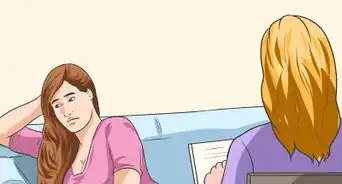
1There’s nothing wrong with seeking professional help. Some people might need additional help overcoming their phobias, especially if it gets in the way of their daily lives. For example, an extreme fear of open spaces or talking to people, might prevent someone from going out to a store and buying food and other necessities.

Expert Q&A
-
QuestionHow can I overcome my fear of snakes?
 Luba Lee, FNP-BC, MSLuba Lee, FNP-BC is a board certified Family Nurse Practitioner (FNP) and educator in Tennessee with over a decade of clinical experience. Luba has certifications in Pediatric Advanced Life Support (PALS), Emergency Medicine, Advanced Cardiac Life Support (ACLS), Team Building, and Critical Care Nursing. She received her Master of Science in Nursing (MSN) from the University of Tennessee in 2006.
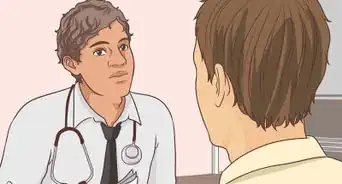
Master's Degree, Nursing, University of Tennessee KnoxvilleIf your phobia is severe, you may need to seek help from a qualified medical professional. Ask them if you can benefit from cognitive behavioral therapy (CBT). This therapy helps you understand your fear, change the way you think about it, and come up with new coping techniques. You'll usually need twelve to fifteen sessions over a few months.
Warnings
- These measures do not stand-in for medical help, which may be required for severe phobias. Anxiety and stress can have hazardous effects on your nervous system and blood pressure. Professional therapies or medications may be required to treat your condition.Thanks!






References
- ↑ http://www.anxietycare.org.uk/docs/self.asp
- ↑ http://www.anxietycare.org.uk/docs/self.asp
- ↑ http://www.psychologytoday.com/articles/200307/the-goals-guide-us
- ↑ http://www.anxietycare.org.uk/docs/self.asp
- ↑ http://www.helpguide.org/articles/anxiety/phobias-and-fears.htm
- ↑ http://www.csulb.edu/~tstevens/Desensit.htm
- ↑ http://www.guidetopsychology.com/sysden.htm
- ↑ http://www.anxietybc.com/sites/default/files/FacingFears_Exposure.pdf
- ↑ http://www.helpguide.org/articles/anxiety/phobias-and-fears.htm
- ↑ https://www.helpguide.org/articles/anxiety/phobias-and-irrational-fears.htm
- ↑ https://sleepfoundation.org/excessivesleepiness/content/the-complex-relationship-between-sleep-depression-anxiety
- ↑ https://www.helpguide.org/articles/sleep/sleep-needs-get-the-sleep-you-need.htm
- ↑ https://www.adaa.org/living-with-anxiety/managing-anxiety/exercise-stress-and-anxiety
- ↑ http://www.health.harvard.edu/mind-and-mood/yoga-for-anxiety-and-depression
- ↑ http://jamanetwork.com/journals/jamainternalmedicine/fullarticle/1809754
- ↑ https://www.mindful.org/mindfulness-how-to-do-it/
- ↑ https://www.healthyplace.com/blogs/anxiety-schmanxiety/2015/12/caffeines-effects-on-anxiety/
- ↑ http://www.healthline.com/health/alcohol-and-anxiety
- ↑ http://www.ncbi.nlm.nih.gov/pubmed/18066139
- ↑ http://www.realnatural.org/vitamin-c-elevates-moods-reduces-distress-and-anxiety/
- ↑ http://wellnessmama.com/3628/sugar-scrub-recipe/
- ↑ http://www.sheknows.com/home-and-gardening/articles/1050763/make-your-own-scented-oil-diffuser
- ↑ http://www.personaltransformation.com/calming_anxiety.html
- ↑ http://www.spiritvoyage.com/blog/index.php/10-reasons-to-chant-on-the-benefits-of-mantra-meditation/
- ↑ https://www.psychology.org.au/for-the-public/Psychology-Topics/Anxiety
- ↑ http://www.psychologytoday.com/blog/fighting-fear/201206/overcoming-phobias-6-important-principles
- ↑ http://www.rcpsych.ac.uk/mentalhealthinfo/problems/anxietyphobias/anxiety,panic,phobias.aspx
- ↑ http://www.mayoclinic.org/healthy-lifestyle/stress-management/in-depth/massage/art-20045743
About This Article
To overcome a phobia, try talking to friends or relatives so you have someone to help you when you're feeling scared. If you're alone, say a phrase or mantra to help calm your anxiety. You can also take a few deep breaths to slow your heart rate and calm yourself down. Additionally, try to visualize a calming scene, like a quiet garden, which is something you can do anywhere, at any time. Alternatively, find a support group in your local area for people who have the same phobia as you so you can talk about coping strategies. For tips from our Medical co-author on how to overcome phobias with the desensitizing technique, read on!













































Medical Disclaimer
The content of this article is not intended to be a substitute for professional medical advice, examination, diagnosis, or treatment. You should always contact your doctor or other qualified healthcare professional before starting, changing, or stopping any kind of health treatment.
Read More...