X
wikiHow is a “wiki,” similar to Wikipedia, which means that many of our articles are co-written by multiple authors. To create this article, volunteer authors worked to edit and improve it over time.
This article has been viewed 76,575 times.
Learn more...
If you are considering a construction project that violates the local jurisdiction's zoning ordinances, then you will need to apply for a variance. Getting a variance can be a tricky and expensive process, and if you don't prepare yourself properly, you may be fighting a losing battle. By learning how to obtain a variance for your lot, you improve your chances of navigating the process smoothly, quickly, and at minimal cost.
Steps
-
1Examine your construction plans, and determine if there is any way they can be revised so that a variance is not necessary. If you can modify your plans so that they conform to the local zoning ordinances, you will save yourself the hassle of applying for a variance. In addition, you are not likely to be approved for a variance if your plans can be easily changed to comply with the zoning laws.
-
2Familiarize yourself with the local jurisdiction's requirements for a variance. In general, a variance will only be granted if the following 4 criteria are met:[1]
- Compliance with the zoning laws would cause undue hardship on the landowner;
- The proposed construction is necessary for reasonable use of the property;
- The proposed construction would not alter the essential character of the neighborhood;
- The proposed construction represents the least intrusive solution possible.
Advertisement -
3Determine what type of variance you need. There are two basic kinds of variances: area and use.[2]
- An area variance is required when the configuration of the lot dictates that the zoning regulations simply be relaxed. Common examples of area variances would be exceptions for minimum setbacks from the property line and minimum floor areas.
- A use variance is required when the building's intended use will violate the zoning ordinances; for example, a use variance would be required to build an office building in a residential neighborhood. Use variances are much harder to obtain than area variances.
-
4Get your lot surveyed. This is an essential step any time you are planning new construction or an addition. The city or town hall where you will file the variance application will want to see an updated survey, and having a proper survey done will keep you out of legal trouble with neighbors who might object to your use of the land. This is especially important when you are seeking a variance regarding minimum property setbacks.
-
5Prepare architectural plans for the proposed project. Check with your municipality or county to see what level of detail is required. Some jurisdictions may want the plans stamped by a licensed architect or engineer, while others may accept plans you have created with home remodeling software.[3]
-
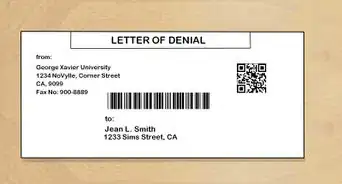
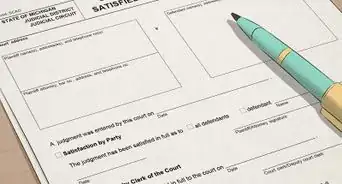
6File your application for the variance. This will generally be performed at your local city or town hall. You will submit your survey, your architectural drawings, a written statement of intent and possibly a separate application required by the jurisdiction.[4]
-
7Notify all property owners within a small radius from your property of your proposed change (the local jurisdiction may actually specify the length of this radius). You may be required to go to a hearing before your variance is approved, in which all nearby property owners will be allowed to attend and ask you questions. Prepare yourself to field these questions if applicable.[5]Advertisement


Community Q&A
-
QuestionWhat type of variance do I need to convert a garage to an apartment?
 Community AnswerWhatever your local authorities say. Quite a few variances may be needed, along with a lawyer.
 -
QuestionDo I need a variance to sell part of my property?
 Community AnswerPossibly. You may be zoning or deed restricted. You'll have to ask your local and county authorities.
 -
QuestionIn what county office do I file my property variance?
 Community AnswerGive the county a call and ask. It could be called the Building Department, Zoning and Permit Department or Planning Commission.
 -
QuestionCan I get a variance to build on seven eighths of an acre for a septic system in Fulton county?Community AnswerA variance usually has to be heard by and decided upon by the Zoning Board and maybe the Planning Commission. Contact your Zoning Board.
-
QuestionCan you build more square footage than zoning allows?Community AnswerSure, if you're permitted and have the variance to do so. Otherwise, you'll be tearing it down once it's discovered, and it will be, at the time of the inspection.
-
QuestionIs it true that I can't use the common area for anything other than a wall?Community AnswerNo, it's not. If there's space, it typically can be used for chairs, mailboxes, offices, storage lockers, etc.
-
QuestionMy taxes are pro-rated to two different towns and I want to construct a 10 ft high privacy screen in my back yard. Do I need a variance? If so, which town do I apply to?
 Upnorth HereTop AnswererYou would generally contact the town in which construction is proposed, as each town may have its own rules for outdoor construction including setback and height restrictions.
 -
QuestionIs a variance likely to be given for a basement finish with a ceiling that is too low?Upnorth HereTop AnswererDepends upon what you plan to do with the basement, whether it is already there, and whether your local rules regulate your plans. Many building or fire codes require at least a minimum ceiling height for "living space", including bedrooms, but they might also allow "crawlspace" with much lower ceilings, for limited uses such as storage or mechanical systems. You would need to investigate the local rules for your proposed use and what permits (if any) are required.
-
QuestionWhat is eminent domain?Upnorth HereTop AnswererEminent domain refers to the inherent power of the government to "take" private property for a public use, as long as there is "fair compensation" and the public need is unique to that property. For example, a highway expansion may require taking land or buildings to clear the way for the public works necessary. It can be a long and difficult process, due to respect for private property rights.
-
QuestionHow do I apply for a variance for an existing 100 square foot building on my property?Upnorth HereTop AnswererDepends upon what your zoning and building laws say and what you're trying to do with the existing building that would violate those rules. If it's already there, and has been for many years, you may be "exempt" from some parts of the rules, as long as you don't plan to change anything.
Warnings
- Don't ever buy land which would require a variance unless the sale agreement makes your purchase contingent on the approval of the variance.Thanks!
Advertisement
Things You'll Need
- Architectural Drawings







References
- ↑ https://www.nh.gov/osi/resource-library/zoning/documents/the-five-variance-criteria-in-the-21st-century.pdf
- ↑ https://real-estate-law.freeadvice.com/real-estate-law/zoning/obtain_variance.htm
- ↑ http://www.seattle.gov/sdci/permits/permits-we-issue-(a-z)/land-use-/-master-use-permit---variance
- ↑ https://www.roswellgov.com/home/showdocument?id=1128
- ↑ https://real-estate-law.freeadvice.com/real-estate-law/zoning/obtain_variance.htm
- http://realestate.findlaw.com/zoning/zoning-changes.html
About This Article
Advertisement