X
This article was co-authored by Lois Wade, a trusted member of wikiHow's volunteer community. Lois Wade has 45 years of experience in crafts including sewing, crochet, needlepoint, cross-stitch, drawing, and paper crafts. She has been contributing to craft articles on wikiHow since 2007.
This article has been viewed 55,199 times.
Learn more...
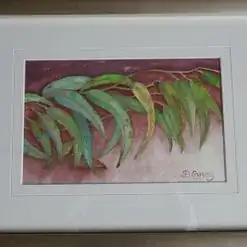
Watercolors require more protection than acrylic or oils before matting or framing. Here are some basic steps to get you started.
Steps
-
1Protect the actual surface of your watercolor by spraying a protective sealant on the surface of your painting. This will protect the paper itself.
- Use an acid-free sealant spray formulated for use with water colors, and be aware that some of the older sprays tend to yellow your paints somewhat.
-
2Mount your painting on a firm backing. You can find several varieties of backing board at most arts and crafts supply stores. Many are acid free and self adhesive.
- Use mulberry hinges and wheat paste for the mounting. The hinges should be slightly lighter than the paper. In case of a problem it is better for the hinge to tear and not the painting.
- Attach the hinges only at the top of the watercolor paper to the backing, using only acid free material such as Foam Core. These hinges can be removed with water in the future if necessary. When framing and matting one does not want to do any harm and it should all be reversible.
Advertisement -
3Measure and cut your backing material to the frame size.
-
4Measure and cut your matting material to the size and shape desired.
-
5Measure and cut your frame glass or plastic to size for the frame.
- Always use museum glass or UV protective glazing, also available in acrylic glazing.
-
6Sandwich your glass, matting and painting into the frame and secure with frame tacks.
-
7Display proudly.Advertisement


Community Q&A
-
QuestionI am a beginning water color painter. I would like to frame some of my pieces, should I use matting and glass?
 SpookyneighbourCommunity AnswerThis would give a much more professional finish and is recommended. However, it can be more expensive.
 -
QuestionWhat size mat is recommended, two inches all the way around? I know it can be larger, but at what point is mat width too small?
 ZackTop AnswererA smaller painting of 3 x 5 inches needs a couple of inches of margin to look balanced. Don't use a smaller width mat on smaller paintings unless you are trying to produce a thin margin effect. A larger piece of art of 18 x 24 inches may need a larger width mat giving 6 inches of margin to look balanced. However, you may use a smaller width mat of 3 or 4 inches on larger paintings.
Things You'll Need
- Appropriately sized frame
- Appropriately sized frame UV protective glass or acrylic glazing
- Appropriately sized matting material Acid Free Matting
- Mulberry hinges lighter than the watercolor paper
- 100% Acid Free Foam Core or similar backing
- Frame tacks
- Dust Cover
- Frame hanging kit
- Matt cutting board or frame shop.



References
- FACTS Standard Guide - Minimum Preservation Paper, Mat & Mount Board, PMMB-2000.
About This Article

Lois Wade
wikiHow Crafts Expert
This article was co-authored by Lois Wade, a trusted member of wikiHow's volunteer community. Lois Wade has 45 years of experience in crafts including sewing, crochet, needlepoint, cross-stitch, drawing, and paper crafts. She has been contributing to craft articles on wikiHow since 2007. This article has been viewed 55,199 times.
Co-authors: 10
Updated: August 20, 2019
Views: 55,199
Categories: Watercolors
Advertisement