wikiHow is a “wiki,” similar to Wikipedia, which means that many of our articles are co-written by multiple authors. To create this article, 40 people, some anonymous, worked to edit and improve it over time.
There are 8 references cited in this article, which can be found at the bottom of the page.
wikiHow marks an article as reader-approved once it receives enough positive feedback. In this case, 100% of readers who voted found the article helpful, earning it our reader-approved status.
This article has been viewed 171,737 times.
Learn more...
Many people get periods. It's only natural, and most people have questions, or need help knowing what's normal or how to use products. Hopefully this article will help.
Steps
Method 1
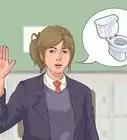
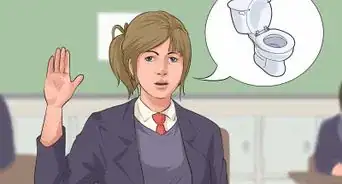
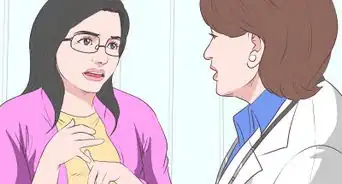
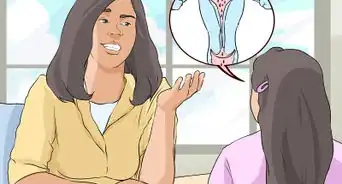
Method 1 of 6:Talk to a parent or guardian.

Method 2
Method 2 of 6:Consider buying pads.
-
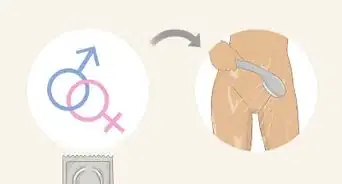
1If you are young or this is your first period, sanitary napkins (pads) would be the best option. Your mother can show you how to do this, or if you are to embarrassed to ask her, simply pull your panties down to your knees, unwrap the packaging, slide off the sticker on the bottom of the pad and stick it to your underwear. The round side will go at the front.[1]

Method 3
Method 3 of 6:Learn about tampons.
-
1If you use tampons: unwrap the packaging, make sure the string are hanging down and insert the tampon about half a finger up your vagina. Remember that your vagina is not straight, it goes back towards your spine, so you might need to insert it vertically.[2]Advertisement

Method 4
Method 4 of 6:Keep your supplies in your bathroom and bedroom.
-
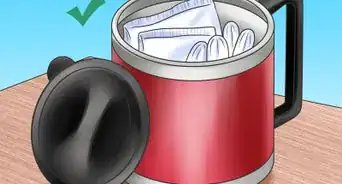
1Keep the supplies next to the toilet in your bathroom, or in your bedroom. You should also leave some supplies in a little make up bag that you can keep in your bag or your locker at school just in case you get your period. You may want to include Midol or Ibuprofen for cramps.[3] Remember that to dispose of the supplies you need to: fold the sanitary napkin up (or just leave the tampon like it is) and throw it in a bin, or the box you see in public toilets or school toilets.


Method 5
Method 5 of 6:Be aware of how long periods last.
-
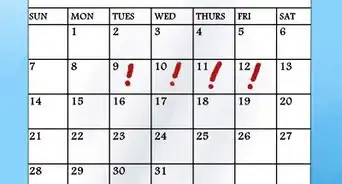
1Your period may consist of about 2-3 heavy days, 2-3 medium days and 1-2 light days. On a heavy day you need to change the sanitary napkin every 2-3 hours. On a medium day, 3-4, and on a light day, 4-5. You can buy sanitary napkins in different absorbencies, but never leave a sanitary napkin there too long, as you will start smelling an unpleasant odor. Never leave a tampon in for more than 8 hours (2 on heavy days) as you will be at risk or TSS (see warnings).[4] Also if you are going to use tampons you cannot use them all the time, as you need to give your vagina some time to air. Never use tampons at night, as might sleep through your night, therefore not changing your tampon for 8-12 hours.[5]Advertisement

Method 6
Method 6 of 6:Try different brands and supplies.
-
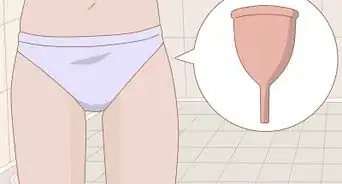
1Keep buying different brands of sanitary napkins/ tampons until you find the one that you like best. Remember that every person is different, so try several different brands, not just the popular ones.[6]

Warnings
- If you leave a tampon in for a long time you are at risk of TSS. For more info about TSS, Google Toxic Shock Syndrome.Thanks!
- 78% of people who have periods get period pain (cramps) just before they get their period so that they know it's coming. However if your period pain is too bad (dizziness, extreme pain, nearly passing out) consult your doctor immediately.Thanks!
- Some women are anemic. Anemia is when the count of iron in your blood is low. It can be caused by a period that comes too often (every 2-3 weeks) and/or is really heavy. This is because you lose to much iron for your body to keep up with. If you are getting heavy periods often, are feeling dizzy or about to pass out, consult your doctor.[8]Thanks!
-Step-23.webp)





References
- ↑ https://kidshealth.org/en/kids/pads-tampons.html
- ↑ https://www.fda.gov/consumers/consumer-updates/facts-tampons-and-how-use-them-safely
- ↑ Payam Katebi Kashi, MD, PhD. Board Certified Obstetrician & Gynecologist. Expert Interview. 15 September 2021.
- ↑ https://www.webmd.com/women/guide/understanding-toxic-shock-syndrome-basics
- ↑ https://www.mayoclinic.org/healthy-lifestyle/womens-health/in-depth/menstrual-cycle/art-20047186
- ↑ https://www.plannedparenthood.org/learn/health-and-wellness/menstruation/how-do-i-use-tampons-pads-and-menstrual-cups
- ↑ Payam Katebi Kashi, MD, PhD. Board Certified Obstetrician & Gynecologist. Expert Interview. 15 September 2021.
- ↑ https://www.mayoclinic.org/diseases-conditions/menorrhagia/symptoms-causes/syc-20352829
- https://kidshealth.org/en/teens/supplies.html


-Step-23.webp)