This article was co-authored by Aaron Asghari and by wikiHow staff writer, Hunter Rising. Aaron Asghari is a Professional Guitarist and the lead guitarist of The Ghost Next Door. He received his degree in Guitar Performance from the Guitar Institute of Technology program in Los Angeles. In addition to writing and performing with The Ghost Next Door, he is the founder and primary guitar instructor of Asghari Guitar Lessons.
This article has been viewed 159,847 times.
It’s so fun to jam on a guitar, but it’s a real pain when your fingers start hurting after a few minutes. Experienced guitarists build up hard calluses on their hands so it’s easier to play for a long time. Luckily, there are some things you can do to strengthen your fingers so you can keep playing and improving. We’ll walk you through a few ways to develop finger calluses and how to keep them tough so you can rock out!
Steps
Method 1
Method 1 of 10:Practice every day.
-
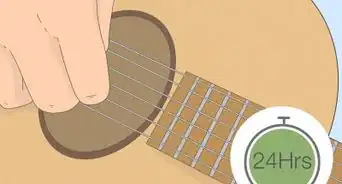
1Try to squeeze in 15 minutes a day to harden the calluses on your fingers. Be consistent with your practice routine so your calluses don’t go away. As your fingers start hurting less, try to do 3–4 daily practice sessions that are each 15 minutes long. If you don’t feel sore after finishing a session, switch over to a single 45- to 60-minute practice to see how you feel.[1]
- Put your guitar down rest if you feel an intense or stinging pain in your fingers.
- Avoid taking long breaks from playing your guitar, or else your fingertips will start softening again.
Advertisement

Method 2
Method 2 of 10:Use medium or heavy strings.
-
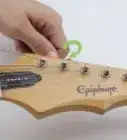
1You’ll develop harder fingertips playing on bigger strings. Remove the old guitar strings from your guitar and replace them with new ones labeled “medium” or “heavy.” Since the new strings are wider, they’ll press against your fingertips more and form calluses faster.[2]
- You can buy new strings online or at your local music store.
- Thicker strings may make it a little more difficult to play chords if you’re just starting to learn guitar.
- Avoid playing on thin or light strings since they’re more likely to cut your skin if you don’t have calluses built up.

Method 3
Method 3 of 10:Switch to an acoustic guitar.
-
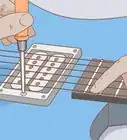
1Acoustic guitars have thicker steel strings that toughen your hands faster. If you normally play or perform with an electric guitar, try using an acoustic while you’re practicing. Since they use larger strings that are higher off the frets, press down on them a little harder while you’re playing. The friction of the strings and added pressure from holding them down makes your fingers harder.[3]
- Acoustic guitar is actually more difficult to play, so you’ll feel a lot more comfortable when you switch back to an electric guitar.
- If you notice pain in your wrist or elbow while you’re practicing, try loosening your grip on the strings a little.
Advertisement

Method 4
Method 4 of 10:Push your thumbnail into your fingertips.
-
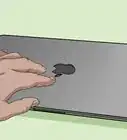
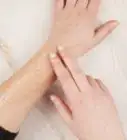
1Apply pressure to your fingers with your thumbnail to harden the tips. When you aren’t playing guitar, press your thumbnail into the pad of your index finger. Push hard enough so your skin indents but not so much that it causes you pain. Go through each of your fingers one at a time to help the calluses form. You could also rub the tips of your fingers against the raised numbers on a credit card for similar results.[4]
- Buy a finger strengthener tool online or from your local music store. The tool has 4 spring-loaded buttons that help you develop calluses and finger strength.

Method 5
Method 5 of 10:Keep your nails trimmed.
-
1Long nails prevent calluses from forming. Use a pair of nail clippers to cut your fingernails short. Try pressing down on your guitar strings and see if your fingernails scrape the surface of your fretboard. If your nails touch the fretboard, trim them shorter.[5]
- This also prevents you from scratching your fretboard or damaging your nails when you slide your hand.
Advertisement

Method 6
Method 6 of 10:Put rubbing alcohol on your fingers.
-
1Coat your fingertips 3–4 times a day to dry and harden them. Soak a cotton swab in rubbing alcohol and wipe your fingertips with it. Since the rubbing alcohol dehydrates your skin, it dries out your fingers and makes it easier to form calluses while you play. Even Eric Clapton used this trick before he played![6]
- Rubbing alcohol may also relieve some of the soreness you feel from playing guitar.

Method 7
Method 7 of 10:Try an apple cider vinegar soak.
-
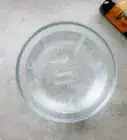
1Do a 30-second dip before and after you practice. You can use the same apple cider vinegar that you would use in your kitchen. Pour some into a small bowl and dip your fingertips in it. Leave your fingers in the vinegar for at least 30 seconds before drying them off. The apple cider vinegar will dry out your skin so you’re more likely to form calluses while you’re playing.[7]
- Apple cider vinegar also alleviates a little pain from pressing down on the strings.
Advertisement

Method 8
Method 8 of 10:Steer clear of moisturizers.
-
1Moisturizers can soften your calluses and make them disappear. While you can moisturize the rest of your hand, avoid applying lotion or any sort of skin conditioner onto your fingertips. Even calluses you’ve been building up for months could go away and get rid of all the work you’ve done.[8]
- A lot of hand soaps have skin softeners as well. If you can, try switching to a waterless sanitizer instead.

Method 9
Method 9 of 10:Play when your skin is completely dry.
-
1Calluses wear away when your fingertips are wet or overhydrated. If you’ve just washed or soaked your hands in water, wait about 1 hour until your skin completely dries out before practicing your guitar. Protect your hands and calluses by wearing gloves whenever you have to do something where you soak your hands, such as washing your hair or doing dishes.[9]
- Rather than washing your hands, try using an alcohol-based hand sanitizer before playing since it dries out quickly.
Advertisement

Method 10
Method 10 of 10:Leave your calluses alone.
-
1If you pick your calluses off, you’ll have to start building them up again. It might be tempting to scratch at your calluses as they start forming, but do your best to avoid it. Let your fingertips keep hardening over time so you don’t lose them. Otherwise, it will be painful to play guitar again.[10]

Community Q&A
Did you know you can get premium answers for this article?
Unlock premium answers by supporting wikiHow
-
QuestionHow long does it take for your fingers to get used to guitar?
 Aaron AsghariAaron Asghari is a Professional Guitarist and the lead guitarist of The Ghost Next Door. He received his degree in Guitar Performance from the Guitar Institute of Technology program in Los Angeles. In addition to writing and performing with The Ghost Next Door, he is the founder and primary guitar instructor of Asghari Guitar Lessons.
Professional Guitarist & InstructorIt can take a couple of weeks to a few months for your calluses to develop, depending on how often you practice.
Support wikiHow by unlocking this expert answer.
-
QuestionWhat if I don't have a grip master and cannot buy one?
 wikiHow Staff EditorThis answer was written by one of our trained team of researchers who validated it for accuracy and comprehensiveness.
Staff AnswerwikiHow Staff EditorStaff AnswerIf you don't have a grip master, try pressing your fingertips against the edge of a thin plastic card, such as a credit card or ID card.Support wikiHow by unlocking this staff-researched answer.
-
QuestionHow do I keep my fingers conditioned when I'm not able to play guitar?
 Community AnswerIf you have fingernails on your thumbs, alternate pressing the nails against the tips of your other fingers.
 -
QuestionHow do I make my fingertips stronger, other than using grip master or practicing more?
 Community AnswerIf you mean how to develop calluses on your fingertips, there's no shortcut. Play, play, play!
 -
QuestionHow do I make my pinkie finger stronger?
 Community AnswerPractice playing and eventually your fingers will get stronger. Alternatively, you could try squeezing on a tennis, or similar, ball to strengthen your whole hand.
Warnings



References
- ↑ https://www.guitaraficionado.com/do-calluses-help-you-play-guitar/
- ↑ https://ledgernote.com/columns/guitar-guru/guitar-calluses/
- ↑ https://www.aimm.edu/blog/how-to-build-guitar-calluses
- ↑ https://ledgernote.com/columns/guitar-guru/guitar-calluses/
- ↑ https://ledgernote.com/columns/guitar-guru/guitar-calluses/
- ↑ http://thevault.musicarts.com/guitar-tips-toughening-fingertips/
- ↑ https://www.guitaraficionado.com/do-calluses-help-you-play-guitar/
- ↑ http://thevault.musicarts.com/guitar-tips-toughening-fingertips/
- ↑ https://www.theguitarlesson.com/guitar-lesson-blog/beginner-guitar-lessons/build-calluses-guitar/
- ↑ https://youtu.be/p9OOHq7lJ64?t=137
- ↑ http://thevault.musicarts.com/guitar-tips-toughening-fingertips/
- ↑ https://www.theguitarlesson.com/guitar-lesson-blog/beginner-guitar-lessons/build-calluses-guitar/
- ↑ https://www.guitaraficionado.com/do-calluses-help-you-play-guitar/
- ↑ https://www.theguitarlesson.com/guitar-lesson-blog/beginner-guitar-lessons/build-calluses-guitar/
About This Article