X
wikiHow is a “wiki,” similar to Wikipedia, which means that many of our articles are co-written by multiple authors. To create this article, volunteer authors worked to edit and improve it over time.
This article has been viewed 93,096 times.
Learn more...
You can use vegetable powders to:
- Put more nutrition and flavor into the things you cook.
- Provide value-added thickening for soups (as opposed to using wheat flour or cornstarch for this job).
- Stretch your grocery dollar by (a) powdering less-expensive vegetables that may not be so popular with your family, but are nevertheless nutritious, and (b) making use of all your clean, uncooked leftovers, including the trimmings.
Keep in mind that while a batch of mixed vegetables can yield interesting results, batches of the same vegetable will dry more uniformly and provide a more predictable "punch" for your other recipes. You can always mix single-veggie powders later.
Steps
-
1Clean the items selected for dehydration. Cosmetic perfection is unnecessary, but trim off any damaged, bruised, or browned areas.
-
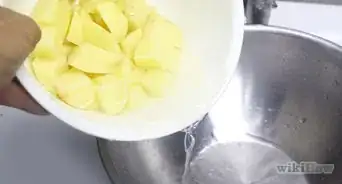
2Blanch the items to preserve color.
-
3Shred rather than chop. Shredded vegetable matter is far easier than hard chunks to grind into powder.
-
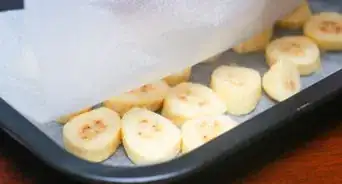
4Spread the shreds onto a lined dehydrator shelf. Follow manufacturer's directions for drying times.
-
5When dehydration is complete, allow the shreds to cool before grinding them in a coffee-bean grinder.
-
6You may find it useful to shake the material from the grinder through a sieve. Put the larger pieces left behind through a second grind.
-
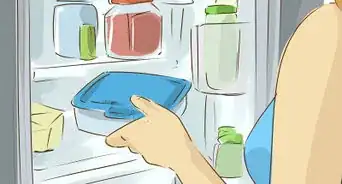
7Store in sealed jars.


Community Q&A
-
QuestionHow much iron is in, let's say, 1/4 cup of this veggie powder?
 David AlanCommunity AnswerCarrots do not contain enough iron to be a significant source. The amount in a quarter cup after processing is negligible.
Warnings
- Don't plan on grinding chunks of dense vegetables (e.g., carrots, parsnips) in your food processor post-dehydration. Doing so is almost certain to damage your food processor. Go ahead and shred.Thanks!
Things You'll Need
- A home dehydrator. If you don't have one, you can spread the shreds onto a cookie sheet lined with parchment paper. (You can find parchment paper in most supermarkets near the aluminum foil and other food-safe wraps.) Place the cookie sheet in an oven set at a very low temp (150-200 degrees F). A less costly and more creative approach may be to wedge a clean window screen so that it provides a flat horizontal surface between the seats of a car parked in a sunny spot. At any rate, you can consult the Internet for plans for ad-hoc, home built dehydrators.
- A food processor with a shredding function, OR a large-bore grater--and lots of patience.
- A coffee-bean grinder.
- A fine-meshed sieve.
- Glass containers with lids that you can seal.