wikiHow is a “wiki,” similar to Wikipedia, which means that many of our articles are co-written by multiple authors. To create this article, 22 people, some anonymous, worked to edit and improve it over time.
There are 7 references cited in this article, which can be found at the bottom of the page.
wikiHow marks an article as reader-approved once it receives enough positive feedback. In this case, 94% of readers who voted found the article helpful, earning it our reader-approved status.
This article has been viewed 341,343 times.
Learn more...
Ingredients
- Approximately 1 cup of water
- A bunch of fresh pine needles from a green white pine (Pinus strobus) (see "Tips" and "Warnings" below for collection advice)
Steps
-
1
-
2Gather the pine needles, clean them, and then put them in the cup or mug.Advertisement
-
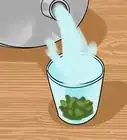
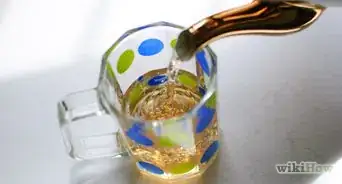
3Pour the boiling water into the cup while the pine needles are in it and stir until the color of the pine needles starts to pale.
-
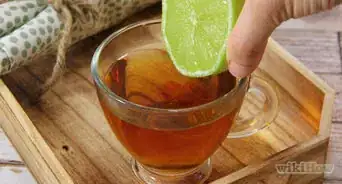
4For more flavor, add the juice of 1 lemon or a squirt of lemon juice. Also try a squirt of honey or stir in a sugar cube.[4]
-
5Filter the pine needles out with a fork and drink up!
-
6If you have more time, try this method.[5]
- Chop 1/2 a cup of pine needles finely. Add them to the boiling water in the saucepan.
- Reduce the heat and simmer the tea for 20 minutes. Don't heat any longer as the vitamin C is heat sensitive.[6]
- Remove from the heat and allow to steep for another 20 minutes or overnight.[7] The tea will gain a red tinge. Warm it up to serve or refrigerate if not drinking yet.
-
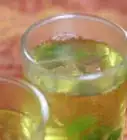
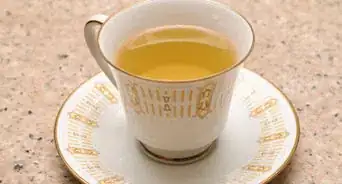
7Finished.Advertisement


Community Q&A
-
QuestionCan I use dry pine needles to make tea? If so, do I use more or less needles?
 Community AnswerYes, you can use dry pine needles. You will need more because the natural juices are sucked out when dried, so to get more flavor you will need to add more needles.
 -
QuestionWhat can I use to clean pine needles properly?Community AnswerJust wash them with water and rub them with a cloth to get dirt off.
-
QuestionWhat kind of pine tree is used for pine tree tea ?
 Community AnswerMost pine trees are safe to make pine needle tea. Some varieties of them are poisonous though, like Yew (Taxus), Norfolk Island Pine (Araucana heterophylla) and Ponderosa Pine (Pinus ponderosa). So check the variety carefully before picking up any needles.
 -
QuestionHow often can I drink pine needle tea?Community AnswerYou can drink it every day or every other day. Avoid drinking too much, however, as it contains 4 to 5 times more vitamin C than orange juice as well as a high amount of vitamin A. Remember, too much of a good thing, including vitamins, can quickly become a bad thing.
-
QuestionHow do I dry the needles and use them in tea?
 Community AnswerYou don't. They're used fresh. You can dry them out by leaving them in a cool dry place, and they'll still work, but it's not essential.
 -
QuestionCan I use fir and/or spruce needles?Community AnswerYes, you could use either one.
-
QuestionCan I use jack pine needles for tea?Community AnswerYes. Jack pine needles are completely safe for pine needle tea.
-
QuestionShould I use young or old pine needles?Community AnswerUse fresh pine needles. The age of the tree does not matter as long as the needles are green/fresh.
-
QuestionCan I use Norway pine needles for pine needle tea?Community AnswerNo. They are poisonous, as are the needles of the Ponderosa pine. It would be a good idea to google "which pine needles are poisonous" if you have further questions.
-
QuestionWhat is the antidote for pine poisoning?Community AnswerThe most common antidote for all poisonous plants is some charcoal and/or white wood ash mixed with water. The charcoal will help absorb the poison in your stomach, so it has less effect. The white wood ash helps relieve stomach pain. Also, plenty of water and rest. You can also go to the emergency center of your hospital, your doctor's or call a poison hotline for help.
Warnings
- Make sure to clean the needles. Who knows what could be on them. There could be bug eggs, dirty water, etc.Thanks!
- As with any wild food, be sure to collect from an area free from pollution and avoid any trees with disease.Thanks!
- Do not consume this tea if pregnant or breastfeeding.[8]Thanks!
- Hemlock trees are not poisonous. The hemlock tree is coniferous tree and a member of the Tsuga genus (family Pinaceae). The poisonous perennial, herbaceous hemlock plants that grow near streams and in fields (e.g. water hemlock, poison hemlock and hemlock water drop-wort) are members of the family Apiaceae. Therefore the two are totally unrelated and bear no physical resemblance to each other either. The reason why hemlock tree came to be named thus is because someone thought that when you crush the needles (it's a pine tree) the smell is similar to that obtained when you crush poisonous hemlock leaves, but that's the only connection.Thanks!
Things You'll Need
- Cup or mug
- Fork





References
- ↑ https://en.wikipedia.org/wiki/Eastern_White_Pine
- ↑ James Wong, Grow your own drugs, p. 178, (2009), ISBN 978-1-60652-119-9
- ↑ https://www.dummies.com/food-drink/cooking/how-to-boil-water/
- ↑ https://joybileefarm.com/pine-needle-tea/
- ↑ http://www.practicalprimitive.com/skillofthemonth/pineneedletea.html
- ↑ http://www.ijstr.org/final-print/nov2013/Effect-Of-Heating-On-Vitamin-C-Content-Of-Some-Selected-Vegetables.pdf
- ↑ https://www.artofmanliness.com/articles/how-to-make-pine-needle-tea/
- ↑ https://joybileefarm.com/pine-needle-tea/
About This Article
To make pine needle tea, boil 1 cup of water in a pot or kettle, and clean fresh pine needles from a green white pine. Place the cleaned needles in a cup or mug, and pour the boiling water over the needles. Then, stir the water until the needles begin to lose their color. You can add a squirt of lemon juice or some honey to the tea for extra flavor. Finally, use a fork or spoon to scoop out all of the pine needles and enjoy your drink! For tips on making a stronger tea, read on!