This article was co-authored by wikiHow staff writer, Hunter Rising. Hunter Rising is a wikiHow Staff Writer based in Los Angeles. He has more than three years of experience writing for and working with wikiHow. Hunter holds a BFA in Entertainment Design from the University of Wisconsin - Stout and a Minor in English Writing.
There are 10 references cited in this article, which can be found at the bottom of the page.
This article has been viewed 2,135 times.
Learn more...
Marigolds are bright and beautiful flowers that add pops of color to your garden, but it can be a pain when they don’t bloom as you expected. If your marigolds aren’t flowering, don’t worry because there are a few things you can do to help them out. We’ve put together some tips and solutions to the most common problems you might have so you can promote those gorgeous blooms from your marigolds!
Steps
Method 1
Method 1 of 9:Move them somewhere with 6 hours of sun.
-
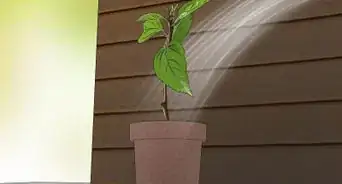
1Marigolds don’t bloom as well if they’re in the shade. Find an area that gets at least 6 hours of sun throughout the day and transplant your marigolds there. Once they start getting enough sunlight, you’ll see a lot more buds and flowers growing from your plants.[1]
- During extremely hot weather, you may notice signs of stress, such as wilting or discolored leaves. If you’re growing marigolds in a container, move them into the shade for a few hours each day during the hottest summer months. If you planted your marigolds in the ground, hang a shade cloth over your plants during the hottest parts of the day.

Method 2
Method 2 of 9:Plant them in well-draining soil.
-
1Marigolds don’t bud when the soil is too soggy. Hard-packed soil makes it difficult for water to drain out, and can actually drown your marigolds.[2] If you planted marigolds in the ground, check your soil’s drainage. If it doesn’t drain properly, either mix in compost with the soil or transplant your flowers to a new spot. For marigolds in containers, use a pot with drainage holes so your soil doesn’t get waterlogged.
- To test the drainage of your soil, dig a hole that’s 1 ft (30 cm) wide and 1 ft (30 cm) deep. Fill the hole with water and let it sit overnight. Fill the hole with water again the following day and measure how much has drained each hour. Well-draining soil should absorb 2 in (5.1 cm) of water each hour.[3]

Method 3
Method 3 of 9:Water them once a week.
-
1Your marigolds only need about 1 inch (2.5 cm) of water every week. Put a rain gauge or moisture meter near your marigolds so you can measure how much water they receive. If you get frequent rain in your area, you probably don’t need to give them any additional water. Otherwise, use a watering can once a week and let the soil dry out 1 in (2.5 cm) below the surface before doing it again.[4]
- If your marigolds are wilting or the leaves become dried or curled, it’s a sign that they’re underwatered.
- Overwatered marigolds will have leaves that turn brown and feel soft and limp.
- Always water the base of the plant rather than from above. Too much water in the flowers can cause them to rot.

Method 4
Method 4 of 9:Apply a layer of mulch to prevent weeds.
-
1Weeds can sap nutrients and make your marigolds bloom less. You can choose any type of mulch you want, but cypress, pine, and mixed hardwood are the most common. Create a layer that’s about 3 inches (7.6 cm) thick of mulch around the bases of your marigolds. Leave 1–2 inches (2.5–5.1 cm) between the edge of the mulch and the stems to prevent root rot.[5]
- Your mulch also helps the soil retain water so you don’t have to water as often.[6]

Method 5
Method 5 of 9:Test the soil before adding fertilizer.
-
1Too many nutrients encourage bushy growth, but not flowers. You only need to fertilize marigolds about 6–8 weeks after you first plant them. Get a standard 5-10-5 slow-release fertilizer for your marigolds.[7] Use about 1/4–1/2 the amount of fertilizer recommended on the packaging so you don’t add too many nutrients to the soil.[8]
- Run a test on your soil to check its nitrogen, phosphorus, and potassium levels. If you already have between 2.2–5.5% nitrogen, 0.23–0.67% phosphorus, and 1.5–2.19% potassium, you don’t need to apply any fertilizer.[9] If the soil is deficient in just 1 of the nutrients, apply a fertilizer that only increases the one that’s missing.

Method 6
Method 6 of 9:Apply insecticidal soap to kill pests.
-
1Spider mites and aphids can damage your plants before they bloom. Even though marigolds are mostly pest-resistant, they can still get damaged by a few insects.[10] Check your marigolds regularly to see if there are any aphids or spider mites on them. If you do notice any, get some insecticidal soap and mix it with water following the directions on the package. Use a sprayer to apply the soap on the tops and bottoms of the leaves to kill any insects.[11]
- Reapply the soap once a week until you don’t see any more pests.

Method 7
Method 7 of 9:Pinch off growing stems to prevent legginess.
-
1Prevent weak, leggy blooms with this simple technique. Your marigolds can grow pretty tall, but their stems won’t be as thick or strong. When you notice them growing taller, find a spot on the main stem that has new buds or leaf nodes. Pinch the main stem tightly between your fingers just above the nearest set of leaves to damage and prevent it from growing taller. You could also cut the stem in the same place with a pair of trimmers. That way, your marigolds focus their energy on producing flowers.[12]
- Try to pinch your marigolds early in the growing season when they’re 6–8 inches (15–20 cm) tall, or else your flowers might not grow as large.

Method 8
Method 8 of 9:Tie taller stems to stakes for support.
-
1Stems could break and stop blooming if flowers get too heavy. If you want to show off tall marigold blooms, place some wooden or bamboo stakes next to your plants. Use twine to loosely tie the stem against the stake so it continues to grow straight rather than wilting. That way, when your marigolds do eventually bloom, they’re less likely to wilt or damage the plant.[13]
- You can buy stakes from your local gardening center.

Method 9
Method 9 of 9:Cut off old flowers after they wilt.
-
1Getting rid of past blooms helps encourage another round of flowers. If you’ve already had marigolds flower during the growing season, wait until they start to wilt or go bad. Once they do, use a pair of garden snips to cut the stems down to just above the nearest sets of leaves. Rather than putting energy into growing more stems, your marigolds will grow new flowers and bloom a second time later in the season.[14]

Warnings
- Be careful not to water marigolds too much since they can easily develop root rot.[16]Thanks!












References
- ↑ https://gardenerspath.com/plants/flowers/grow-marigolds/
- ↑ https://hgic.clemson.edu/factsheet/marigold/
- ↑ https://extension.tennessee.edu/Williamson/Horticulture/Consumer%20Horticulture/DIY%20Soil%20Drainage%20Perk%20Test%20for%20Your%20Yard%20(2016).pdf
- ↑ https://hgic.clemson.edu/factsheet/marigold/
- ↑ https://gardeningsolutions.ifas.ufl.edu/care/planting/mulch.html
- ↑ https://www.almanac.com/plant/marigolds
- ↑ https://www.almanac.com/plant/marigolds#
- ↑ https://www.pilotonline.com/life/home-garden/article_7af60259-5949-5d4e-9efc-2260ba806a04.html
- ↑ http://e-gro.org/pdf/2017_641.pdf
- ↑ https://www.almanac.com/plant/marigolds
- ↑ https://hgic.clemson.edu/factsheet/insecticidal-soaps-for-garden-pest-control/
- ↑ https://www.gardeningchannel.com/how-to-grow-marigolds/
- ↑ https://gardenerspath.com/plants/flowers/grow-marigolds/
- ↑ https://www.almanac.com/plant/marigolds
- ↑ https://www.almanac.com/plant/marigolds
- ↑ https://gardenerspath.com/plants/flowers/grow-marigolds/
About This Article