This article was co-authored by wikiHow staff writer, Jessica Gibson. Jessica Gibson is a Writer and Editor who's been with wikiHow since 2014. After completing a year of art studies at the Emily Carr University in Vancouver, she graduated from Columbia College with a BA in History. Jessica also completed an MA in History from The University of Oregon in 2013.
This article has been viewed 2,182 times.
Learn more...
If you love pasta but don't want a meaty red sauce, make aglio e olio. This classic dish from Naples is made by boiling spaghetti until it's tender. While the noodles boil, heat sliced garlic in extra-virgin olive oil. Toss the drained noodles with the fragrant oil until they're coated. Serve the aglio e olio or add a dash of red pepper flakes, grated Parmesan, chopped parsley, or sautéed shrimp.
Ingredients
- 1 to 2 tablespoons (18 to 36 g) kosher salt
- 1 pound (450 g) dried spaghetti
- 8 tablespoons (120 ml) extra-virgin olive oil, divided
- 4 medium cloves garlic, thinly sliced
- 1/2 teaspoon (1 g) red pepper flakes, optional
- 1/2 cup (15 g) fresh parsley, minced, optional
- 1 cup (100 g) freshly grated Parmesan cheese, optional
- 2 pounds (910 g) shrimp, optional
Makes 4 servings
Steps
Part 1
Part 1 of 3:Heating the Noodles
-
1Bring a large pot of water to boil and add kosher salt. Set a 5 to 6 quart (4.7 to 5.6 liter) pot on the stove and pour in enough water to come 3/4 up the side. Put a lid on the pot and turn the burner to high. When the water boils add 1 to 2 tablespoons (14.8 to 29.6 ml) (18 to 36 g) of kosher salt.[1]
- The salt will flavor the pasta as it boils.
-
2Add 1 pound (450 g) of spaghetti. Remove the lid and put the dried noodles into the salted water. Stir the noodles immediately so they don't clump together. You'll also need to stir the noodles frequently throughout the entire cooking time.[2]
-
3Boil the spaghetti for 8 to 11 minutes. Set a timer for 1 minute less than the recommended time on the package. Since spaghetti noodles are made with different types of flour, it's important to follow the package instructions. Just cook it for 1 minute less than recommended.[3]
-
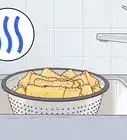
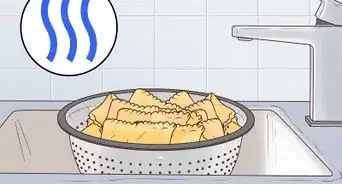
4Reserve 1 cup (240 ml) of the pasta water and drain the spaghetti. Turn off the burner and use a mug or ladle to remove 1 cup (240 ml) of the water from the pot. Set this aside and place a colander in the sink. Pour the noodles into the colander so they drain.[4]
- Avoid rinsing the noodles with cold water or the oil and garlic sauce won't soak into the noodles.


Part 2
Part 2 of 3:Cooking the Sauce
-
1Heat 6 tablespoons (89 ml) of olive oil and the garlic for 5 minutes. Pour 6 tablespoons (89 ml) of the olive oil into a large skillet and stir in 4 medium cloves of thinly sliced garlic. Turn the burner to medium and cook the garlic in the oil until it turns a pale gold color.[5]
- Slice the garlic as thinly as you can.
- The garlic will sizzle a little as it cooks.
-
2Add the spaghetti to the skillet with 1⁄2 cup (120 ml) of the pasta water. Pour half of the reserved pasta water into the skillet and add the drained spaghetti. Use tongs to toss the noddles with the water, oil, and garlic.[6]
- Add more of the remaining pasta water if the sauce is too thick and you'd like to thin it.
-
3Simmer and stir the noodles for 2 minutes over high heat. Turn the burner up to high so the pasta water begins to bubble. Stir and cook the spaghetti in the sauce so the noodles are coated.[7]
-
4Stir in the remaining olive oil and serve the pasta. Turn off the burner and pour in the remaining 2 tablespoons (30 ml) of olive oil. Toss the noodles so they're completely coated with the oil.[8]
- Divide the pasta among plates and serve it immediately.
- While you can refrigerate leftover aglio e olio in an airtight container for up to 3 to 5 days, the oil may thicken on the noodles.


Part 3
Part 3 of 3:Trying Variations
-
1Add pepperoncini if you want spicy pasta. To make aglio e olio pepperoncini, stir 1/2 teaspoon (1 g) of red pepper flakes into the olive oil and garlic before you add the noodles. Let the red pepper flakes cook with the garlic.[9]
- You can add just a pinch of red pepper flakes if you don't want the pasta to be as spicy.
-
2Stir in Parmesan cheese for creamier pasta. If you'd like cheesy aglio e olio, sprinkle 1 cup (100 g) of Parmesan cheese over the noodles after you've tossed them with the oil and garlic. Then use tongs to mix the spaghetti with the Parmesan.[10]
- For the best flavor, use freshly grated Parmesan instead of powdered or pre-shredded cheese.
-
3Toss parsley with the aglio e olio. For a fresh herbal flavor, chop 1/2 cup (15 g) of fresh parsley and add it to the prepared aglio e olio spaghetti. Toss the noodles and parsley until the herbs are combined.[11]
- Use fresh instead of dried parsley for the boldest flavor and color.
-
4Add jumbo shrimp for extra protein. To include seafood in the pasta, sauté 2 pounds (910 g) of shrimp in a skillet over medium-high heat. Stir and cook the shrimp for about 2 to 3 minutes or until they turn pink. Then set them aside and prepare the aglio e olio.[12]
- Stir the cooked shrimp into the finished pasta just before you're ready to serve it.
-
5Finished.


Things You'll Need
- Measuring cups and spoons
- 5 to 6 quart (4.7 to 5.6 liter) pot with lid
- Tongs or spaghetti spoon
- Colander or strainer
- Knife and cutting board

References
- ↑ https://www.seriouseats.com/recipes/2016/02/spaghetti-aglio-olio-recipe.html
- ↑ https://www.seriouseats.com/recipes/2016/02/spaghetti-aglio-olio-recipe.html
- ↑ https://www.seriouseats.com/recipes/2016/02/spaghetti-aglio-olio-recipe.html
- ↑ https://www.seriouseats.com/recipes/2016/02/spaghetti-aglio-olio-recipe.html
- ↑ https://www.seriouseats.com/recipes/2016/02/spaghetti-aglio-olio-recipe.html
- ↑ https://www.seriouseats.com/recipes/2016/02/spaghetti-aglio-olio-recipe.html
- ↑ https://www.seriouseats.com/recipes/2016/02/spaghetti-aglio-olio-recipe.html
- ↑ https://www.seriouseats.com/recipes/2016/02/spaghetti-aglio-olio-recipe.html
- ↑ https://www.foodnetwork.com/recipes/ina-garten/spaghetti-aglio-e-olio-recipe-2043225
About This Article