This article was co-authored by wikiHow Staff. Our trained team of editors and researchers validate articles for accuracy and comprehensiveness. wikiHow's Content Management Team carefully monitors the work from our editorial staff to ensure that each article is backed by trusted research and meets our high quality standards.
There are 8 references cited in this article, which can be found at the bottom of the page.
This article has been viewed 2,354 times.
Learn more...
Concrete is a highly-durable product, making it low-maintenance and cost-effective compared with other materials. However, it still needs some care to ensure it stays as beautiful as the day it was laid. Whether it’s outdoors, polished concrete, or decorative, it is important to take the best care of your concrete flooring to ensure its long life.
Steps
Method 1
Method 1 of 3:Looking after Your Outdoor Concrete
-
1Clean and remove dirt from your concrete regularly. Use a pressure washer to remove stains and grime that can build up in the outdoor environment.[1]
- Use protective footwear, hearing protection and gloves when cleaning your concrete with a pressure washer.[2]
- Make sure you are familiar with the safety warnings of the pressure washer before using it.
- Hold the washer 2 feet (0.6 m) away from the surface at a 45-degree angle.
- Use a finer nozzle on the pressure washer to clean stains and small spots on your concrete. The higher the level of the nozzle the wider the spray, but be sure not to use a 0 -degree nozzle which can be dangerous due to its high pressure of water. [3]
- Move the nozzle back and forth over the surface of your concrete covering the whole area, and focusing on the stained areas.
-
2Repair cracks in the concrete. Over time, cracks can appear in the concrete, it’s best to fill them and seal the concrete to prevent water intrusion.[4] Also, removing any large trees from the driveway can prevent the roots of the trees surfacing beneath the concrete and create an uneven-cracked surface.[5] If you have a crack in your concrete, you can take a few steps to repair it:
- First, clean the surface of concrete you are going to repair, remove any grime and scrub away any dirt to have a clean surface to work with to ensure the filler will stick to the surface.
- Use a chisel to create an area for filling, this means making the base as wide as the surface of the crack. Remove any debris from the area with a broom or vacuum.
- Use the concrete mix to fill the hole and make sure you cover the whole cracked area. You can find a concrete mix at your local hardware store.
- Smooth off the repair and leave to dry, overnight if needed. Read the instruction manual to see how long it takes to set.
- Apply a sealer to your concrete, if it is in an area of a lot of traffic a few coats may be needed.
Advertisement -
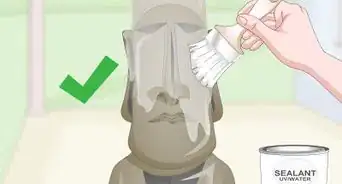
3Use a sealer to protect the concrete surface and joints. A good sealer will help repel water from the concrete and stop dust from sticking to the surface. Some seals can also provide resistance to damage from UV exposure.[6]
- You should apply a seal every two years, depending on the weather and the traffic exposure of the concrete area.[7]
-
4Clean up spills immediately. In an outdoor environment, concrete is exposed to spills from hard-to-remove liquids such as oil, gasoline and grease.
- Try to deal with those kinds of spills as soon as possible to stop a stain occurring.[8]
- Look for cleaning products that will help remove these spills, but that are neutral so they don’t fade or harm your concrete.
-
5Avoid heavy vehicles and sharp metal objects on your concrete surface. These can damage the concrete with constant pressure or create scratches across the surface.[9]
- A sealer can help protect your concrete surface from small scratches and heavy traffic.
- Using heavy equipment on your concrete surface can lead to cracks and degrade the surface quality. You can prevent this by taking special care which using heavy machinery or sharp objects on your concrete.
Advertisement


Method 2
Method 2 of 3:Caring for Polished Concrete Floors
-
1Clean your floor with neutral cleaning products. Avoid products high in acidity or that can be harmful to a polished surface. [10]
-
2Use a dry microfiber pad for cleaning. Microfiber is great for cleaning away dirt and grime without being harsh on the surface area. If cleaning a commercial large area, you can use a buffer to clean the floor.
- If you don’t have a microfiber pad, you can use cotton or other materials, but make sure you aren’t using any equipment that could scratch or degrade the polished flooring.[13]
-
3Remove spills as soon as possible. Certain products with high acidity can degrade the floor quicker than others and leave a stain.
- You can have a stain remover kit ready for when accidents happen to help remove spills quickly.[14]
- Cleaning your floor surface daily can help to prevent unnoticed spills from becoming long-term stains.
-
4Apply a guard to protect the floor. Depending on the surface use, choose a guard that will best protect the flooring to stop grime build up. This will help prevent spills becoming stains, you will still need to clean up spills but it works as an extra layer of protection.[15]
- Apply a guard every six months to get the best protection.[16]
Advertisement


Method 3
Method 3 of 3:Protecting Decorative Concrete
-
1Choose designs that are easy-to-maintain. The more edging and joints the design has the more exposure to water intrusion and degradation.[17]
- Get as much information about your potential designs before making a decision on the decorative concrete for your home.
-
2Ask the manufacturer for specific care instructions. Certain coloured concretes, sprays on a decorative finish or brands will require different cleaning and care.[18]
- Make sure you are familiar with the correct process for your decorative flooring. It may be as easy as having to broom the area regularly or may require specific cleaning products.
-
3Coat your concrete flooring with a wax. To avoid stains and to assist the sealer in protecting your flooring choose a clear floor wax that matches your flooring.[19]
- If you don’t know which coating to use ask at your local hardware store. Look after your flooring with the correct methods and enjoy a lifelong investment.
Advertisement











References
- ↑ https://www.concretenetwork.com/concrete/maintaining/
- ↑ https://www.consumerreports.org/pressure-washers/surfaces-safe-to-clean-with-a-pressure-washer/#safety
- ↑ https://www.consumerreports.org/pressure-washers/surfaces-safe-to-clean-with-a-pressure-washer/#safety
- ↑ https://www.concretenetwork.com/concrete/maintaining/
- ↑ https://blog.nationwide.com/driveway-concrete-repairs-and-tips/
- ↑ https://www.concretenetwork.com/concrete/maintaining/
- ↑ https://www.concretenetwork.com/concrete/concrete_driveways/how-to-maintain.html
- ↑ https://www.concretenetwork.com/concrete/concrete_driveways/how-to-maintain.html
- ↑ https://www.concretenetwork.com/concrete/concrete_driveways/how-to-maintain.html
- ↑ http://www.diamaticusa.com/10-maintenance-tips-for-polished-concrete-floors/
- ↑ https://www.youtube.com/watch?v=0vszpqj3myU
- ↑ https://www.youtube.com/watch?v=zDc9Ur2lbS0
- ↑ http://www.diamaticusa.com/10-maintenance-tips-for-polished-concrete-floors/
- ↑ https://www.youtube.com/watch?v=0vszpqj3myU
- ↑ https://www.youtube.com/watch?v=zDc9Ur2lbS0
- ↑ https://www.youtube.com/watch?v=zDc9Ur2lbS0
- ↑ https://www.concretenetwork.com/concrete/maintaining/
- ↑ https://www.concretenetwork.com/concrete/maintaining/
- ↑ https://www.sundek.com/tips-cleaning-maintaining-decorative-concrete/
About This Article