This article was co-authored by Monica Moreno, MS, RD, LD/N. Monica Moreno is a Registered Dietitian and the Founder, Owner, and Lead Dietitian at Essence Nutrition in Miami, Florida. Monica specializes in nutrition consulting and school and corporate wellness programs. She holds a BA in Linguistics, French, and Teaching English as a Second Language from The University of Florida and an MS in Dietetics and Nutrition from Florida International University. Monica is the dietitian for the Miami Marlins and is the visiting dietitian specialist at Ocean Reef Resort and Club. Monica is a member of the Academy of Nutrition and Dietetics, Nutrition Entrepreneurs Dietetics Practice Group, Integrative Nutrition Dietetics Practice Group, Collegiate and Professionals Sports Dietitians Association, and Weight Management Dietetic Practice Group. She was awarded the 2020 Coral Gables Chamber of Commerce Business Woman in Healthcare of the Year award.
There are 18 references cited in this article, which can be found at the bottom of the page.
wikiHow marks an article as reader-approved once it receives enough positive feedback. This article received 15 testimonials and 100% of readers who voted found it helpful, earning it our reader-approved status.
This article has been viewed 202,147 times.
An A1C test effectively measures your average blood sugar levels over the past 3 months. A doctor can measure your A1C levels to diagnose and treat pre-diabetes and diabetes. Lower levels of A1C are associated with lower risks of diabetes-related complications. If you’re diabetic or at risk of becoming diabetic, try some of the tips on this list to lower your A1C levels and start leading a healthier lifestyle today!
Steps
Method 1
Method 1 of 11:Reduce your overall calorie intake.
-
1Eating too many calories increases A1C more than certain types of food do. Use a calorie calculator or consult a nutritionist to determine how many calories are ideal for you. Start counting your calories and reduce your portion sizes or cut out high calorie foods to stay near your target.[1] [2]
- In general, the recommended daily intake of calories is 2,500 for men and 2,000 for women.[3]
- If you’re trying to lose weight, a general rule is to reduce your typical calorie intake by about 500-1000 calories. This typically results in a loss of about 1 lb (0.45 kg) per week, which is considered healthy weight loss.[4]
Advertisement

Method 2
Method 2 of 11:Measure and weigh food portions.
-
1Use measuring cups, spoons, and a food scale to determine serving sizes. Even small differences in portion sizes can make a big difference in calories! After a while, you'll get a better idea of what servings of different foods look like, so you can visually eat the right amount without overdoing it.[5]
- All packaged food has nutritional information about servings sizes and calories on it, so you can look at that when you're measuring and weighing your portions. Otherwise, you can look up caloric information for different foods online.

Method 3
Method 3 of 11:Stay hydrated with water.
-
1Preventing dehydration helps keep your blood sugar at a normal level. Drink lots of water throughout the day whenever you’re thirsty, especially when you’re exercising or when it’s hot. Stay away from caffeinated beverages, sodas, energy drinks, fruit drinks, and other types of sugary drinks that can cause higher blood sugar levels and weight gain.[6]
- You can also drink seltzer water or another healthy water-based beverage, such as sugar-free lemonade or herbal tea, to stave off dehydration.
Advertisement

Method 4
Method 4 of 11:Follow a low-carb diet.
-
1Eating fewer carbs means you'll have fewer spikes in blood sugar. Monitor your blood sugar levels after eating carbs to identify which foods have the biggest effect on your levels. Reduce the amount of or cut out carbs that cause your blood sugar to spike a lot.[7] [8]
- The Dietary Guidelines for Americans recommend that carbs should account for 45-65% of the average person’s diet.[9] People with diabetes should aim to get about half their calories from carbs.
- In general, it’s best to avoid simple carbs, like pasta, sugar, white bread, cookies, pastries, and anything else made from white flour. Instead, choose healthier complex carbs, like brown rice, whole wheat pasta and bread, quinoa, legumes, and oatmeal.

Method 5
Method 5 of 11:Eat more protein.
-
1Protein causes carbs to release energy more slowly. As you reduce the amount of carbs you’re eating, increase the amount of protein you consume to help keep your blood sugar down.[10] Eat more beef, chicken, fish, pork, seafood, turkey, beans, cheese, eggs, nuts, tofu, seeds, and low-fat dairy.[11]
- A good general goal is to eat 1-1.5 grams of protein per 2.2 lb (1.00 kg) of body weight each day.
- Eating lots of protein also helps you build and maintain lean muscle mass and keep your weight under control.
- You can also get protein from a whey protein supplement powder, which you mix with water or milk to make a protein shake.
Advertisement

Method 6
Method 6 of 11:Switch to a plant-based diet.
-
1Eating a vegetarian or vegan diet can greatly reduce diabetes symptoms. Focus on eating lots of fresh produce, especially vegetables, at each meal. Get your protein from plant-based sources like beans and other legumes, tofu, soy-based meat replacements, and nuts.[12]
- You can also try a lacto-ovo diet, which allows you to eat eggs and dairy, but not meat.

Method 7
Method 7 of 11:Try a ketogenic diet.
-
1Going keto could be a good alternative to a plant-based diet. A keto diet is an extremely low-carb diet that still allows you to eat as much meat as you want. To start a keto diet, cut out all the wheat and starches from your meals. Aim to get about 70-80% of your calories from healthy fats, such as fatty fish, avocados, and olive oil. Get another 10-20% of your calories from protein like meat, chicken, fish, and eggs. Check with your doctor first before starting a keto diet.[13]
- Although some studies support the use of keto diet for type 2 diabetes, more research needs to be done to determine whether it is effective.[14]
- The keto diet is shown to help people with type 2 diabetes lose weight, reduce their medication, and lower A1C levels.
- In a typical keto diet, you should limit carb intake to less than 50 grams per day.
Advertisement

Method 8
Method 8 of 11:Exercise moderately for 20-30 minutes a day.
-
1Getting regular exercise helps keep weight off and maintain lean muscle. Focus on doing some form of cardio most days, such as brisk walking, jogging, running, biking, or swimming.[15] Mix in some resistance training a few days a week, such as bodyweight exercises, resistance band exercises, or weight training.[16]
- If you’re too busy to work out every day, shoot for 150 minutes total of moderate to vigorous physical activity per week. You can break the sessions up however is most convenient for you.

Method 9
Method 9 of 11:Lower your stress levels.
-
1Higher stress levels are associated with more diabetes-related risks. Coping with diabetes can be a strain on your mental health, so look for ways to reduce your overall stress. Try blowing off steam with exercise, practicing relaxation skills, and talking with friends or family about your condition.[17]
- Yoga is a great way to combine exercise and relaxation. Sign up for a local yoga class or follow YouTube videos at home.
- Finding a hobby that relaxes you and takes your mind off of stressful things is also a great idea.
Advertisement

Method 10
Method 10 of 11:Take an oral antidiabetic medication.
-
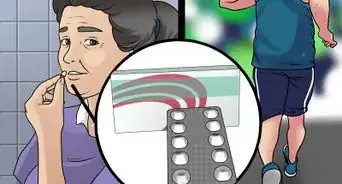
1A1C levels typically drop within 4-6 months of taking the medication. Get a prescription for an oral antidiabetic medication from your doctor. Take it once or twice a day with meals as prescribed.[18]
- Metformin is a type of antidiabetic medicine that may help lower your A1C levels by 1.5% or more.[19]

Method 11
Method 11 of 11:Work with your doctor.
-
1A doctor can help you set an A1C goal and recommend management techniques. Get an A1C blood test from your doctor to determine your current levels. Then, talk to them about what a good level would be for you and how you can achieve it through diet, exercise, and medication.[20]
- A1C is a type of hemoglobin that is chemically linked to sugar. Higher A1C levels generally mean that there is more sugar in your bloodstream.
- A1C is measured in milligrams per deciliter (mg/dL).
- Most diabetics have A1C levels of 6.5 and up. Pre-diabetic levels are between 5.7-6.4 and normal levels are below 5.7.
Advertisement

Expert Q&A
-
QuestionHow much cinnamon should I take to lower my A1C?
 Monica Moreno, MS, RD, LD/NMonica Moreno is a Registered Dietitian and the Founder, Owner, and Lead Dietitian at Essence Nutrition in Miami, Florida. Monica specializes in nutrition consulting and school and corporate wellness programs. She holds a BA in Linguistics, French, and Teaching English as a Second Language from The University of Florida and an MS in Dietetics and Nutrition from Florida International University. Monica is the dietitian for the Miami Marlins and is the visiting dietitian specialist at Ocean Reef Resort and Club. Monica is a member of the Academy of Nutrition and Dietetics, Nutrition Entrepreneurs Dietetics Practice Group, Integrative Nutrition Dietetics Practice Group, Collegiate and Professionals Sports Dietitians Association, and Weight Management Dietetic Practice Group. She was awarded the 2020 Coral Gables Chamber of Commerce Business Woman in Healthcare of the Year award.
Registered DietitianYou shouldn't rely on cinnamon to lower your A1C levels. Some studies do show that cinnamon can lower your blood sugar, but it really comes down to long-term, strategic eating habits, not eating/drinking a specific food. -
QuestionWhat foods can I eat to lower my A1C?Monica Moreno, MS, RD, LD/NMonica Moreno is a Registered Dietitian and the Founder, Owner, and Lead Dietitian at Essence Nutrition in Miami, Florida. Monica specializes in nutrition consulting and school and corporate wellness programs. She holds a BA in Linguistics, French, and Teaching English as a Second Language from The University of Florida and an MS in Dietetics and Nutrition from Florida International University. Monica is the dietitian for the Miami Marlins and is the visiting dietitian specialist at Ocean Reef Resort and Club. Monica is a member of the Academy of Nutrition and Dietetics, Nutrition Entrepreneurs Dietetics Practice Group, Integrative Nutrition Dietetics Practice Group, Collegiate and Professionals Sports Dietitians Association, and Weight Management Dietetic Practice Group. She was awarded the 2020 Coral Gables Chamber of Commerce Business Woman in Healthcare of the Year award.
Registered DietitianLowering your A1C levels is more about what combination of foods you're eating. Try to pair your carbs with protein, fat, and fiber—this helps reduce your body's glycemic response. -
QuestionWhat is the best fruit to lower A1C?Monica Moreno, MS, RD, LD/NMonica Moreno is a Registered Dietitian and the Founder, Owner, and Lead Dietitian at Essence Nutrition in Miami, Florida. Monica specializes in nutrition consulting and school and corporate wellness programs. She holds a BA in Linguistics, French, and Teaching English as a Second Language from The University of Florida and an MS in Dietetics and Nutrition from Florida International University. Monica is the dietitian for the Miami Marlins and is the visiting dietitian specialist at Ocean Reef Resort and Club. Monica is a member of the Academy of Nutrition and Dietetics, Nutrition Entrepreneurs Dietetics Practice Group, Integrative Nutrition Dietetics Practice Group, Collegiate and Professionals Sports Dietitians Association, and Weight Management Dietetic Practice Group. She was awarded the 2020 Coral Gables Chamber of Commerce Business Woman in Healthcare of the Year award.
Registered DietitianBerries are a great choice since they're high in fiber and low in sugar. This doesn't mean that sugary fruits are off the table, though! Just make sure that you're pairing a small portion of a sugary fruit (like mango) with protein, fat, or fiber (like Greek yogurt).




-Step-10.webp)






References
- ↑ Monica Moreno, MS, RD, LD/N. Registered Dietitian. Expert Interview. 4 August 2021.
- ↑ https://www.webmd.com/diabetes/tips-to-lower-a1c
- ↑ https://www.nhs.uk/common-health-questions/food-and-diet/what-should-my-daily-intake-of-calories-be/
- ↑ https://www.mayoclinic.org/healthy-lifestyle/weight-loss/in-depth/calories/art-20048065
- ↑ https://www.canr.msu.edu/news/portion_control_and_prediabetes
- ↑ https://www.mayoclinic.org/healthy-lifestyle/nutrition-and-healthy-eating/in-depth/water/art-20044256
- ↑ Monica Moreno, MS, RD, LD/N. Registered Dietitian. Expert Interview. 4 August 2021.
- ↑ https://www.cdc.gov/diabetes/managing/manage-blood-sugar.html
- ↑ https://www.mayoclinic.org/healthy-lifestyle/nutrition-and-healthy-eating/in-depth/carbohydrates/art-20045705
- ↑ Monica Moreno, MS, RD, LD/N. Registered Dietitian. Expert Interview. 4 August 2021.
- ↑ https://www.uofmhealth.org/health-library/uq1238abc
- ↑ https://www.ncbi.nlm.nih.gov/pmc/articles/PMC5466941/
- ↑ https://www.webmd.com/diabetes/keto-diet-for-diabetes
- ↑ https://www.ncbi.nlm.nih.gov/pmc/articles/PMC6566854/
- ↑ Monica Moreno, MS, RD, LD/N. Registered Dietitian. Expert Interview. 4 August 2021.
- ↑ https://www.mayoclinic.org/healthy-lifestyle/fitness/expert-answers/exercise/faq-20057916
- ↑ https://www.ncbi.nlm.nih.gov/pmc/articles/PMC4936828/
- ↑ https://care.diabetesjournals.org/content/33/8/1859
- ↑ https://hopkinsdiabetesinfo.org/medications-for-type-2-diabetes-metformin/
- ↑ https://www.cdc.gov/diabetes/managing/managing-blood-sugar/a1c.html
- ↑ https://health.clevelandclinic.org/can-taking-cinnamon-lower-your-blood-sugar/
About This Article

Medical Disclaimer
The content of this article is not intended to be a substitute for professional medical advice, examination, diagnosis, or treatment. You should always contact your doctor or other qualified healthcare professional before starting, changing, or stopping any kind of health treatment.
To lower A1C levels, increase your consumption of veggies, fruits, beans, nuts, and fish and reduce your intake of high-fat, high-cholesterol foods. Drink plenty of water to stay hydrated, and try to perform at least 30 minutes of physical activity every day. Deep breathing, yoga, and meditation can help reduce levels of stress and anxiety, both of which contribute to higher A1C levels. Be sure to take your diabetes medications as prescribed and see your doctor if you have any questions or concerns. For more tips on making healthy lifestyle changes that affect A1C levels, read on!